
5th August 09
West Yorkshire
45mins from Conisbrough Castle
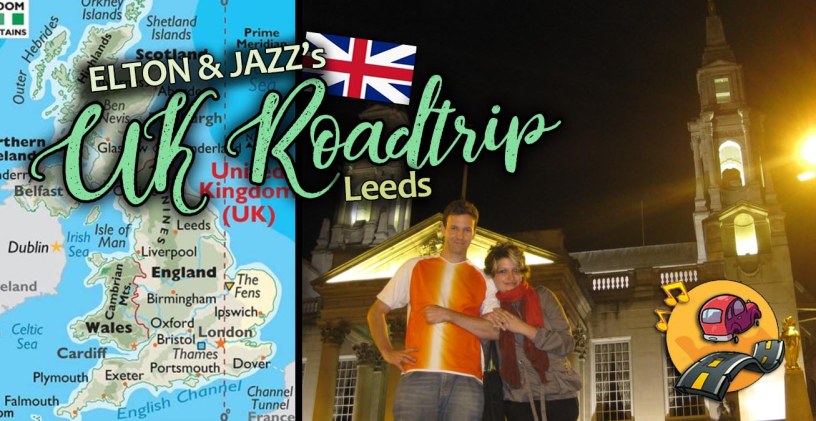
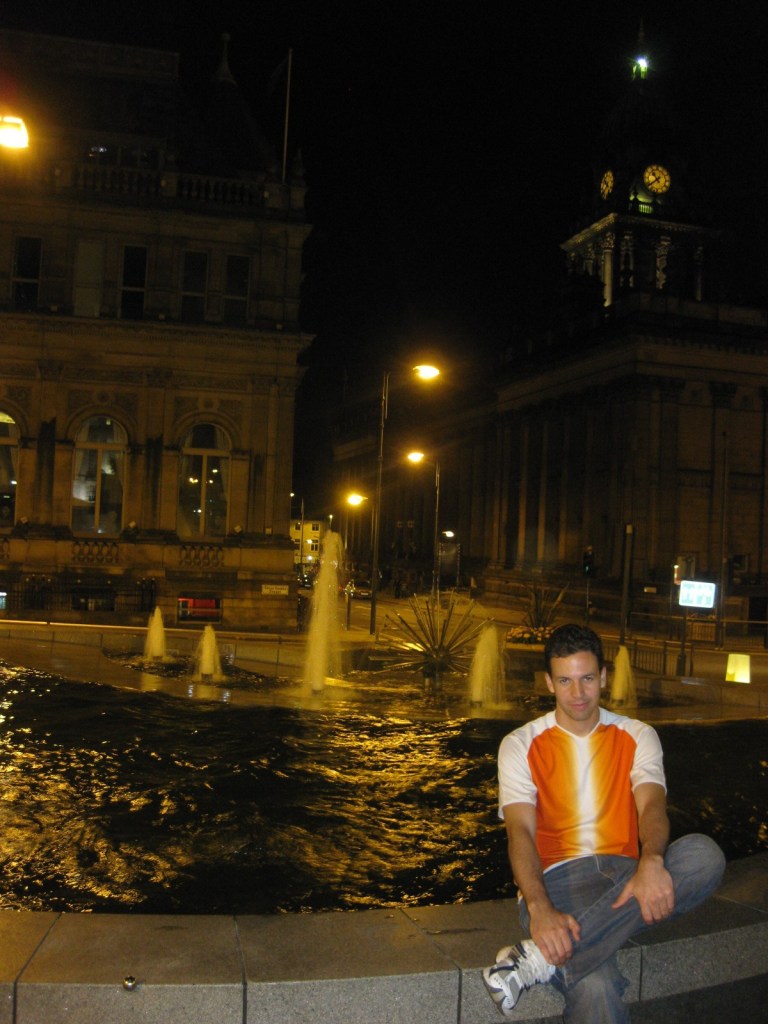
There were big constructions and it seemed to be a nice city, but we couldn’t make sure because it was very late. We took some night shots of the City Town Hall with the lights all lit up which was nice and one of my favourite photos of Elton with the hands of a statue trying to squash his head! hahaha too funny!
Leeds seemed like a very big city, I would have liked to visit it during the day.

In Leeds, we parked our car and took some photos in the city center. By the time we got there it was dark. We were both annoyed because we had to pay for 10mins parking!

During the Industrial Revolution, Leeds developed into a major industrial centre for the production and trade of wool before emerging as a centre for commerce and education (Leeds University is well known) Leeds is the largest legal centre outside of London. The river flowing through Leeds is called the River Aire.

Amazingly lit up at night, Leeds Town Hall
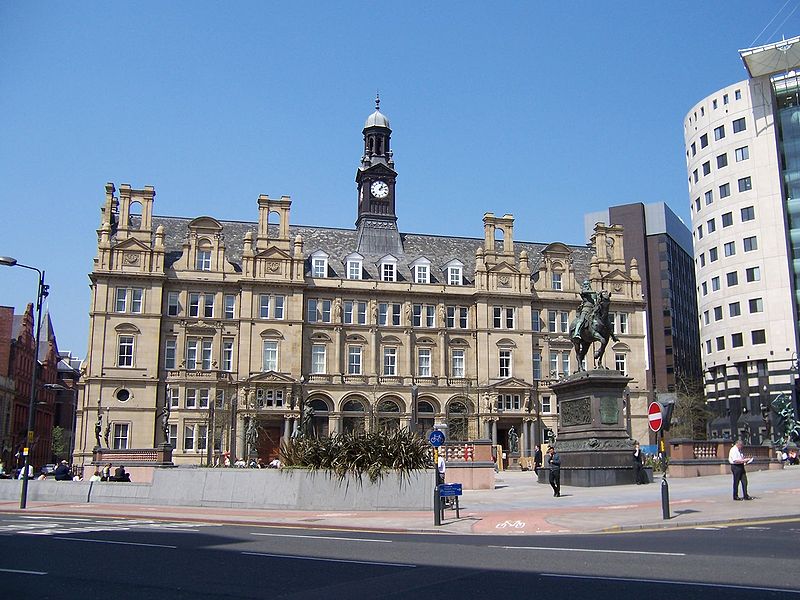
Leeds during the day taken from from the net
Leeds is the cultural, financial and commercial heart of the West Yorkshire Urban Area, which at the 2001 census had a population of 1.5 million,[9] and the Leeds city region, an economic area with Leeds at its core, had a population of 2.9 million. Leeds is the UK’s largest centre for business, legal, and financial services outside London, and its office market is the best in Europe for value.

Historically a part of the West Riding of Yorkshire, Leeds can trace its recorded history to the 5th century when the Kingdom of Elmet was covered by the forest of “Loidis”, the origin of the name Leeds. The name has been applied to many administrative entities over the centuries. It changed from being the appellation of a small manorial borough, in the 13th century, through several incarnations, to being the name attached to the present metropolitan borough. In the 17th and 18th centuries Leeds became a major centre for the production and trading of wool. Then, during the Industrial Revolution, Leeds developed into a major industrial centre; wool was still the dominant industry but flax, engineering, iron foundries, printing and other industries were important. From being a compact market town in the valley of the River Aire in the 16th century Leeds expanded and absorbed the surrounding villages to become a populous urban centre by the mid-20th century.
The name Leeds derives from “Loidis”, the name given to a forest covering most of the kingdom of Elmet, which existed during the 5th century into the early 7th century

I would love to visit here again and stay a couple of days
 The Wandering Passport