
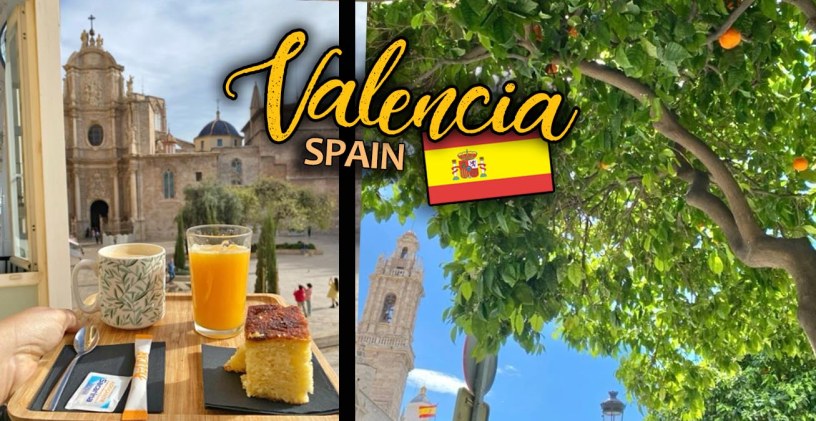
Lelelelele! I haven’t been to Valencia since 2009 when I visited while living in London.
A friend and I went when we decided we wanted to experience some Spanish festivals, La Tomatina and the Water & Wine Festival, so last time was a blur and I was happy to visit the city on my own with more time, less tomatoes and alcohol this time 🤣
The walk into the old town from the train station was really easy and took around 25mins
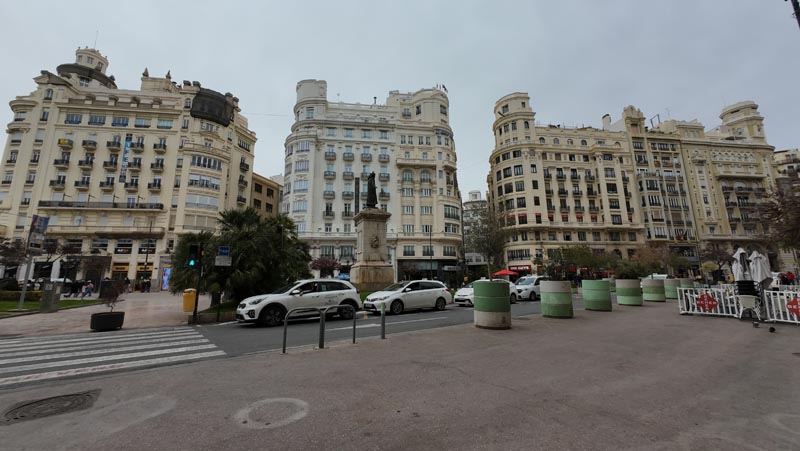
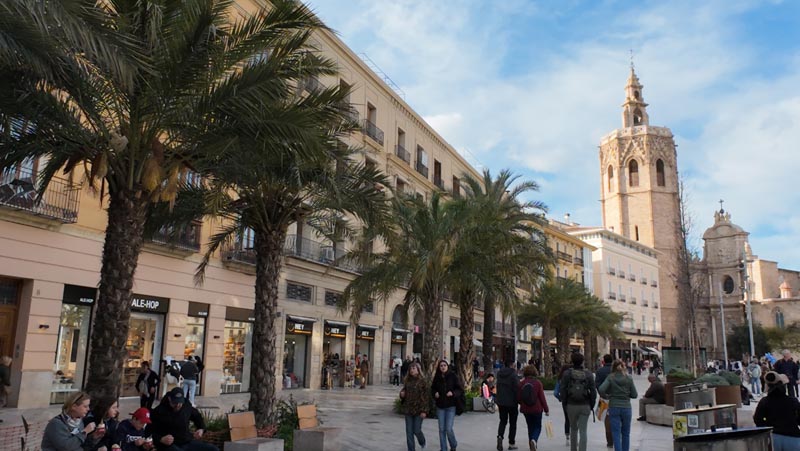
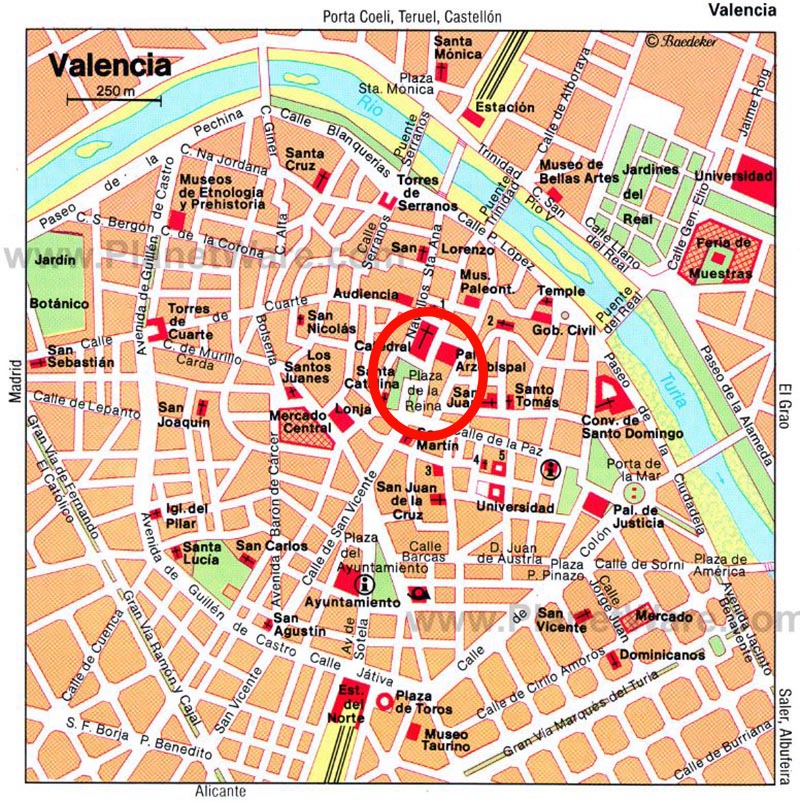
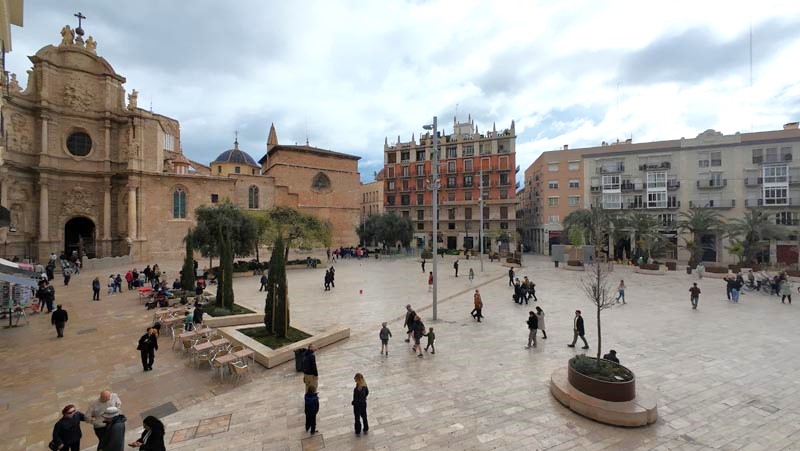
I stayed in PLAZA DE LA REINA where the very important Cathedral is located
REVIEW OF MY ACCOMMODATION IS ON THE BELOW BLOG LINK:
Was a FANTASTIC apartment / hotel in an awesome location! highly recommended!
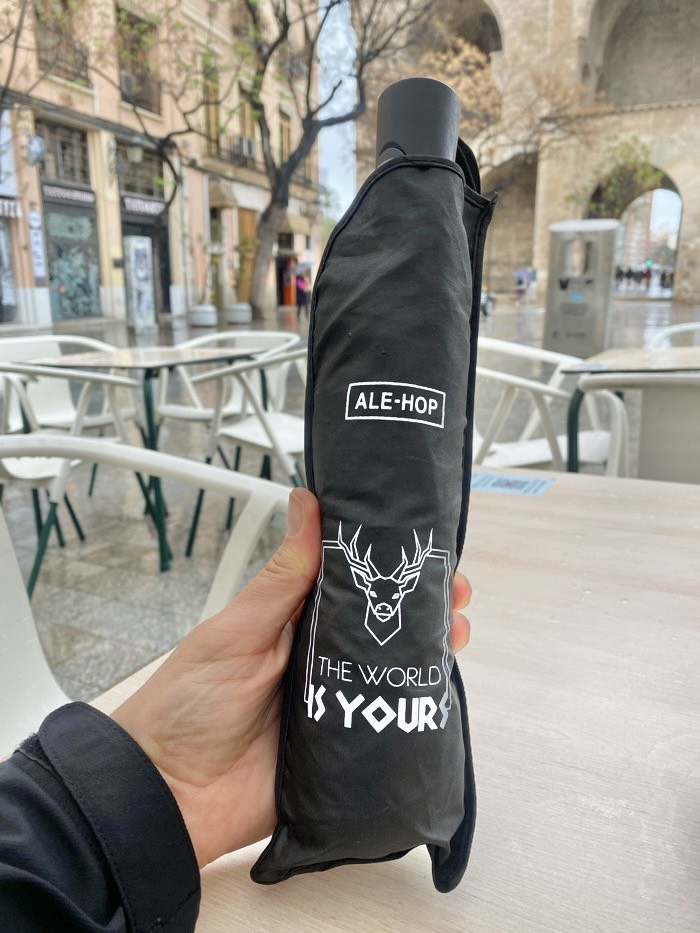
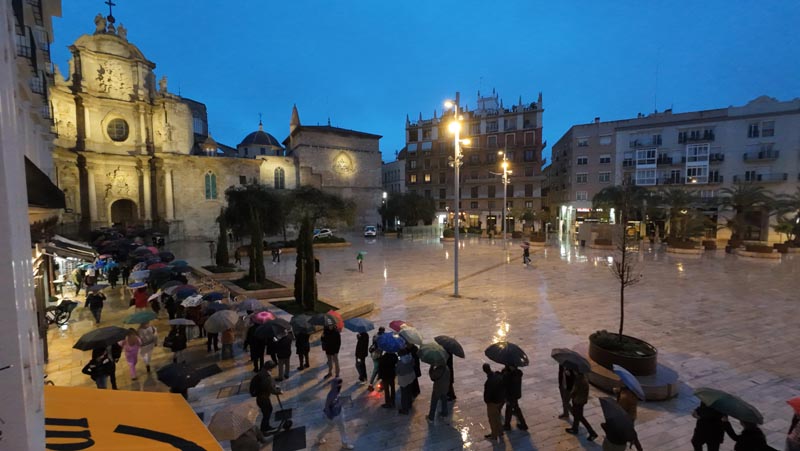
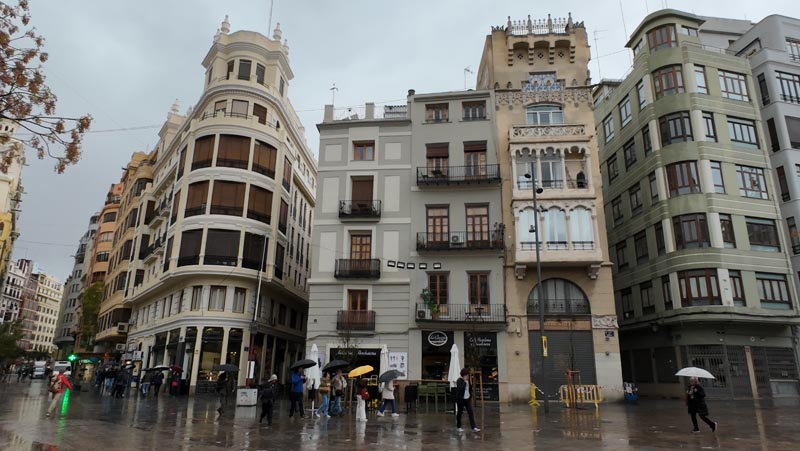
The day I arrived, it was cloudy and cold and at night it began raining and drizzled on and off for the remainder of my stay… its hard to walk / take photos / look at the map / talk to people AND carry an umbrella
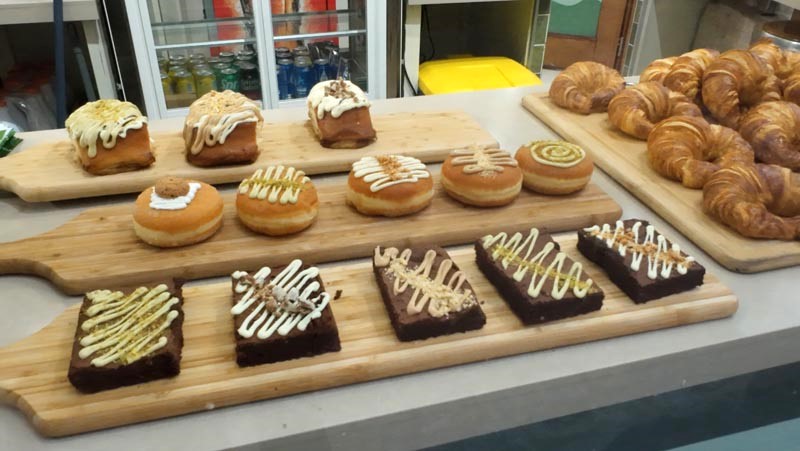
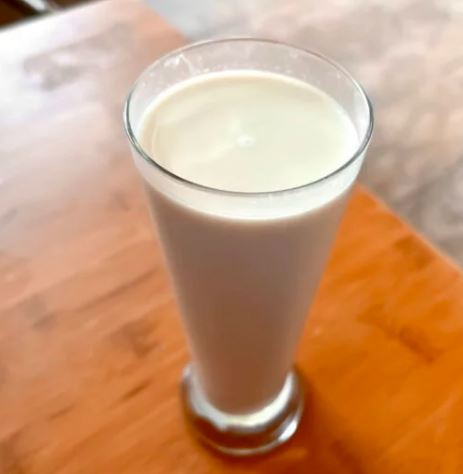
Horchata de Chufa – is a popular drink from Valencia – made with Chufa (a tubercule grown in nearby fields) and is sweet and has a nutty flavour to it – friendly for vegans
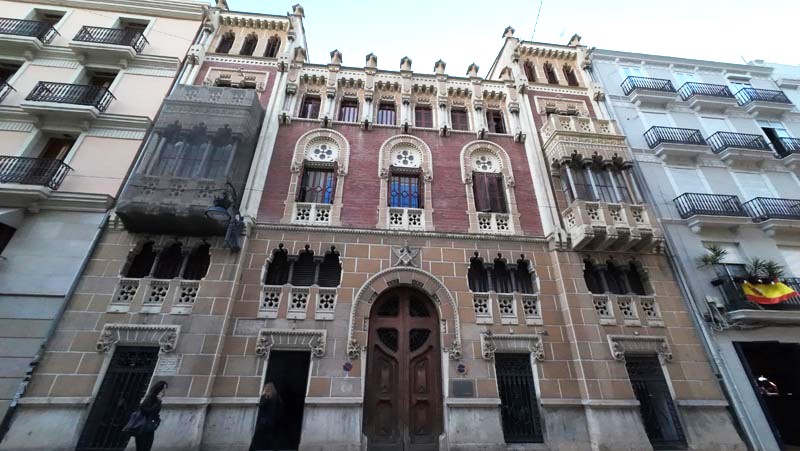
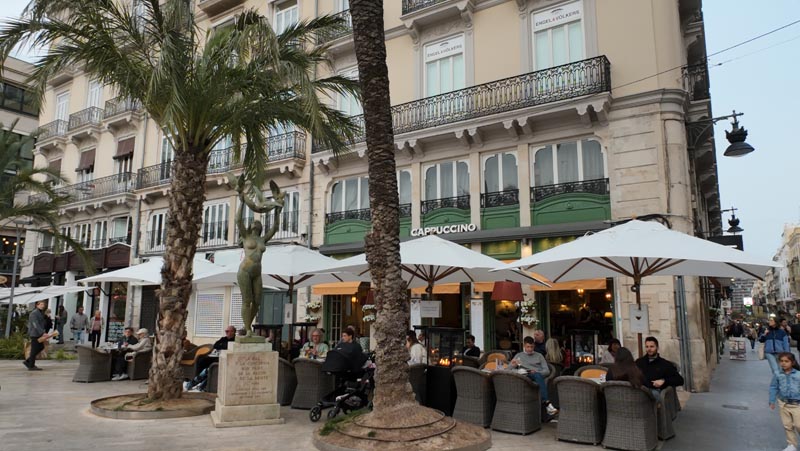
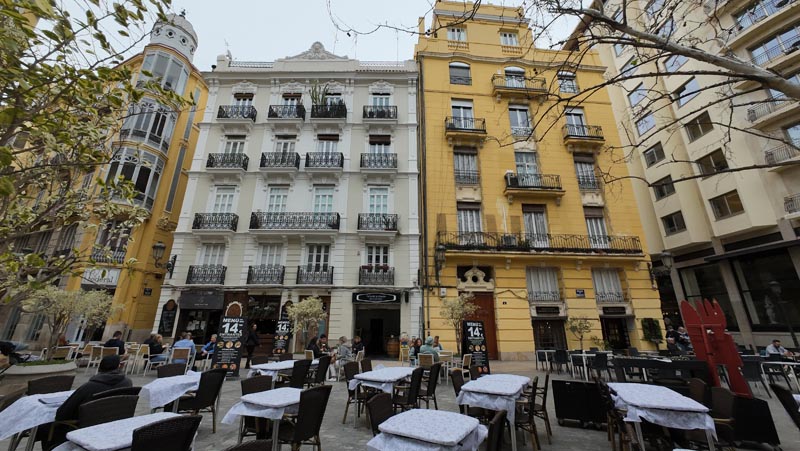
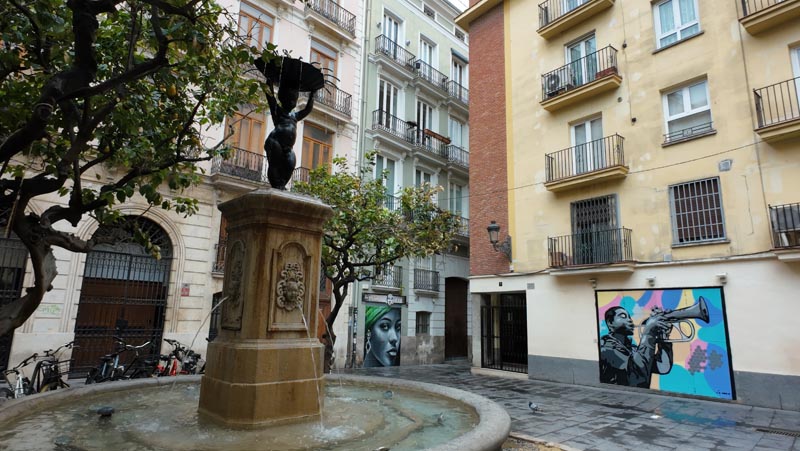
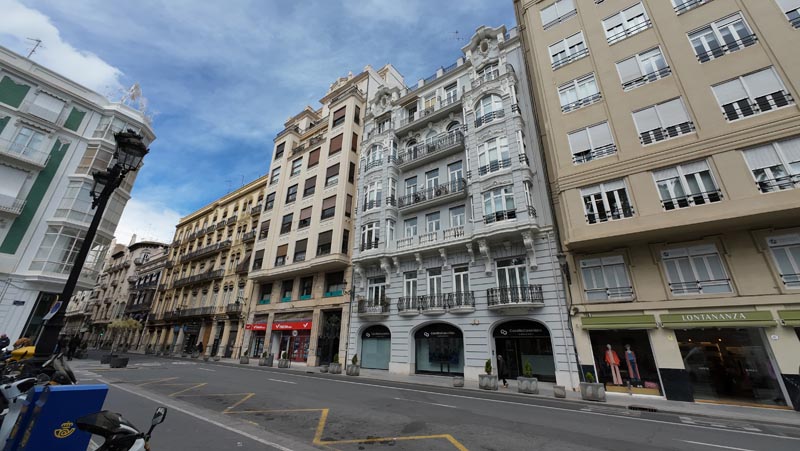
Many of the buildings were once palaces you can tell by their design and the gorgeous detailing and colours and sometimes its easy to miss these architectural beauties as they are smooshed between newer less interesting buildings
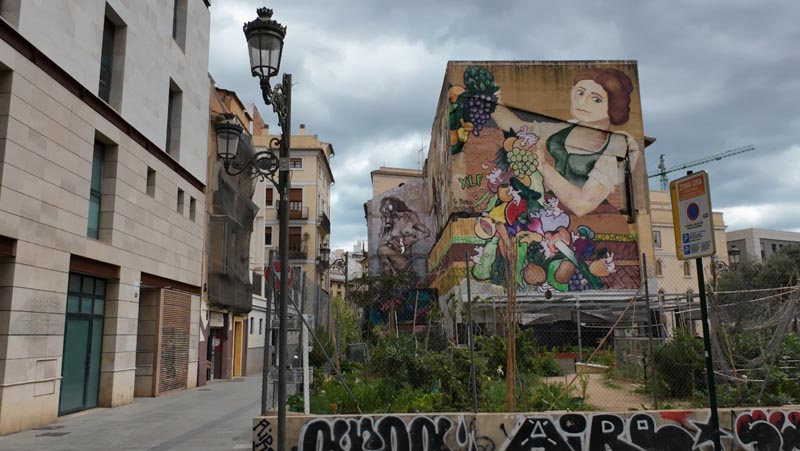
GRAFFITI & MURALS WALK :
I didnt get the chance to do this, would have loved to! Here is link below if you are lucky enough to be able to do it 🙂
https://www.visitvalencia.com/en/what-to-do-valencia/city-routes/graffiti-route
ORANGES!
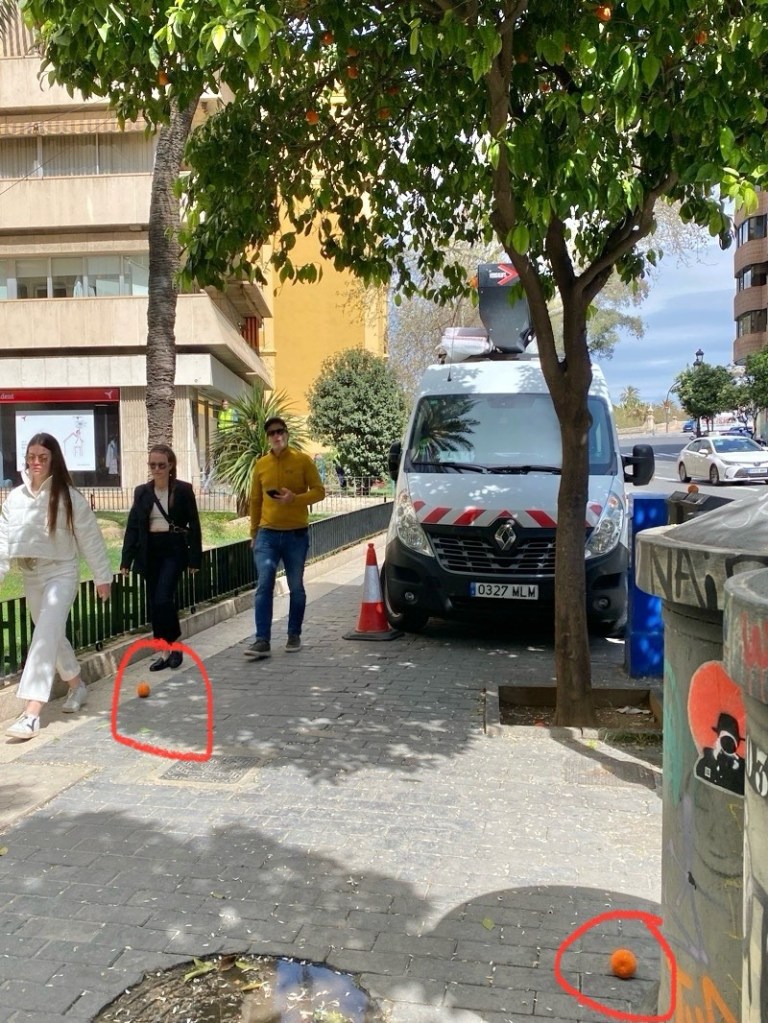
The Valencia region is the largest producer of oranges in Spain and the local oranges are sweet and juicy! The locals are so proud of their status with oranges and make sure to drink orange juice with their breakfast every day
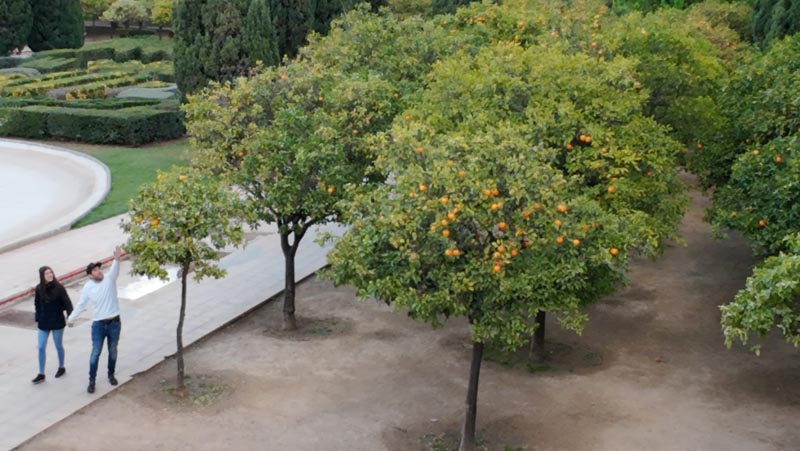
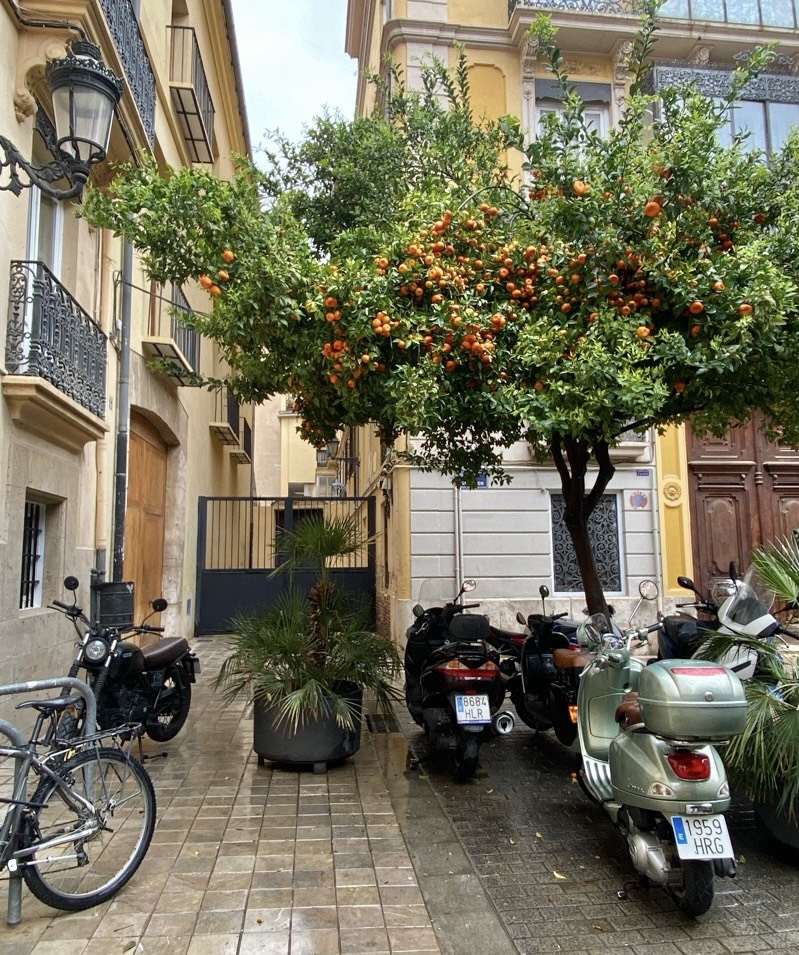
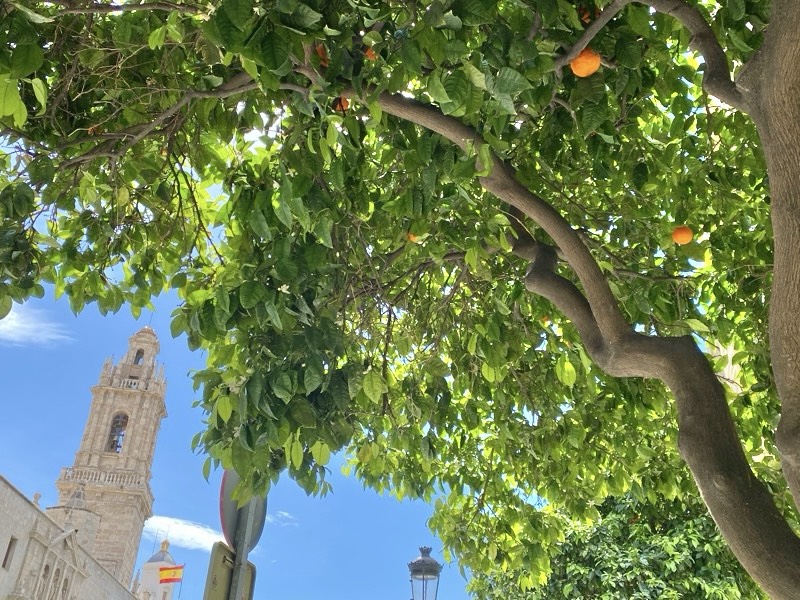
It was the end of orange season but there still were healthy looking oranges on some of the trees
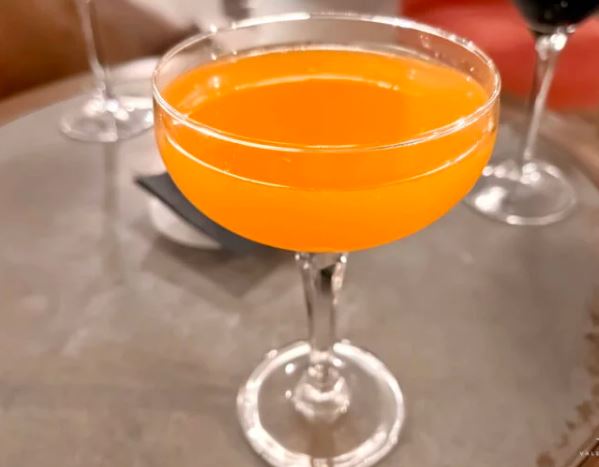
You have to try the famous Agua de Valencia – the famous Valencian cocktail made with fresh orange juice / cava / vodka / gin
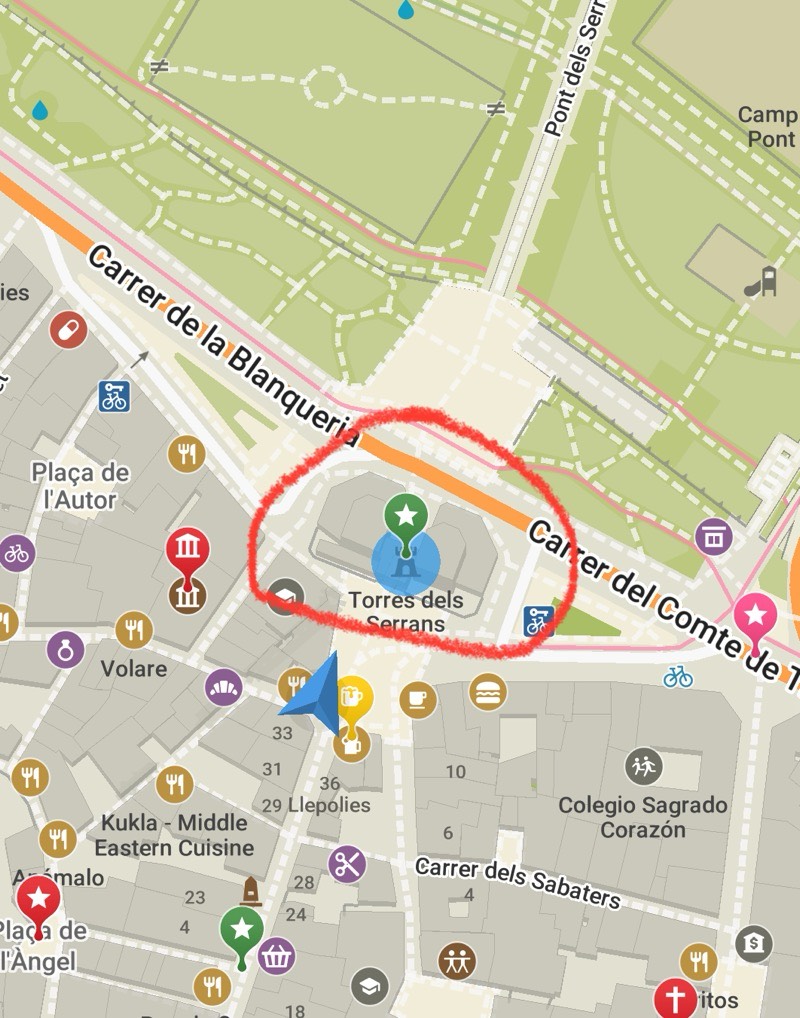
Valencia is also known for having the largest urban park in Spain, it stretches East to West around the city and taking on the pathway of the old Turia River (which has been diverted further out of the city) and the park attaches to the Bioparc which has the Fine Arts Museum, Palau de la Musica and Torres de Serranos
There were heaps of people walking, cycling and running through the gardens also walkkng their dogs and enjoying the green space, was really nice to see
BEACHES!
I didnt end up including the beaches in this visit as 1) I had been before and 2) it wasnt beach weather.
Valencia is also known for its beaches which are within easy reach of the city around 20-40mins and are really wide with plenty of space and often they arent crowded
I really recommend exploring the beaches in the area as there are many cafes and restaurants that line the shorefront as well and its a beautiful day out close from the city centre – try these 3 beaches! Playa del Cabañal / Playa de la Malvarrosa / Playa de Patacon
CENTRAL FOOD MARKETS
DONT MISS THIS! These markets are the largest fresh food markets in Europe!
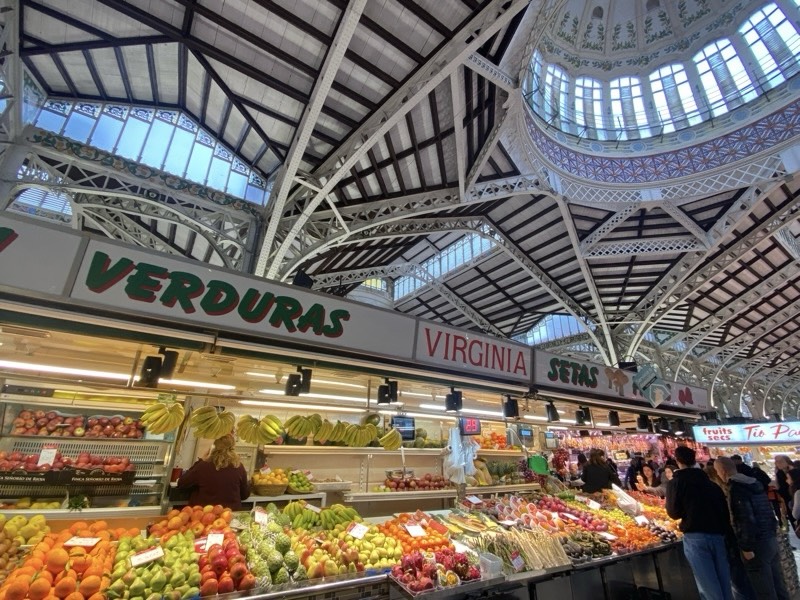
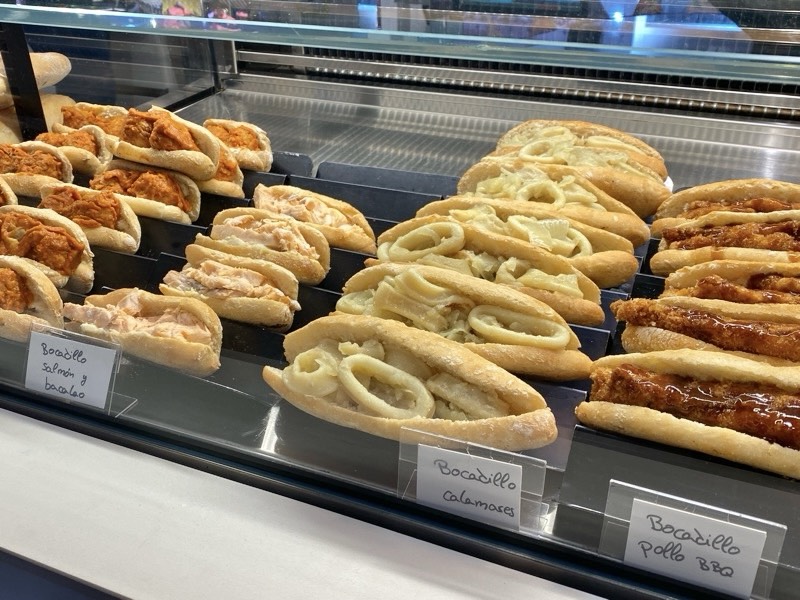
The day I explored, it was raining but perfect to head inside and explore and meander for a while through their stalls and try out some of their wares
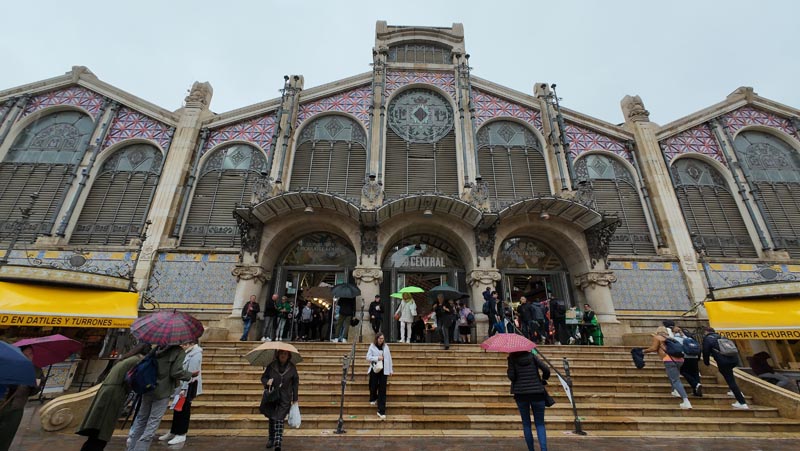
Looking at the markets from the outside, the building resembles a Cathedral style structure rather than a covered market …
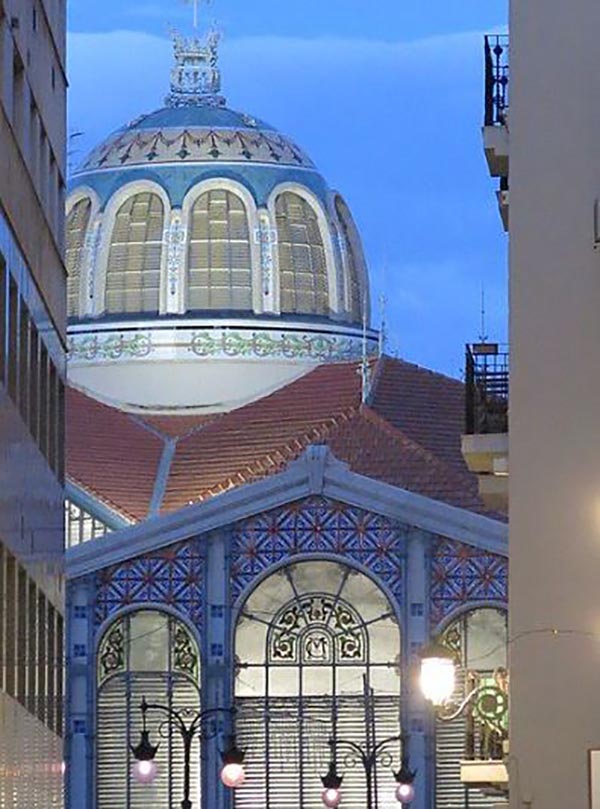
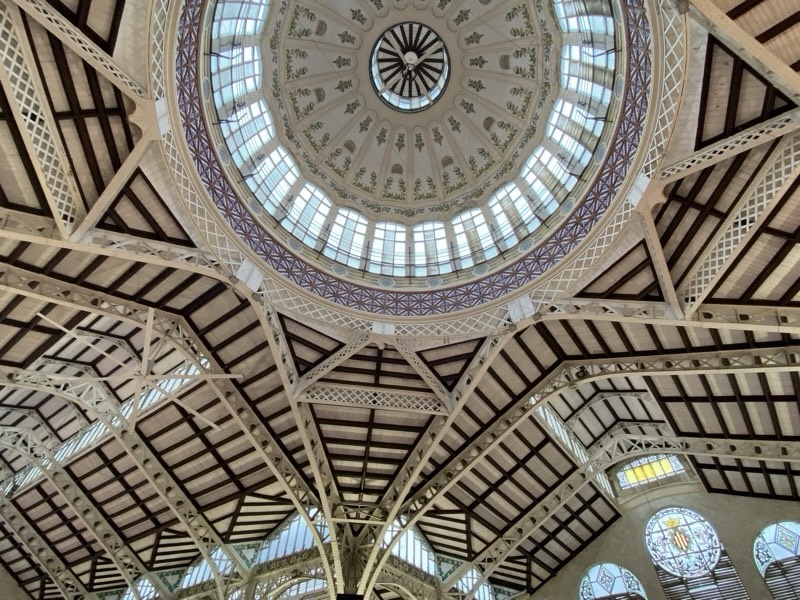
… and especially the central dome which looks like it should be on the roof of a church
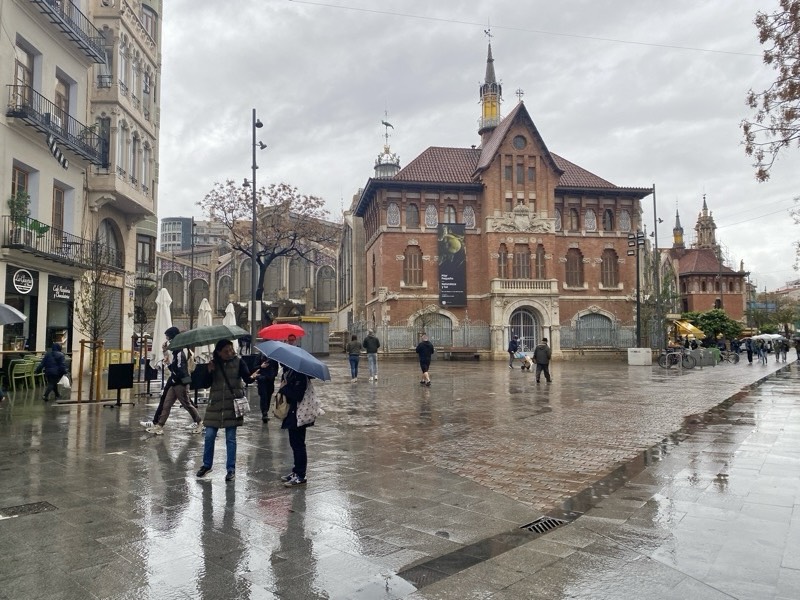
These markets used to be an open air market which began at the end of the 19th c.
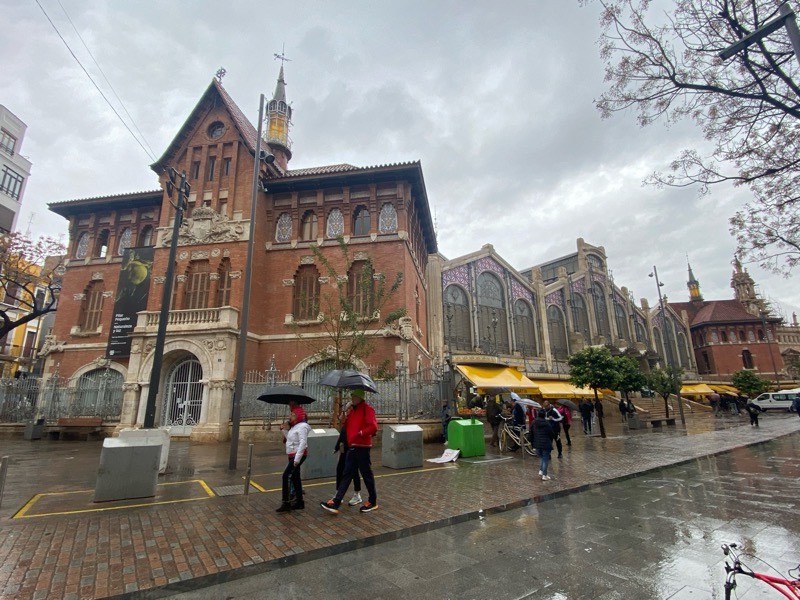
There are over 1200 stalls inside upstairs and downstairs
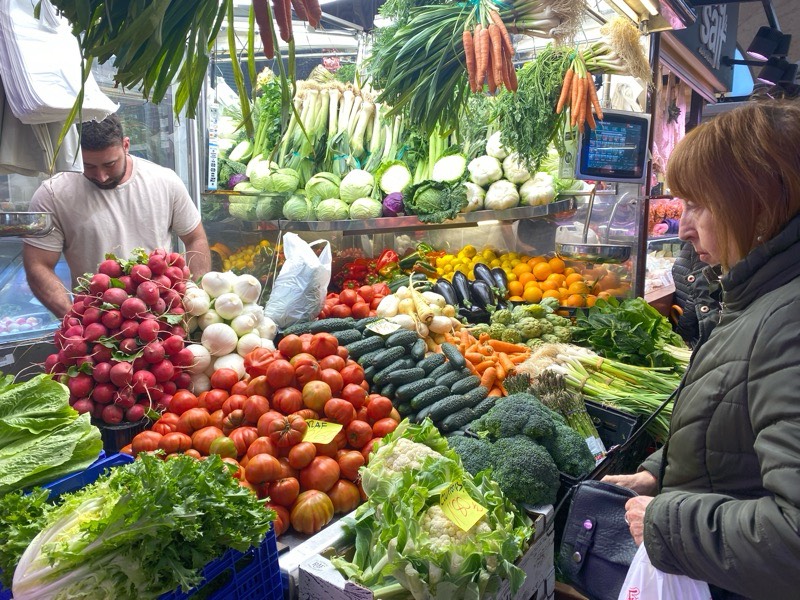
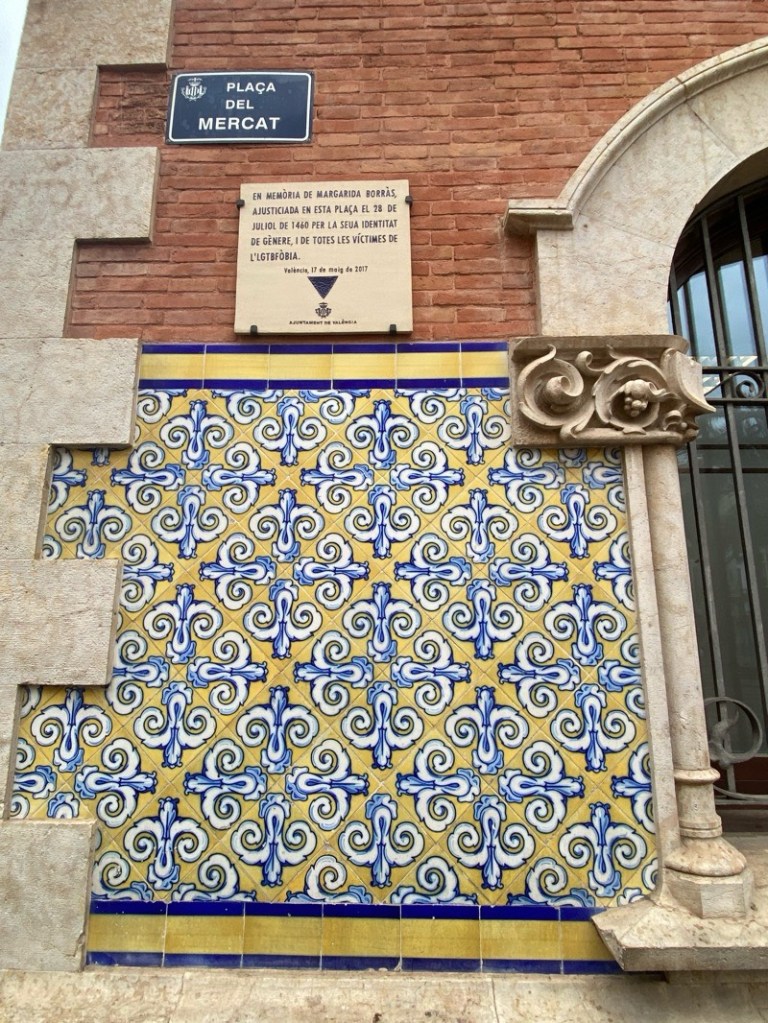
There were many impressive buildings in the Placa Del Mercat surround the old markets – detailings and designs can easily be missed as there is so much to see and explore
THE SILK EXCHANGE
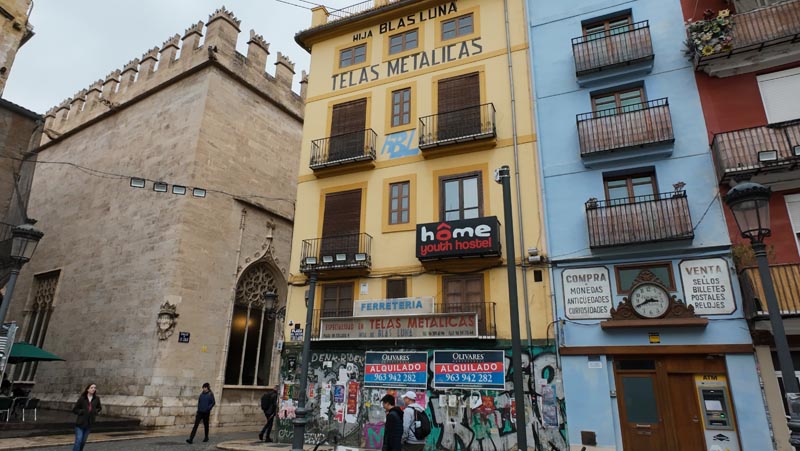
The Lonja de la Seda or Silk Exchange is a late Valencian Gothic-style civil building
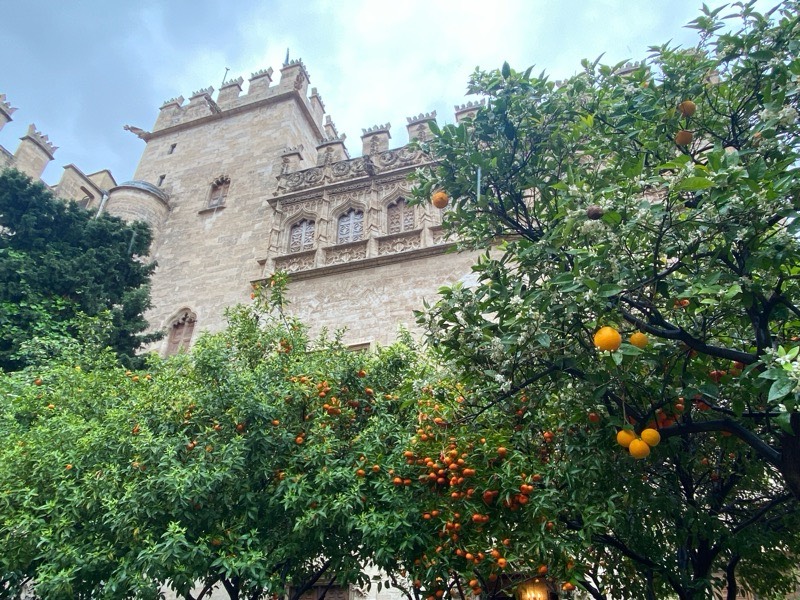
Said to have been built between 1482 and 1533 and composed of 3 parts and also an Orange Garden in the walled courtyard
Valencia’s commercial prosperity reached its peak during the 15th c and led to the construction of this newer building which supercedes the old one which is behind this one
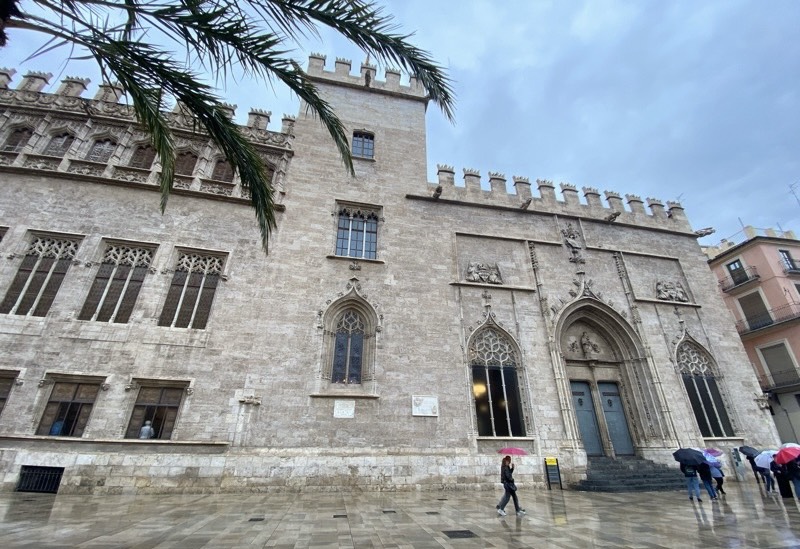
The Building has a very Venetian look to it from the outside with ornate and intricate designed windows
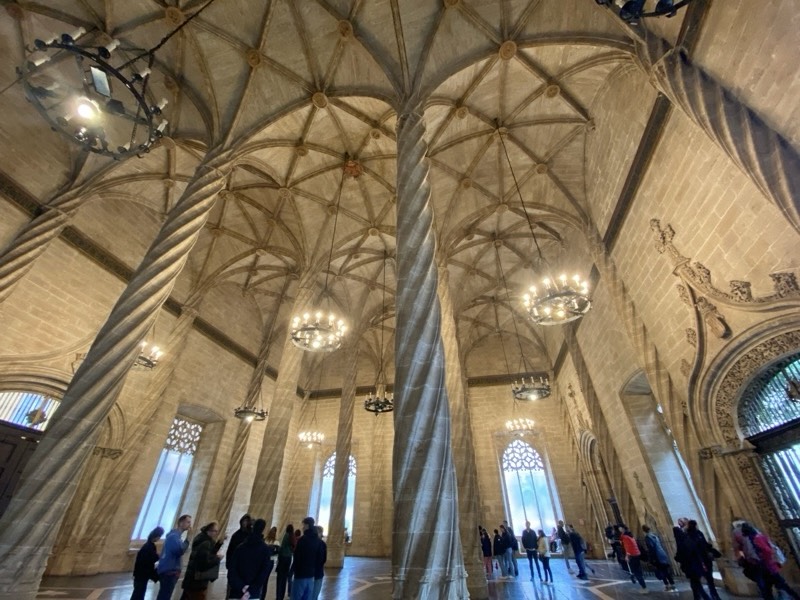
This is the main hall called The Trading Hall and was the financial centre of the La Lonja and its here that Merchants worked on their contracts
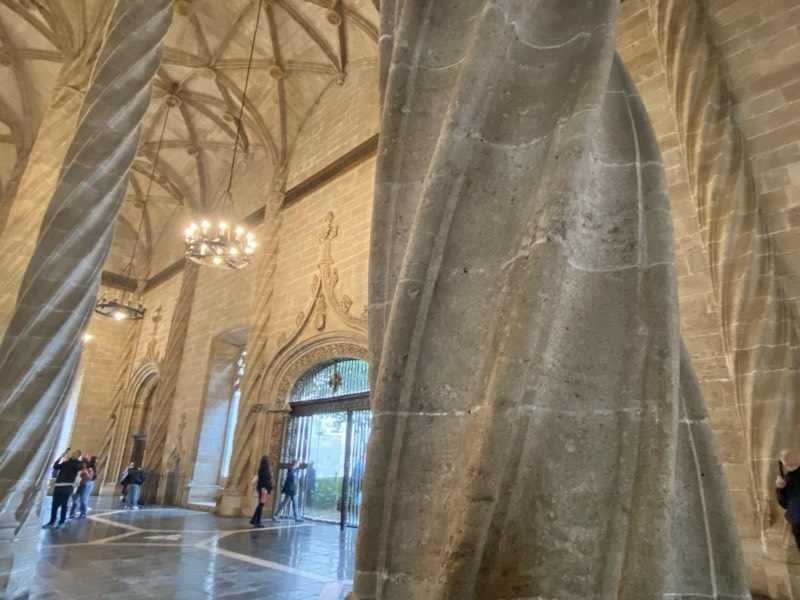
Its supported by these absolutely amazing twisted marble columns which I couldnt stop staring at and analysing how humans could possibly have made these back then when everything just crumbles these days and we are meant to be more advanced (?) lol … anyways
GATE OF SERRANO
It is one of the twelve gates that formed part of the ancient city wall, the Christian wall – it’s in Valencian Gothic style
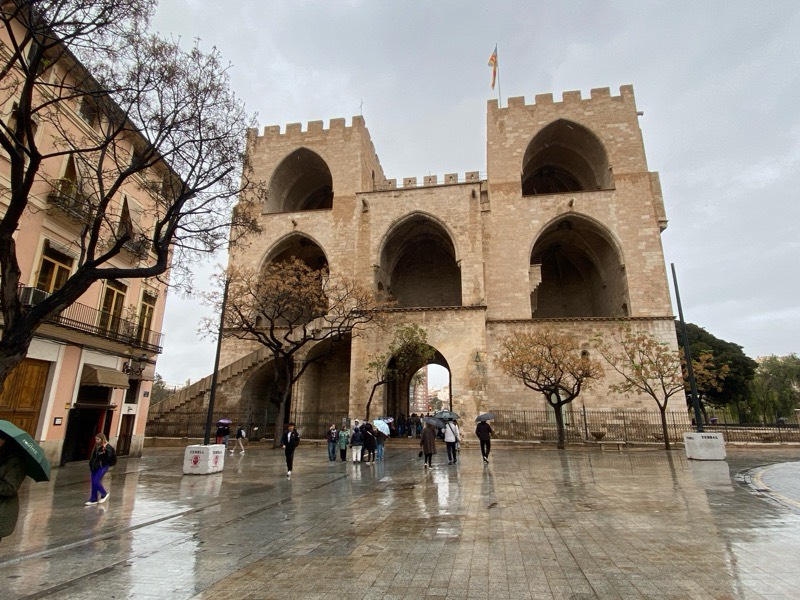
Said to be built in the 14th c. and 1 of 12 gates that formed part of the ancient city wall surrounding Old Town Valencia – unfort for whatever reason (!) the city walls were pulled down in 1865 and this is one of the best preserved parts of the wall that remain
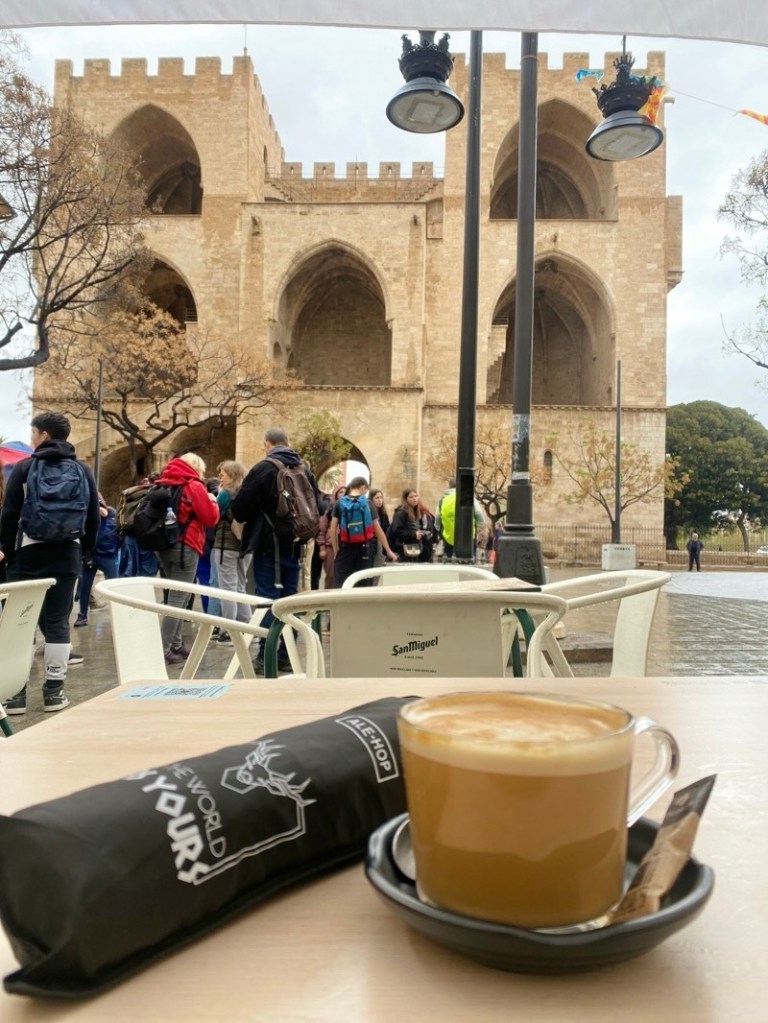
In 1870 the towers were a prison at one stage
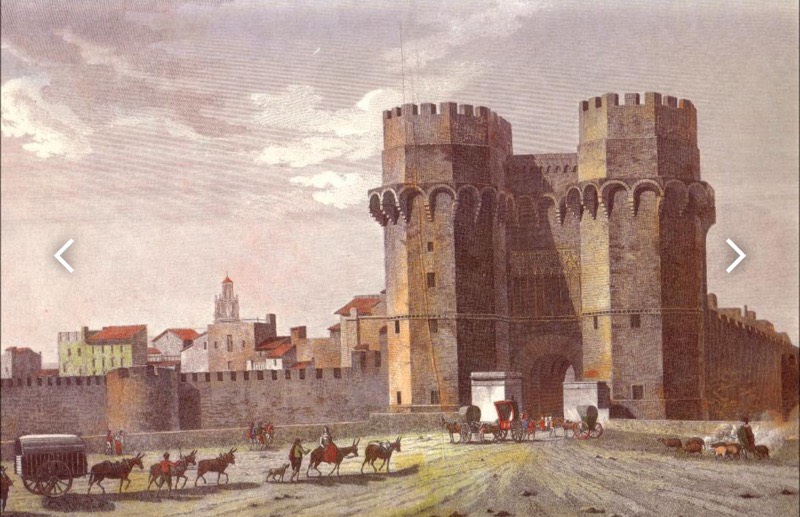
It is an important landmark and one of the best preserved monuments of Valencia.
This was the main gate so was originally built with a defensive function
THE CATHEDRAL
The line to get into the cathedral was so long! I also want to climb the Bell Tower and the line to that is even longer!
I’m staying right next to the Cathedral I think I’ll need to come back at a more quiet time, I’ll take a look out my balcony and see when the crowds are the least busy, prob in the morning
Valencia Cathedral was said to be built in 13th c in Gothic style initally but construction went on for many centuries so also has a mix of Valencian Gothic, Romanesque, Renaissance, Baroque and Neoclassical
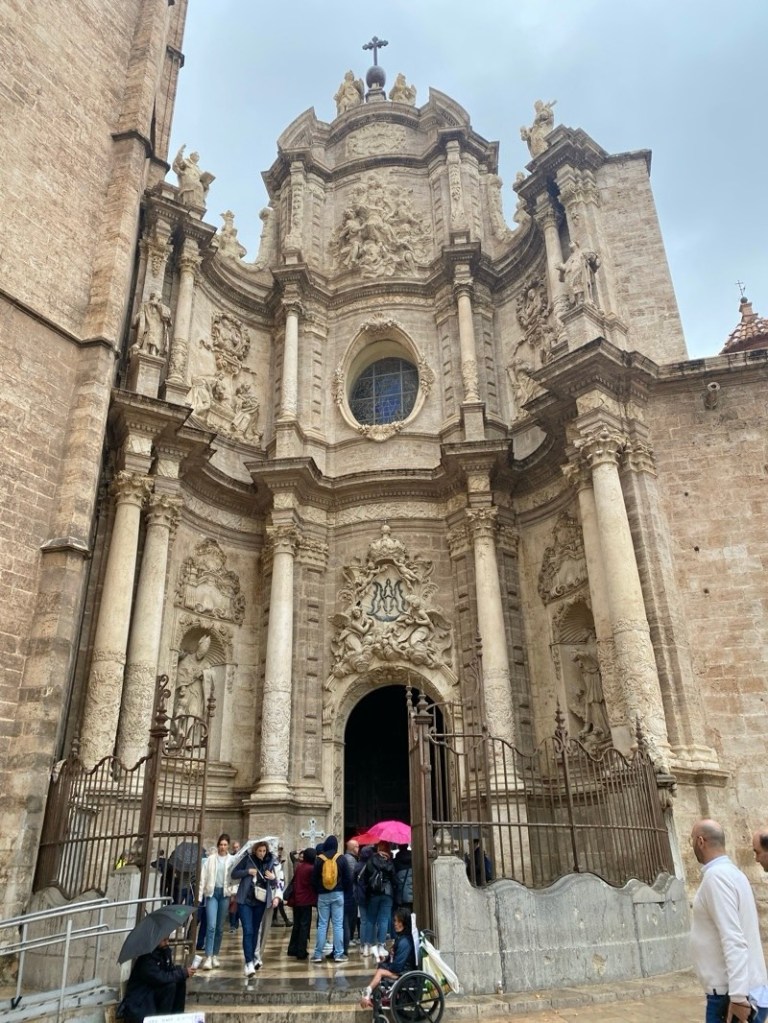
A rainy day today so it was perfect to explore the Cathedral
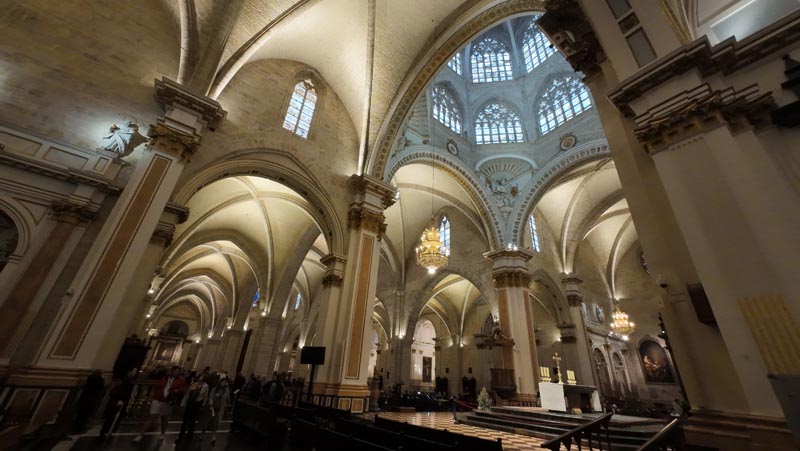
Stained glass windows are made with thin sheets of alabaster which is common in Valencia and I noticed many of the church windows were made with this
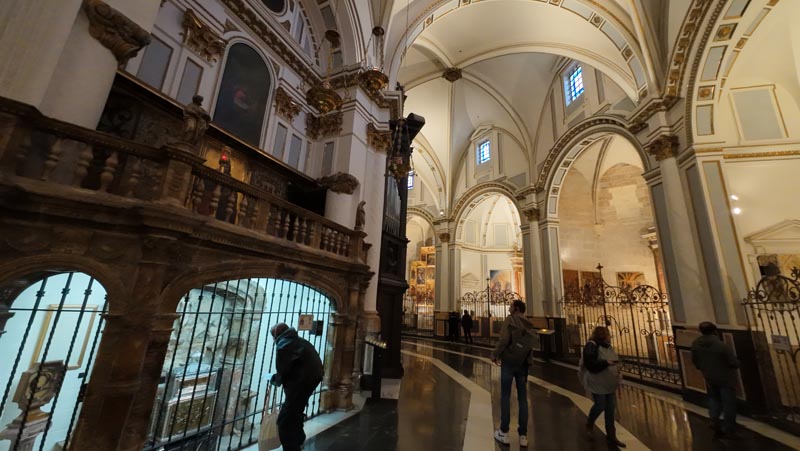
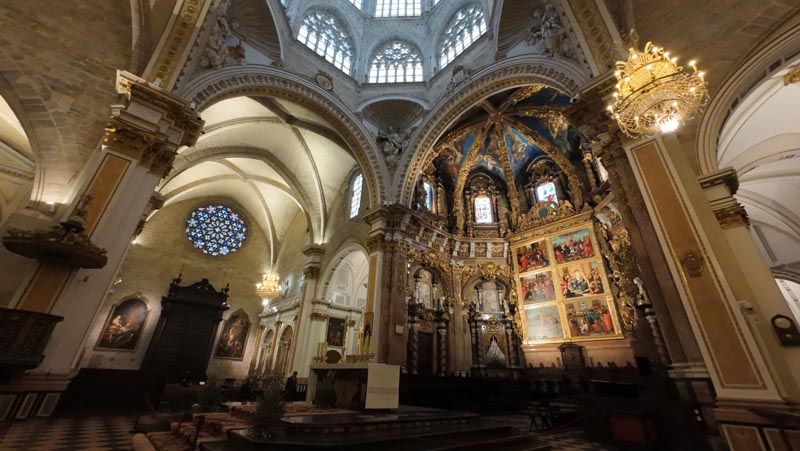
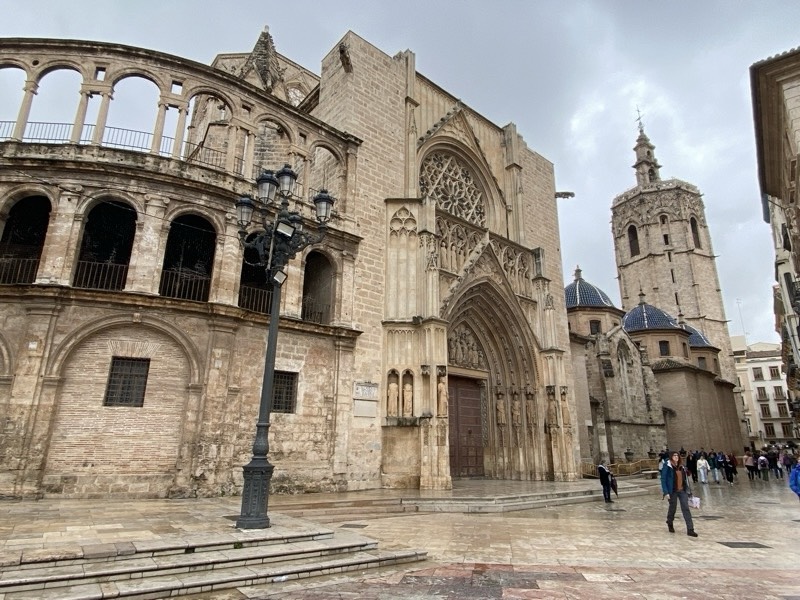
The side view of the Cathedral with its different arcitecture and building materials
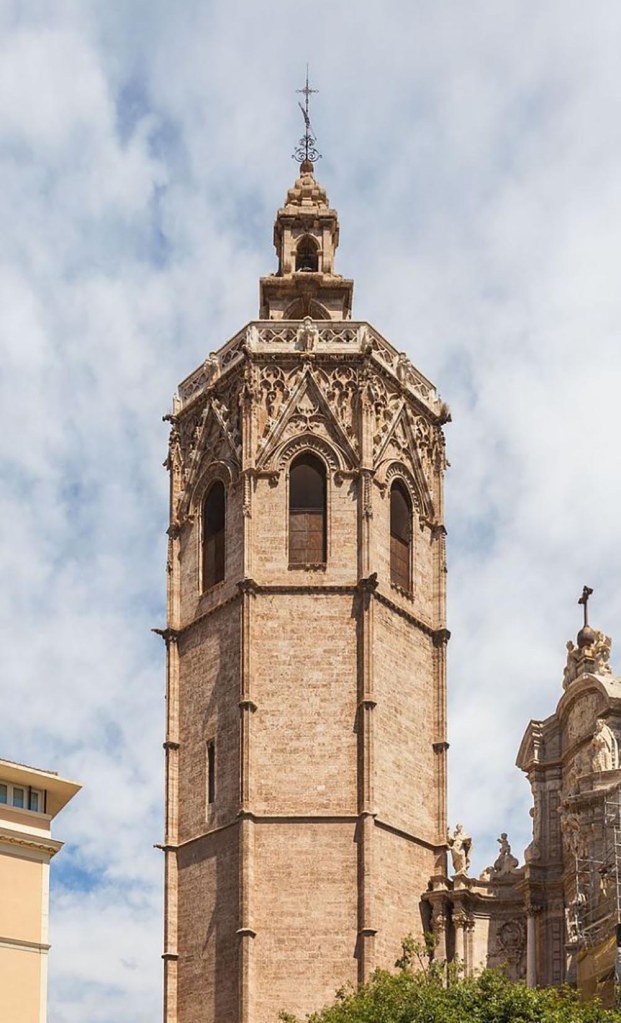
MIGUELETE TOWER – I stood in line for around 30mins
Made in the shape of an octagonal prism in Valencian Gothic style, its 51m to the viewing terrace and 63m in total
Originally it was a seperate tower but then at some stage was attached to the Cathedral when it was extended in 15th c.
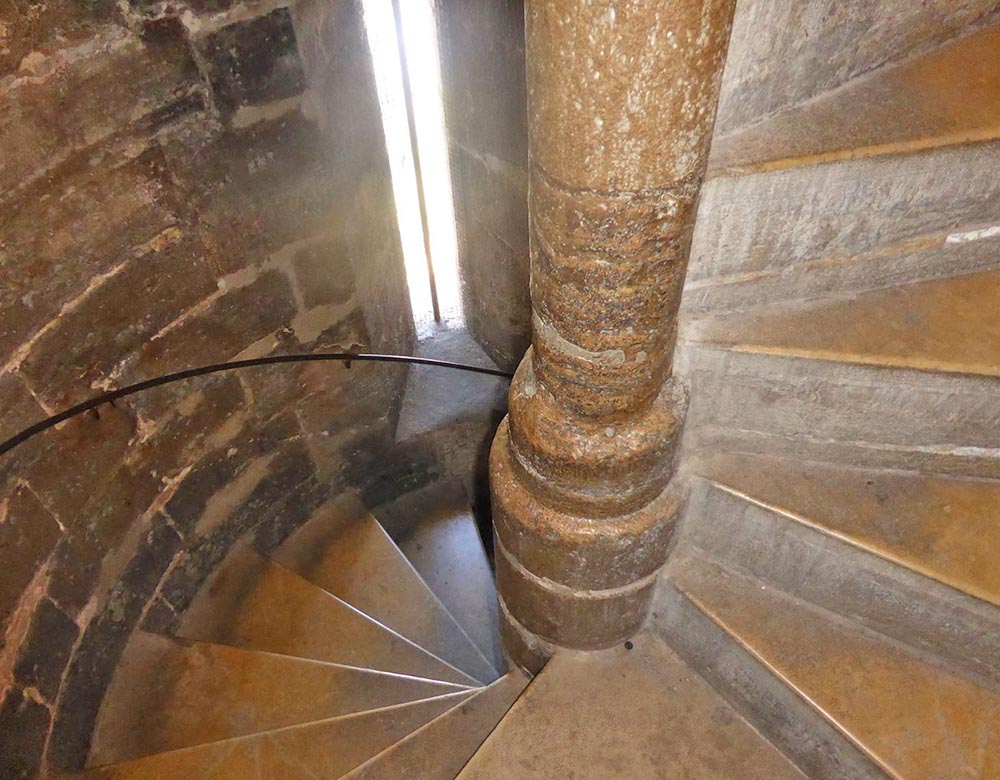
There are 207 steps to climb to reach the top – well worth it though!
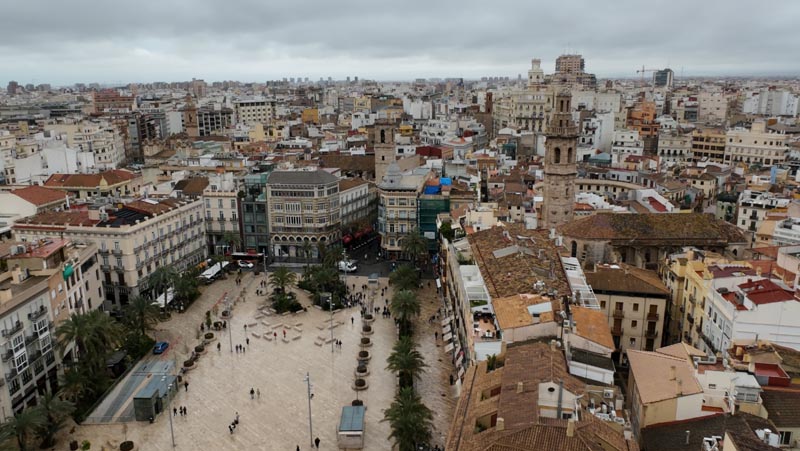
THE HOLY GRAIL
THE HOLY GRAIL (the cup used by Jesus at the Last Supper) is said to be housed here in the Chapel of The Holy Grail
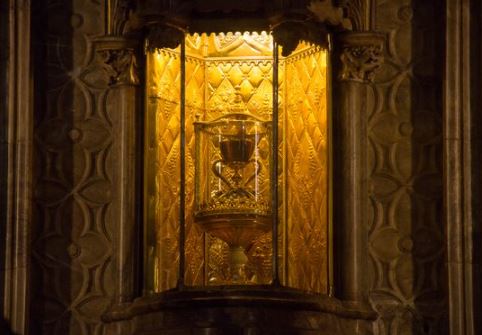
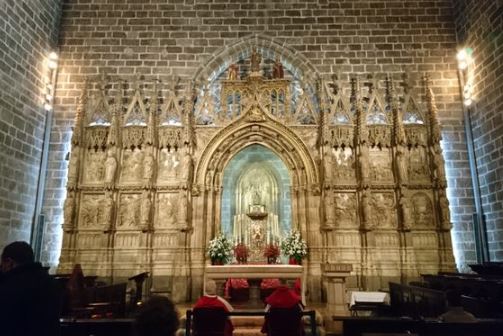
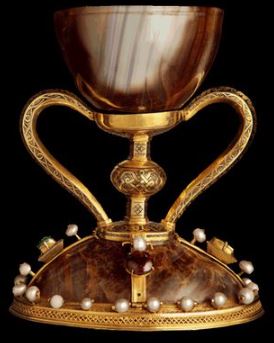
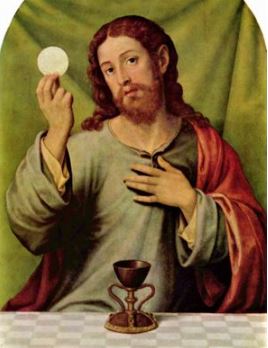
At the beginning of the 15th c. the chalice was brought to Valencia by King Alfonso the Magnanimous. During its first few years in Valencia, the chalice was kept in the Royal Palace and in 1437 it became a possession of the Cathedral and on display since 1916
Now, this is what has been said and Ive checked online but who knows what the real story is and if this really is the Holy Grail, it would be pretty cool if it was though!
EXPLORING SOME MORE INTERESTING BUILDINGS…
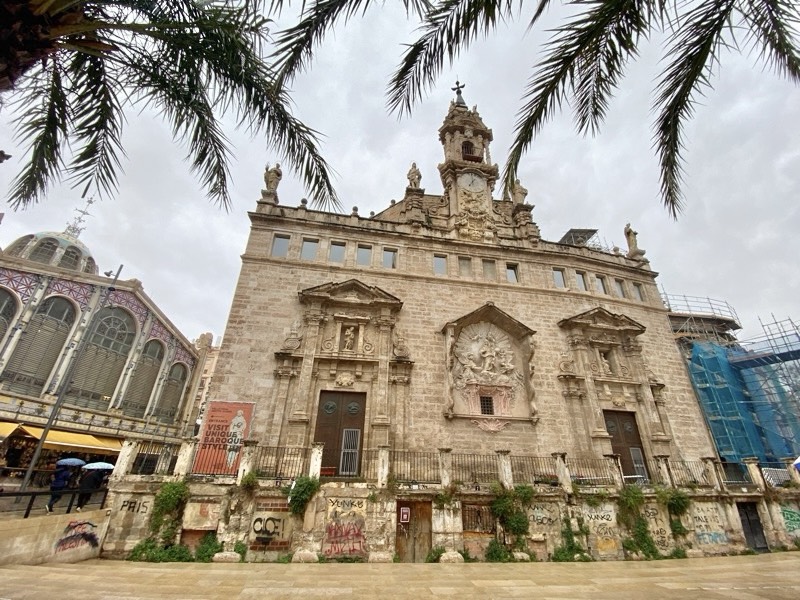
ROYAL PARISH OF THE ST JOHNS – This building is a perfect example of an ancient Mosque then having a Catholic Church built on top of it! its an interesting Baroque styled building and rises a few metres above the Merkat Square
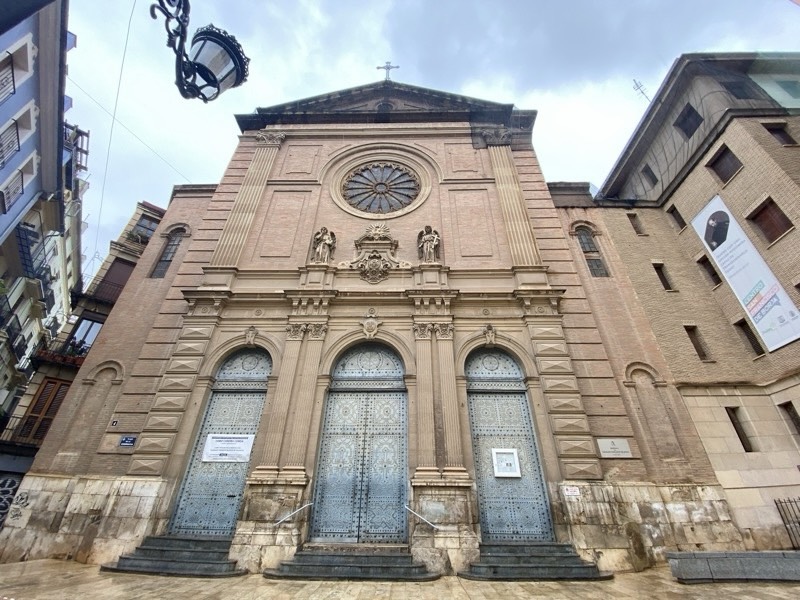
Església de la Companyia de Jesús – Located in the Plaza de la Compania – this church was part of a group of buildings that the Society of Jesus had here and was and still is a residence for Jesuit Priests
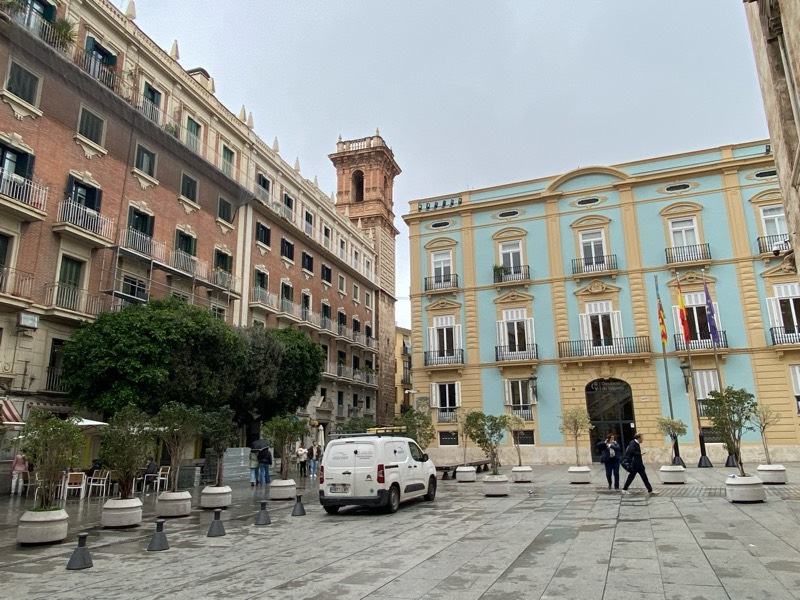
PALAU DE LA BATLIA / Headquarters of THE PROVINCIAL COUNCIL OF VALENCIA –
Valencia is a Province of Spain approx. 2.6 million people – 1/3rd live in the Capital, Valencia which is the 3rd largest city in Spain with around 860,000 pop.
The headquarters are in this beautiful Palace in the city centre
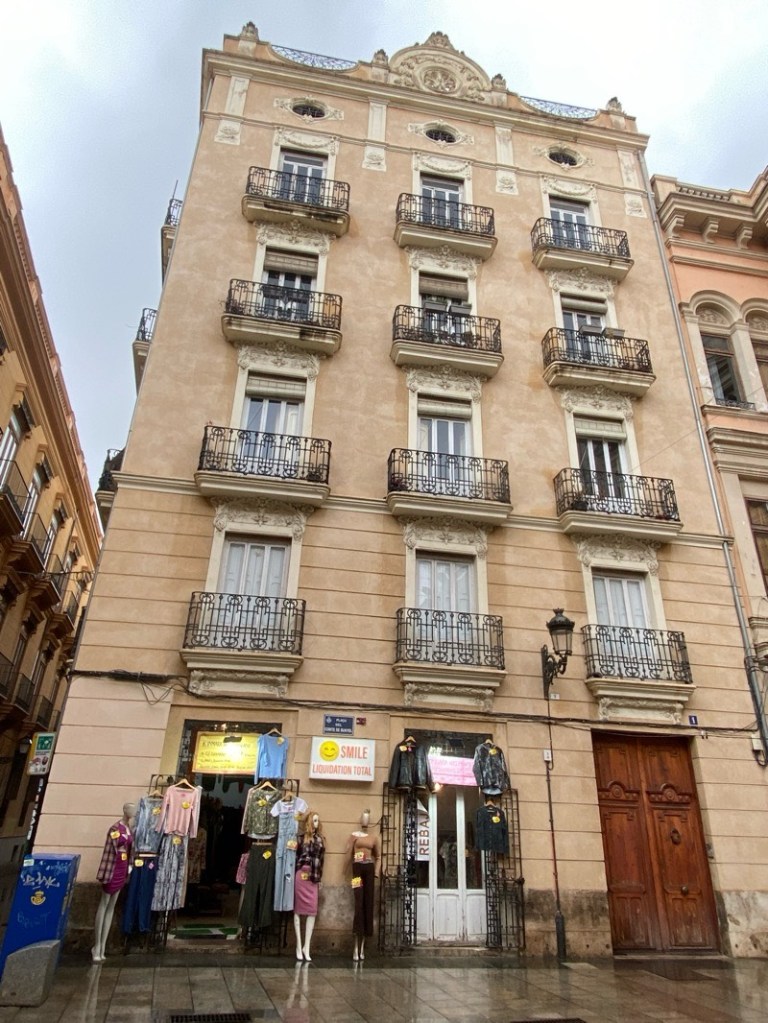
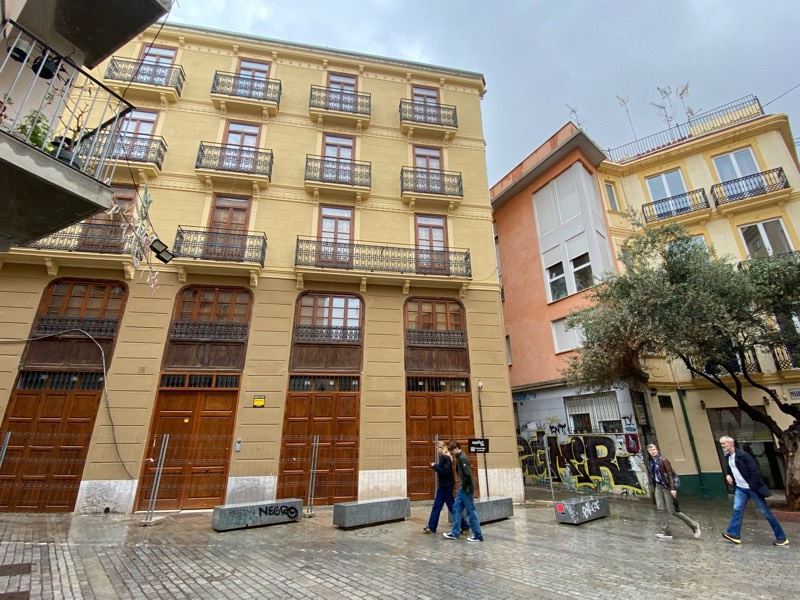
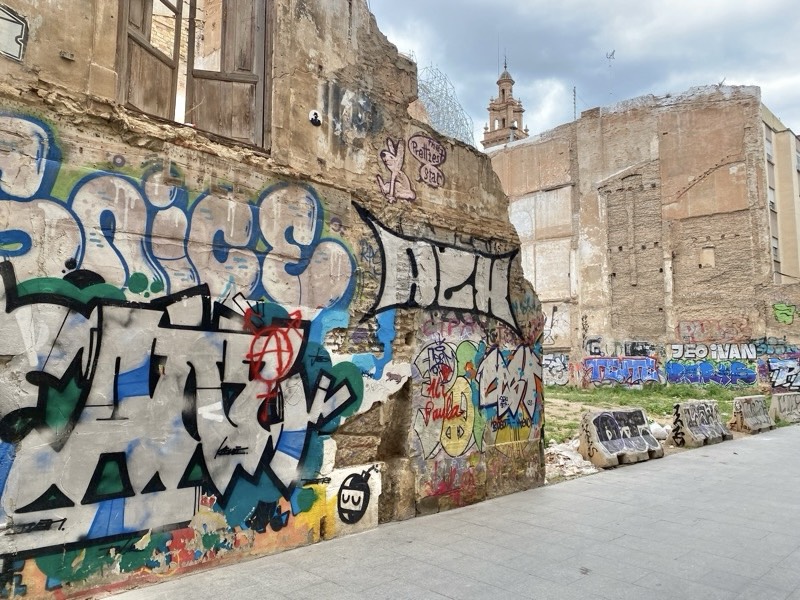
It’s really sad to see but there are a lot of historic buildings around the outskirts of the town that have gone to ruin – would love to see some investment in building these up and creating them into some sort of apartments (there are many homeless) or creative spaces (there are many artists)
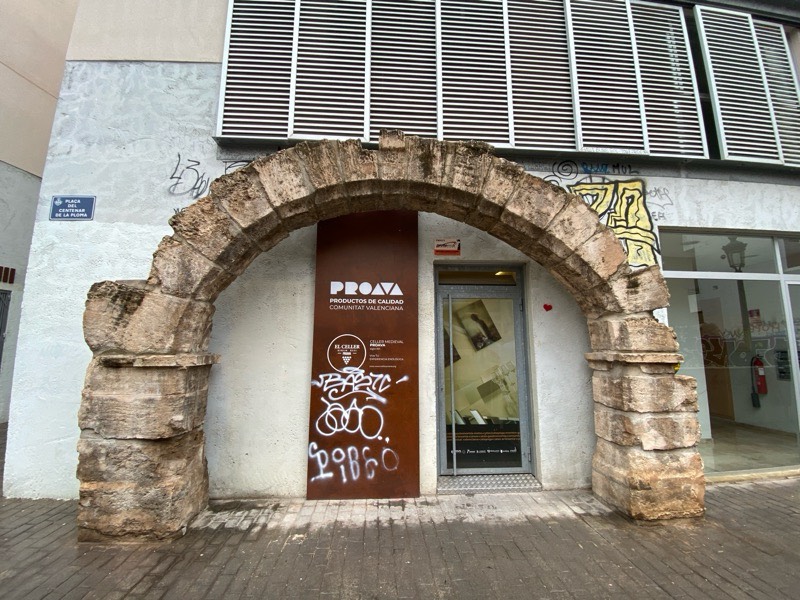
CARMEN CHURCH & CONVENT – said to have been founded in 1281
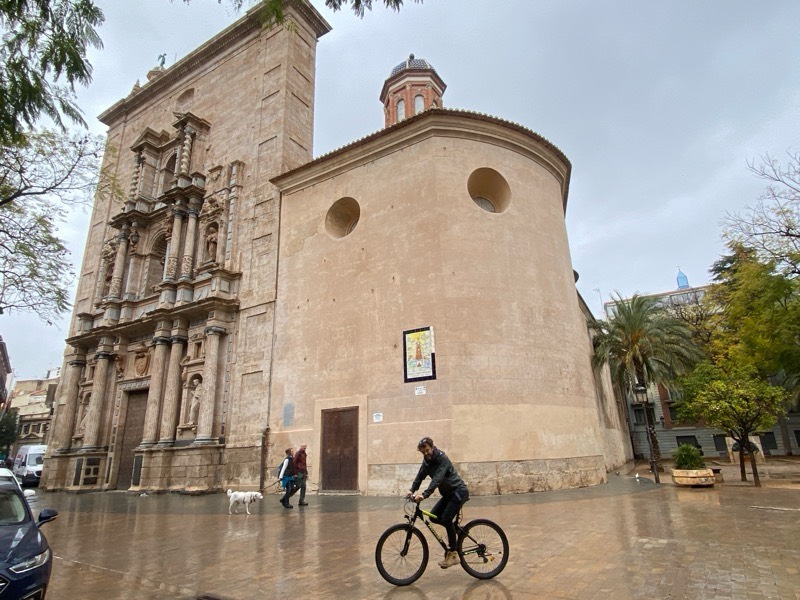
The Church is now used as a museum for 19th c Fine Arts and Modern Arts – Instituto Valenciano de Arte Moderno (IVAM)
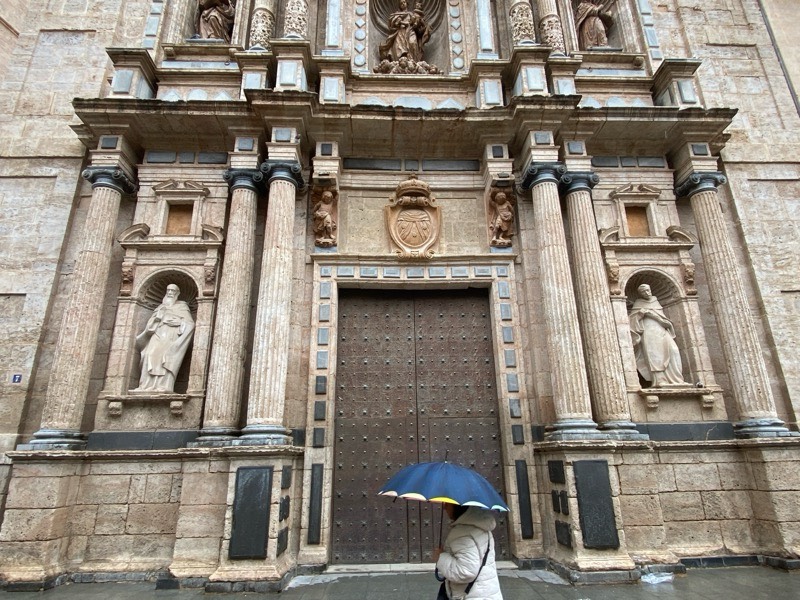
It is one of the best preserved monuments in Valencia
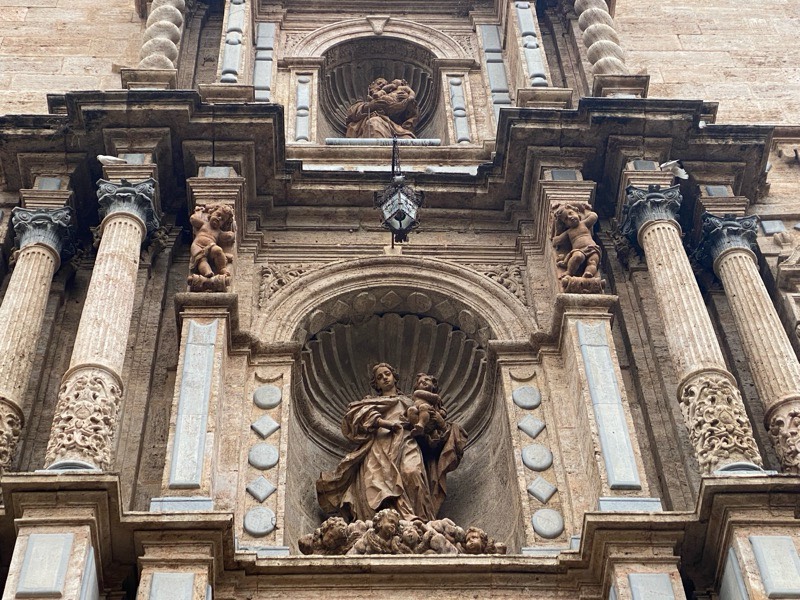
The detailed sculptures on top of the main entrance doorway
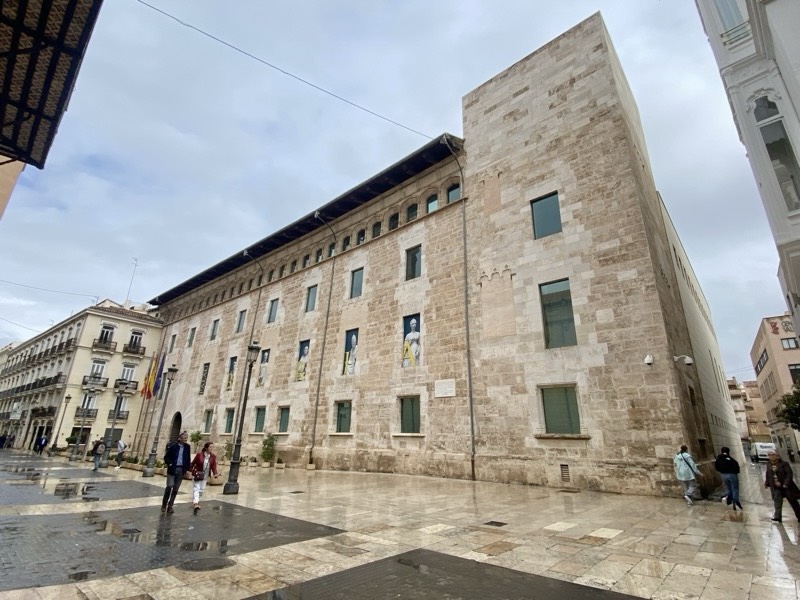
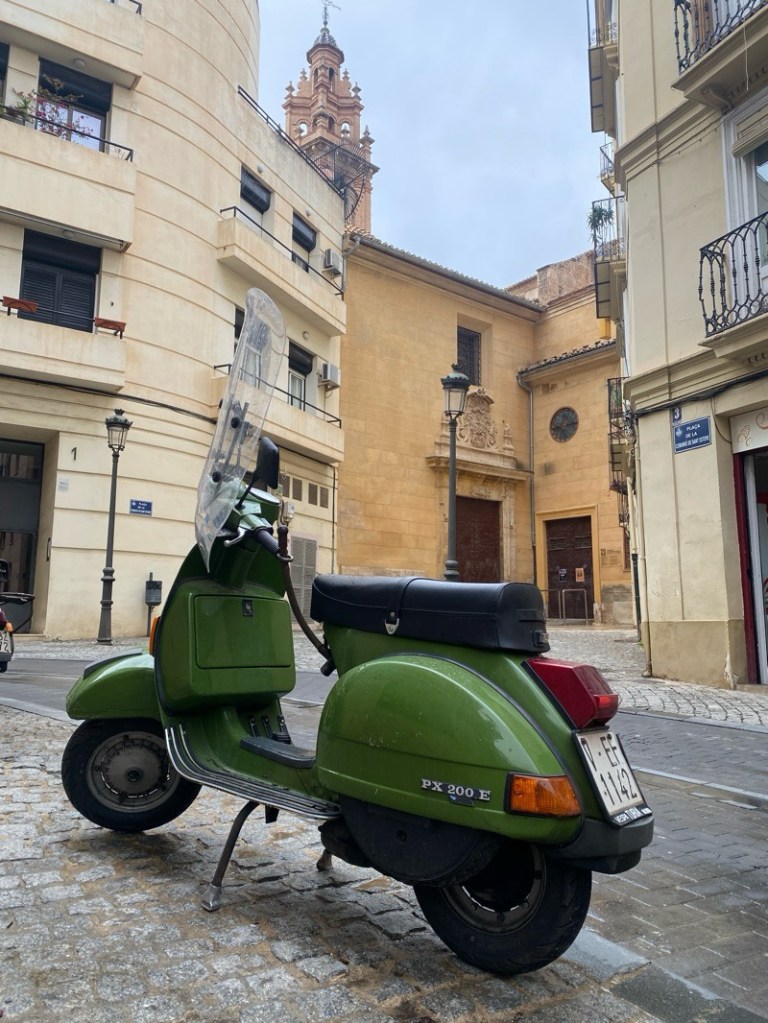
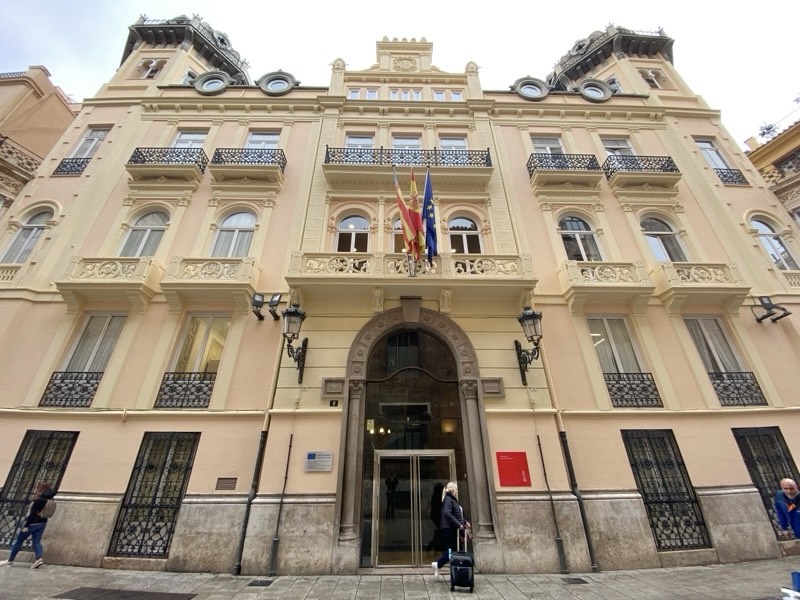
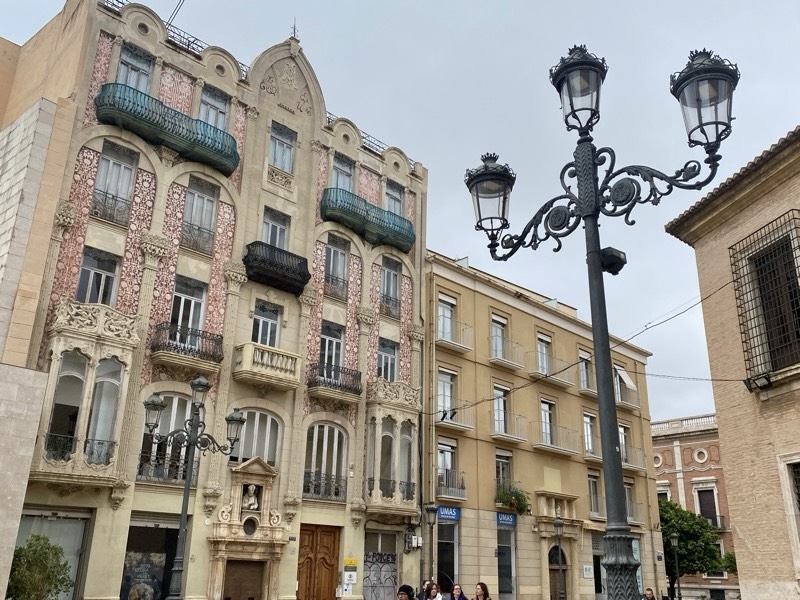
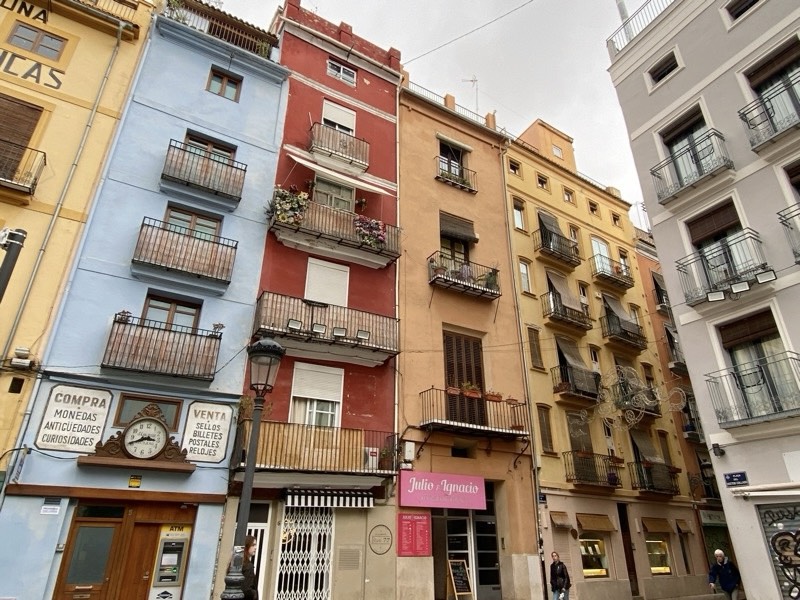
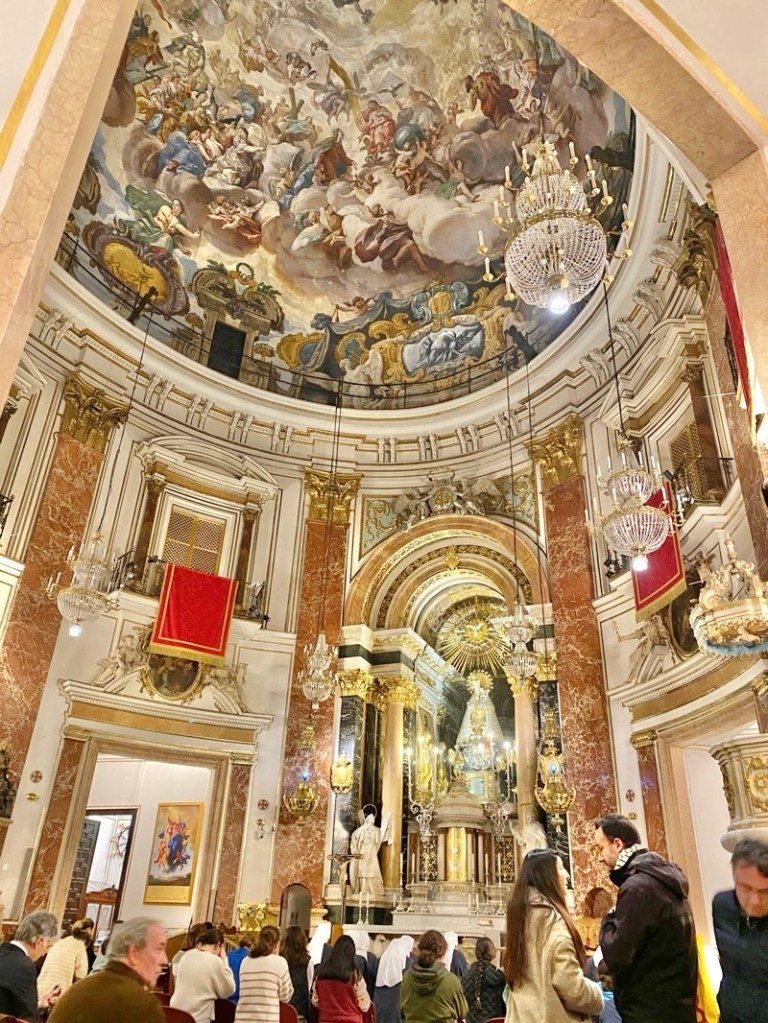
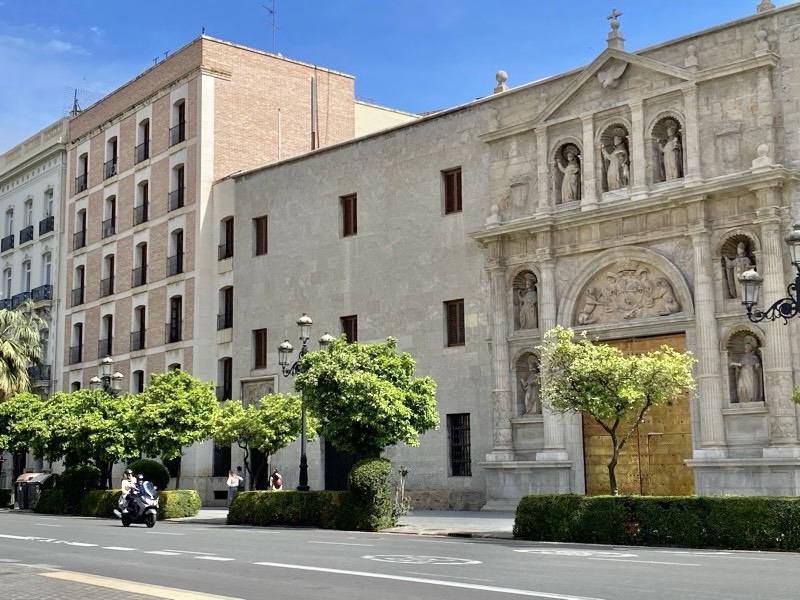
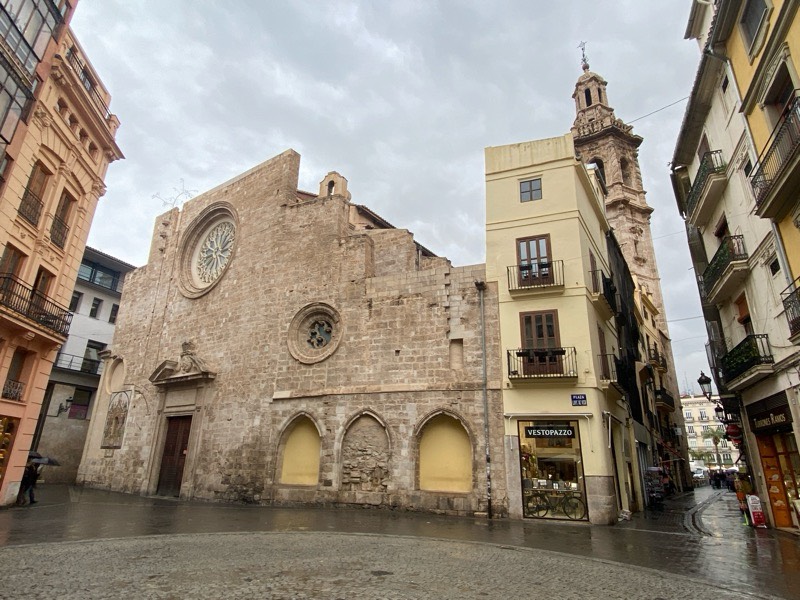
So many churches scattered around the whole city with amazing facades
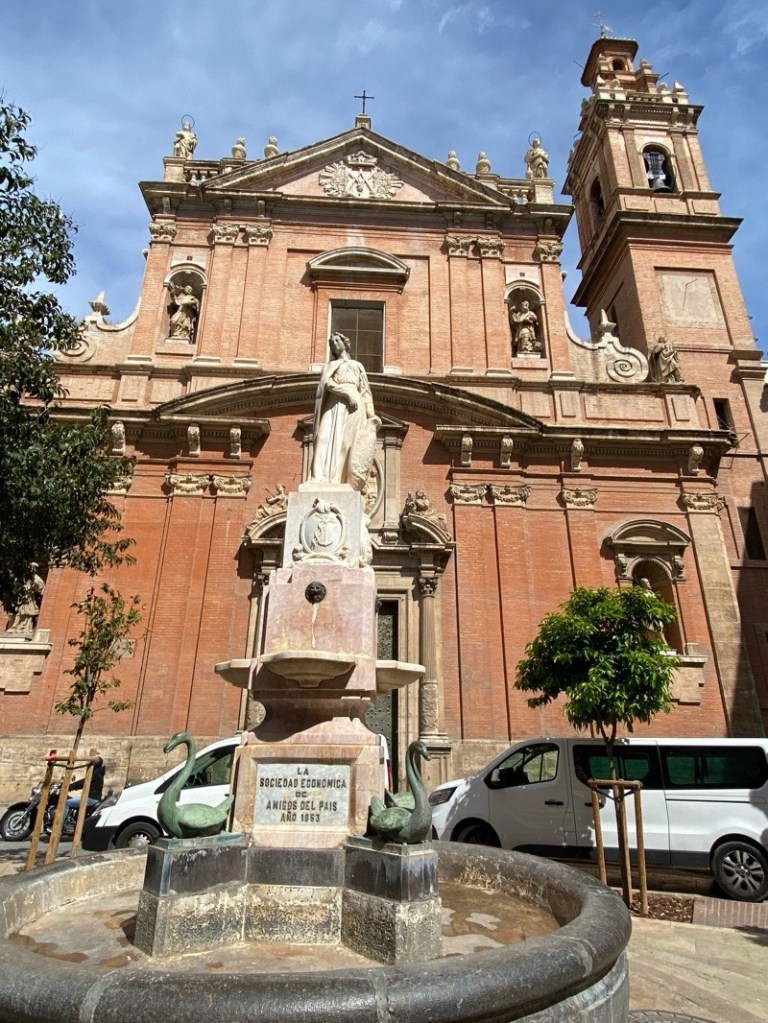
I couldnt keep up with the amount of old buildings that craved to be explored…
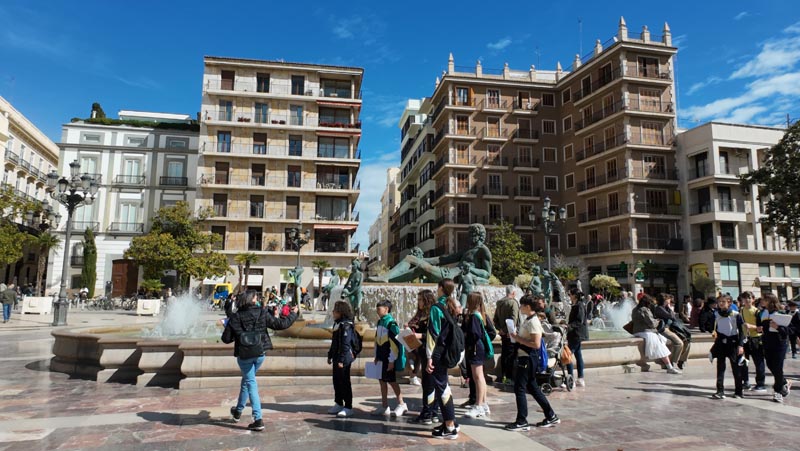
Sunny day today! 🌞 It’s actually quite hot today – even more people are out and about and huge tour groups
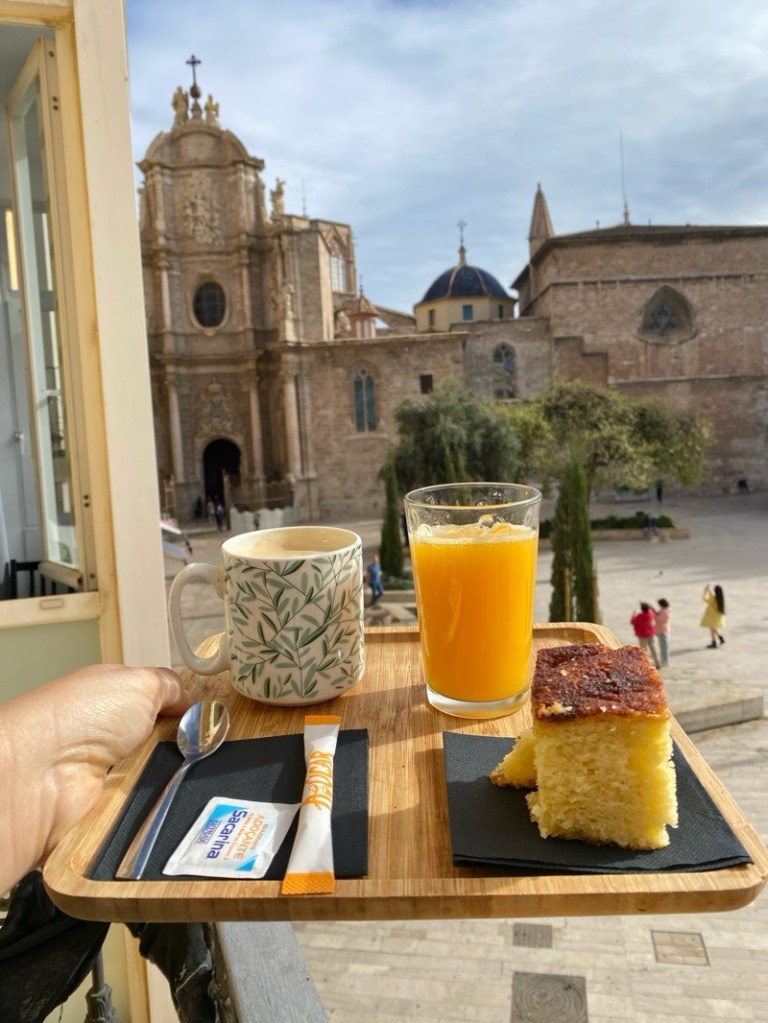
Valencia is so well known for its delicious oranges and is famous for freshly squeezed juice to have with their breakfast
LA ALMOINA ARCHAEOLOGICAL MUSEUM
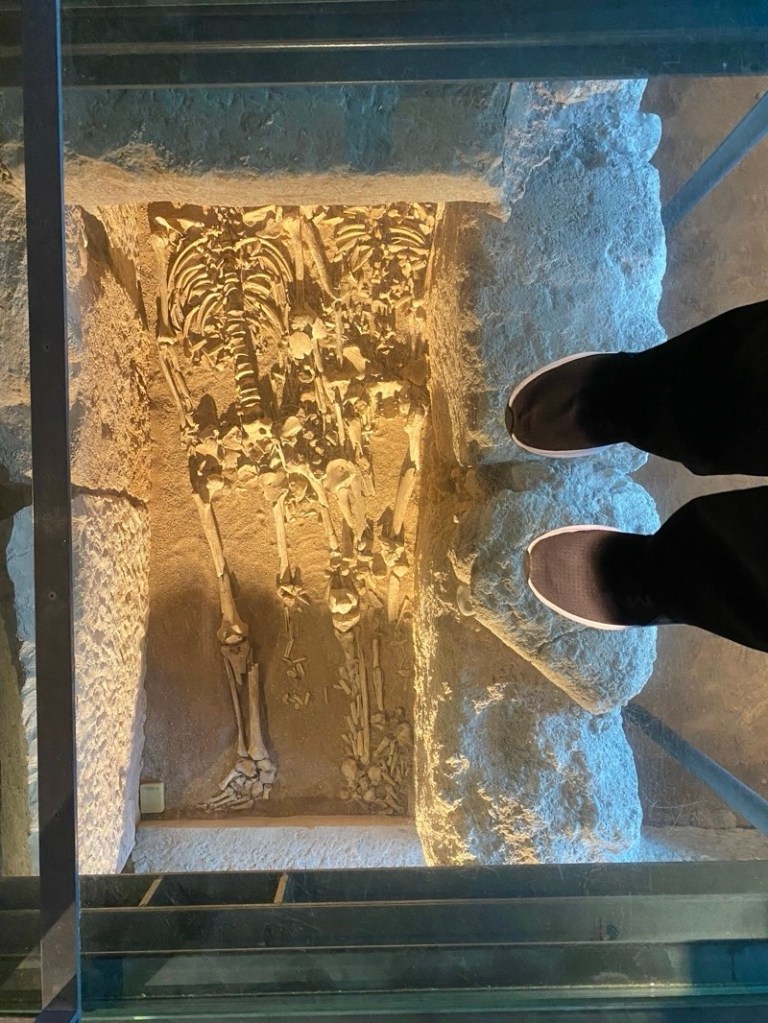
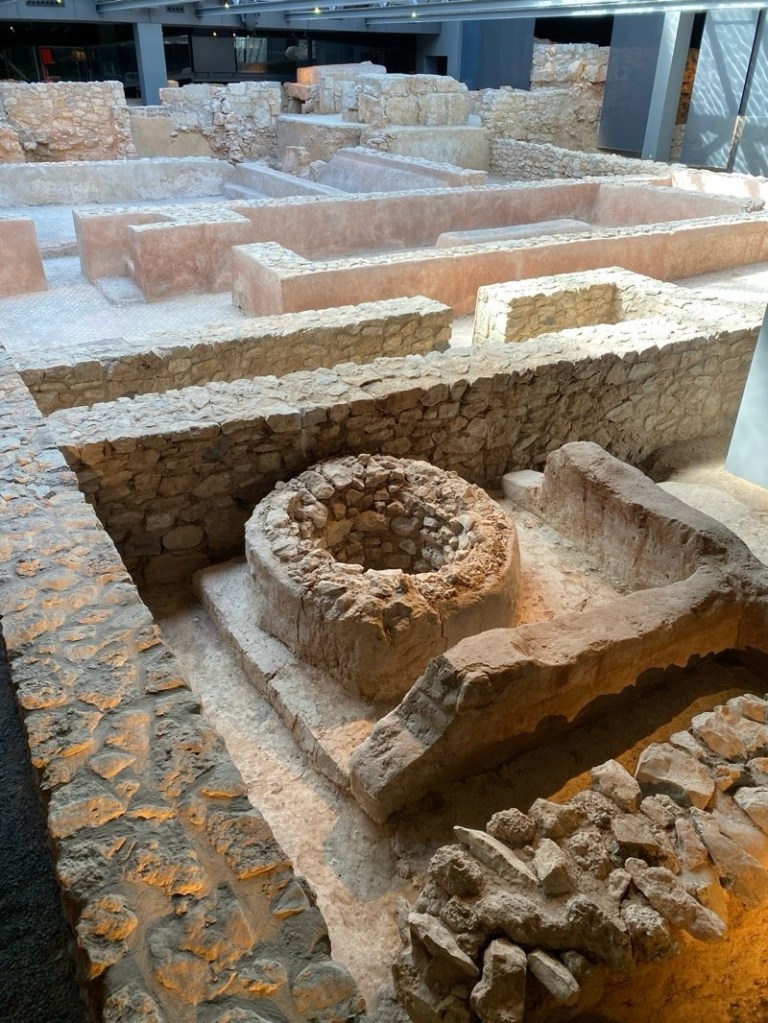
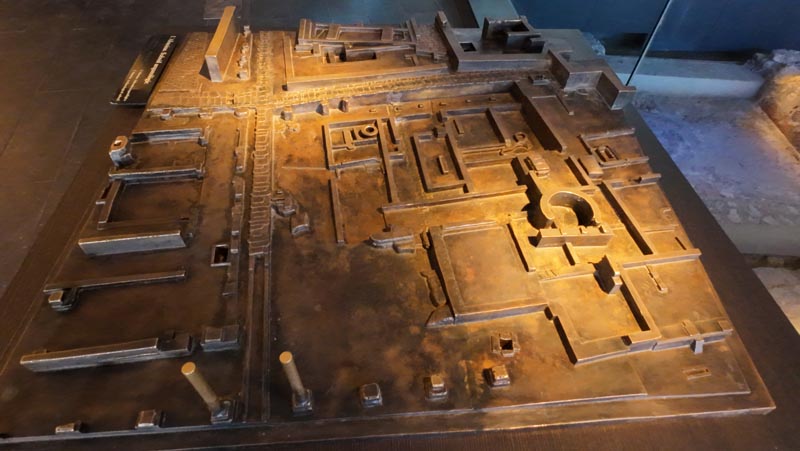
A museum where you can visit the underground which houses the old Roman ruins which the modern day city has been built on
Its one of Europes most important sites!
A bit of history
La Almoina Museum contains vestiges of Valencia’s history from its establishment to the 14th century.
In the year 138 BC, the consul Decimus Junius Brutus founded the city of Valentia. But the joy was short-lived, for in 75 BC, it fell victim to the war between Pompey and Sertorius and was sacked, leaving it with little or nothing and no one until …
In 25 BC, the Romans refounded Valentia, marking the start of its imperial period.
Five centuries later, around 500 AD, the Visigoths drove out the Romans, ushering in the Visigothic or Christian period, which lasted until the arrival of the Muslims. This came in 711 AD, when they advanced into the territory, defeating the Visigoths and taking Balansiya, as they called Valencia.
The Christians won the city back in 1238 AD, when Jaime I took Balansiya during his conquest of the territory, the beginning of the Christian era and what is now the Valencian Community.
Since then, on 9th October each year, we celebrate the entry of Jaime I into Valencia.
Having provided this historical framework, let us now look at what a visit to La Almoina holds.
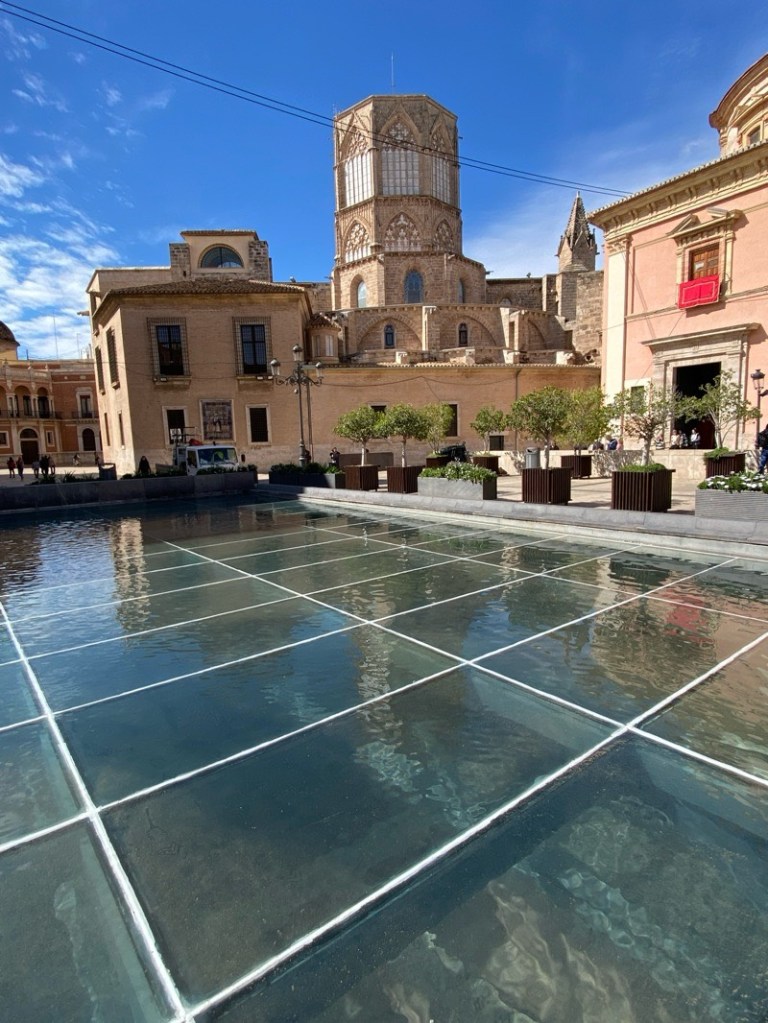
There was a building previously on this site which was a charity centre for the disadvantaged and when it was demolished, this large square was revealed in the basement and the remains from these later periods
Because of this archeological find, a museum was built on this spot instead between 1985-2005
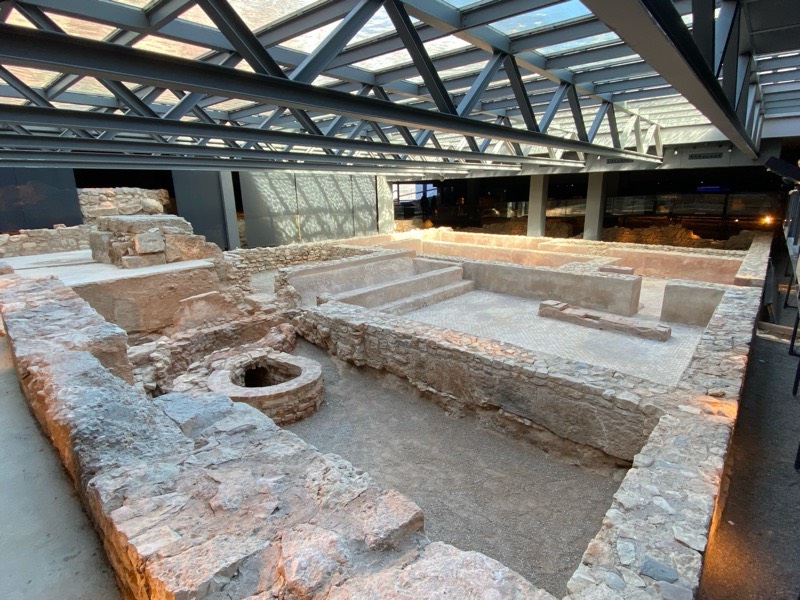
There are ruins such as Roman baths / baptistery / A Basilica / the Visigoths left behind a Cathedral and some funerary tombs – there also are ruins of the Alcazar (fortress) from the Muslim era along with some other ruins
CHURCH OF SAN JUAN DEL HOSPITAL
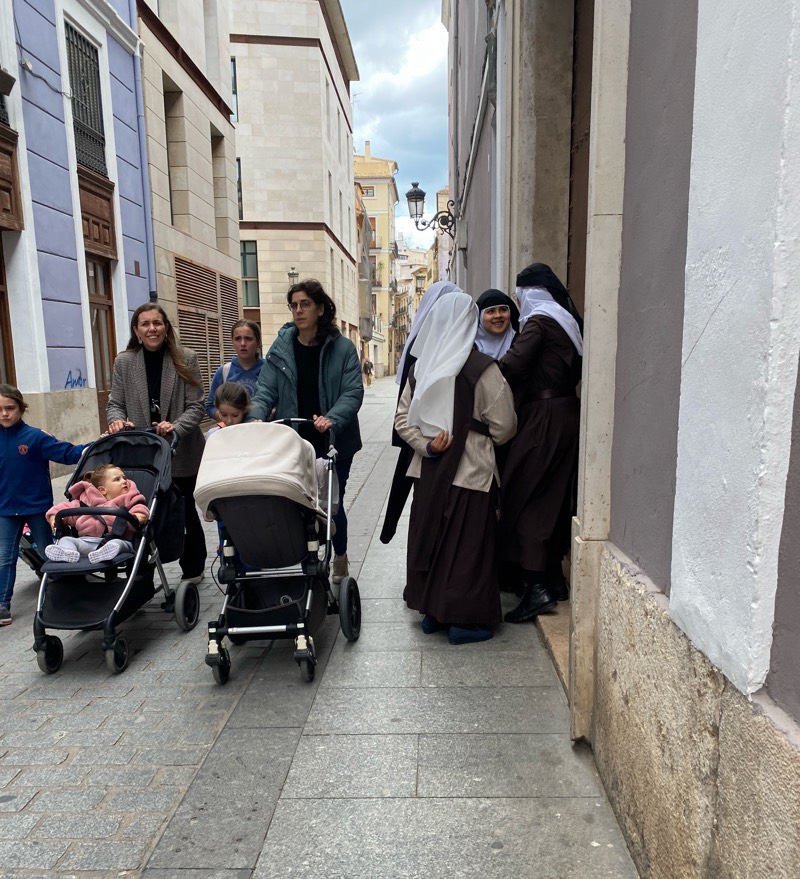
Randomly stumbled upon this church and its inner courtyard area and had a look around before I was told they were closing the lights – just made it! This trip seems to be like this a lot 🤗
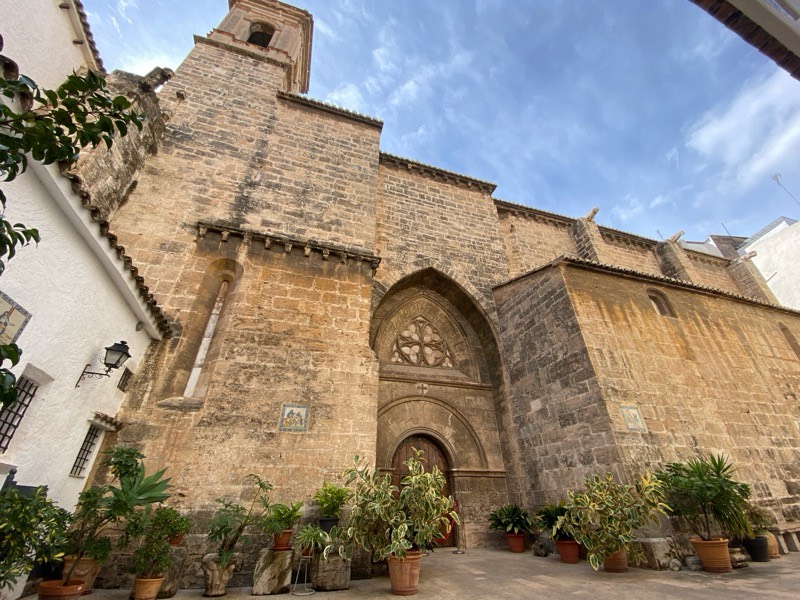
Located in the historic centre in the are of Seu-Xerea neighbourhood and is said to have been founded in 1238 by the Military Order of the Knights Hospitallers of St John of Jerusalem, today known as the Order of Malta
This building is seen as a national and artistic monument – there were many nuns and religious people wandering around the huge grounds, it seemed to also be connected to a religious school
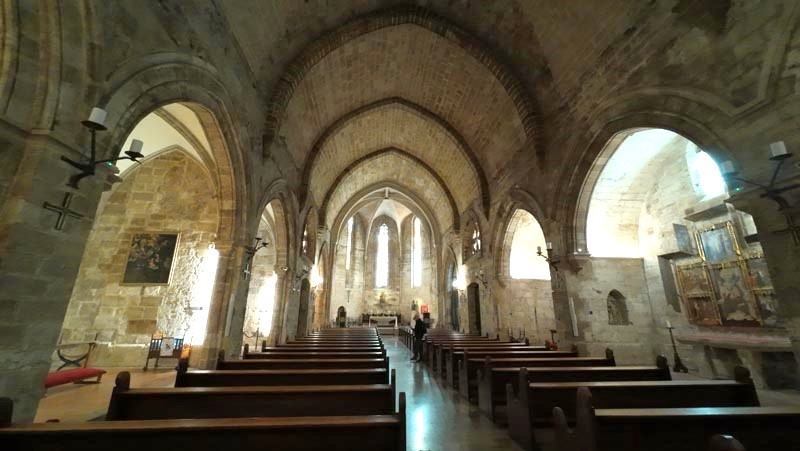
Its the oldest church built after the Reconquest of Valencia, granted by King Don Jaime recognising the collaboration of the order in the Reconquest of Valencia
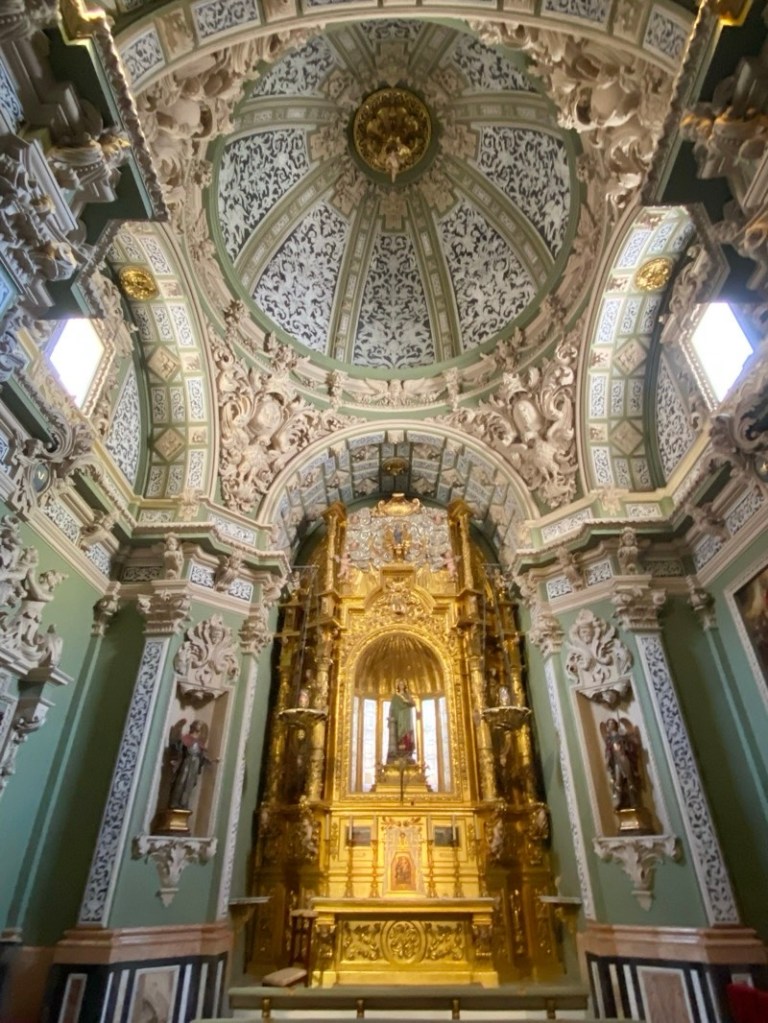
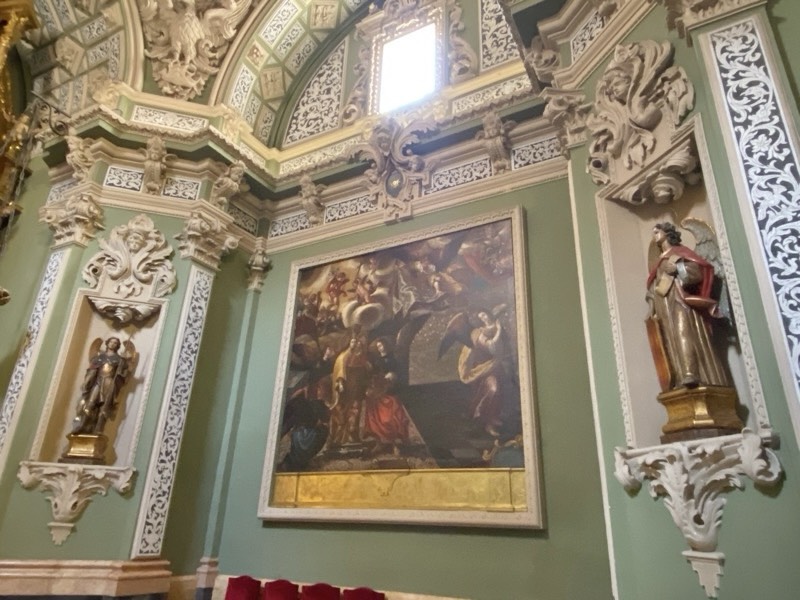
The colourful Chapel inside the Church
I noticed the many different styles of this church, they had built and rebuilT, firstly in their traditional Romanesque and then a mix of the new gothic architecture
The only cemetery dating from the medieval times is here in the church grounds
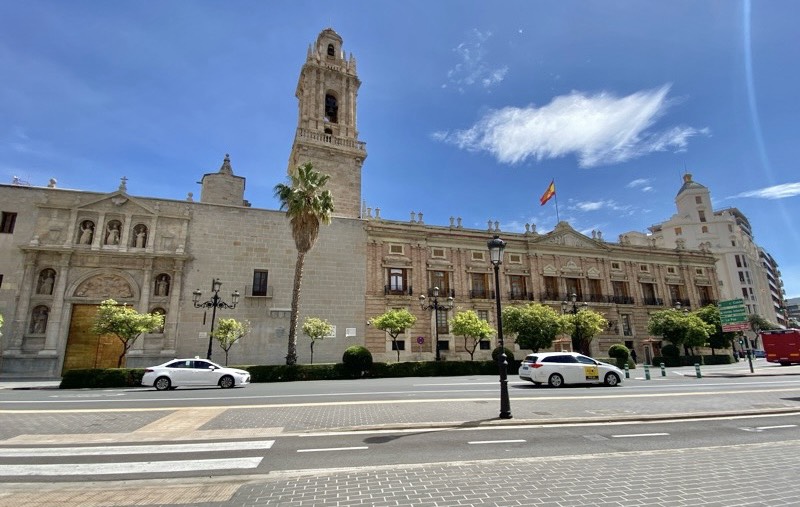
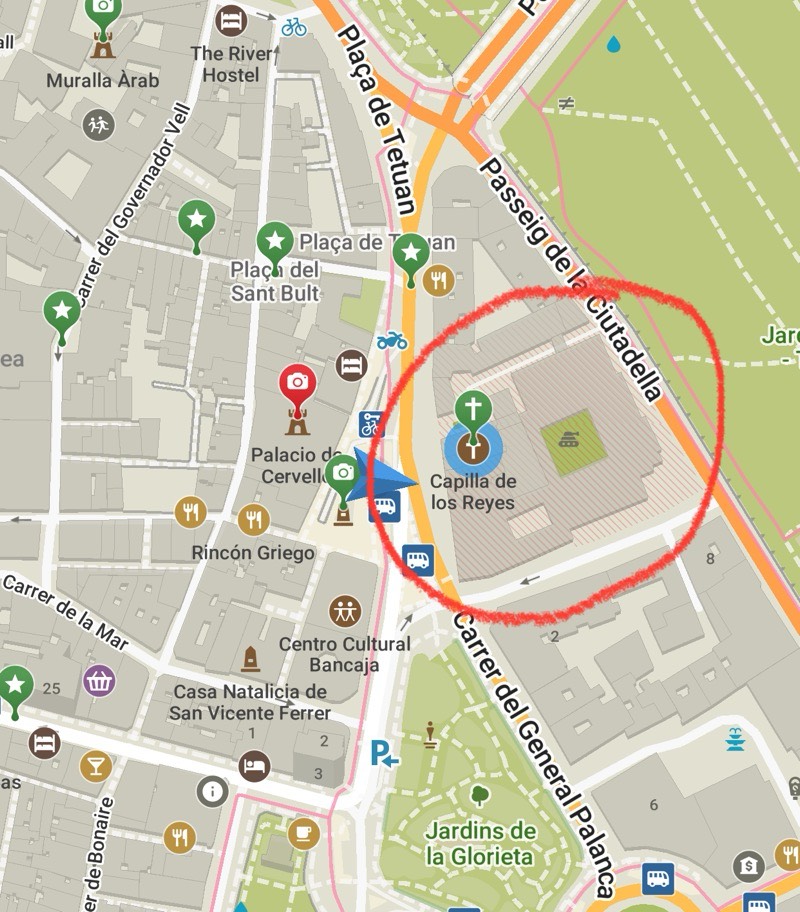
Situated on the outskirts of the old town
THE PATRIARCH CHURCH
College of Corpus Christi and the Patriarch Museum
The outside was beautiful BUT what took my breath away about this church was the INsIdE! Omg!
Located at Placa Del Collegi Del Patriarca its definitely worth a visit! Its easy to pass by as its not outstanding from the outside….
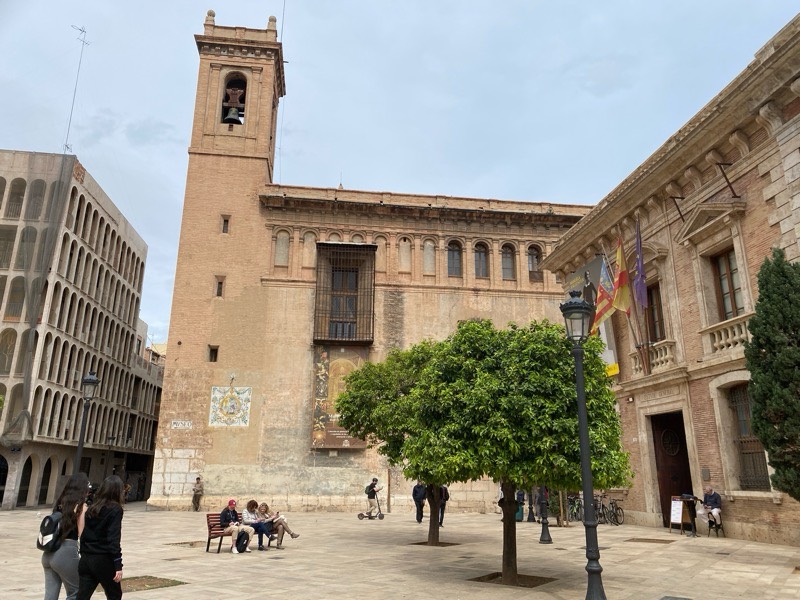
A former roman catholic school and seminary founded in 1583 – now a church dedicated to the heart of Christ
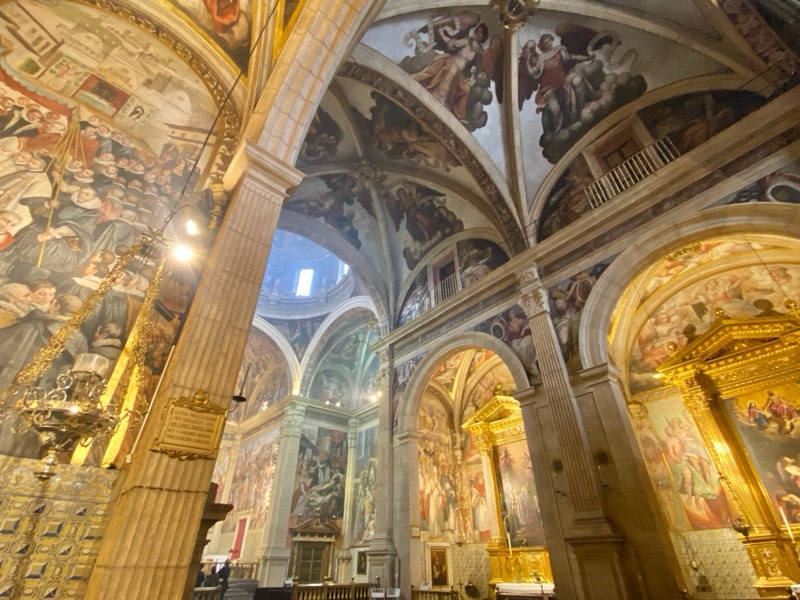
When I walked in I wasnt expecting what I saw! Every wall and ceiling space was full of gorgeous paintings!
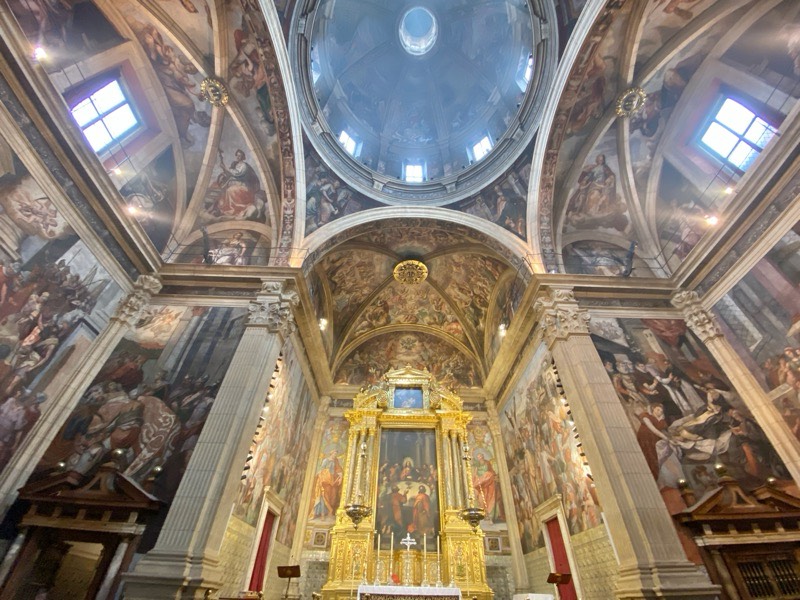
I tried to keep a low profile as there was a service going on so I stood as still as I could and took photos of as many of the walls as I could, wow this place took my breath away! Just look at the details and the colours all around the church!
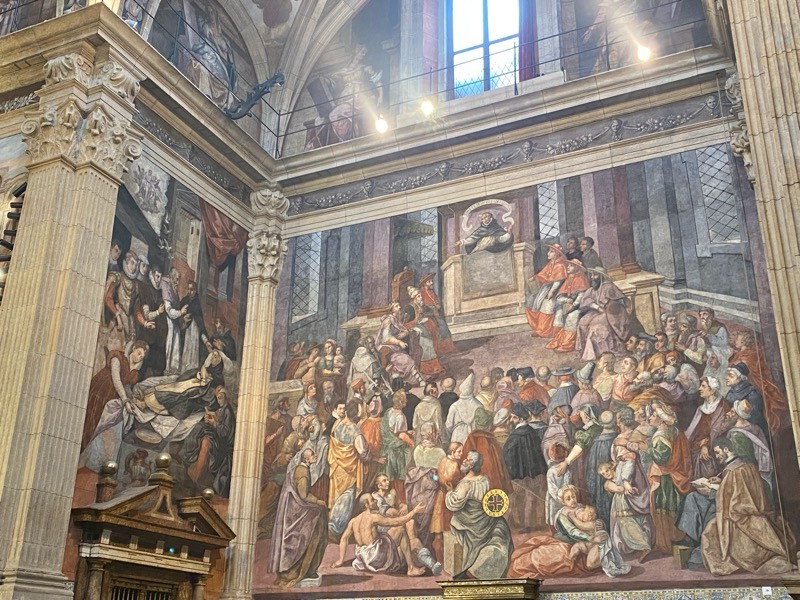
Detailed religious paintings near the front of the church – this one takes up a whole wall and each figure in the painting is detailed and you feel like you are in the scene itself!
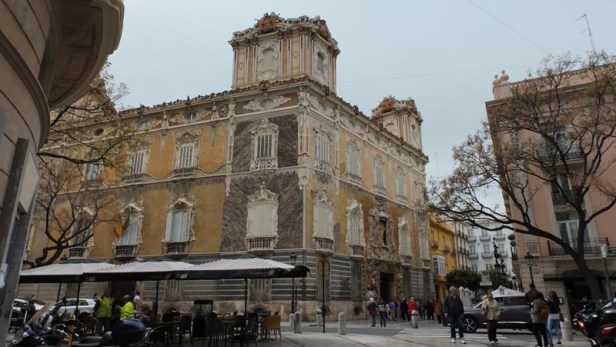
PALACE OF THE MARQUIS OF DOS AGUAS
The Palace of the Marquis of Dos Aguas is a Rococo nobility palace that dates back to the 18th c.
€3 entry fee – so worth it!! I really wanted to explore the inside of this fantastic building!
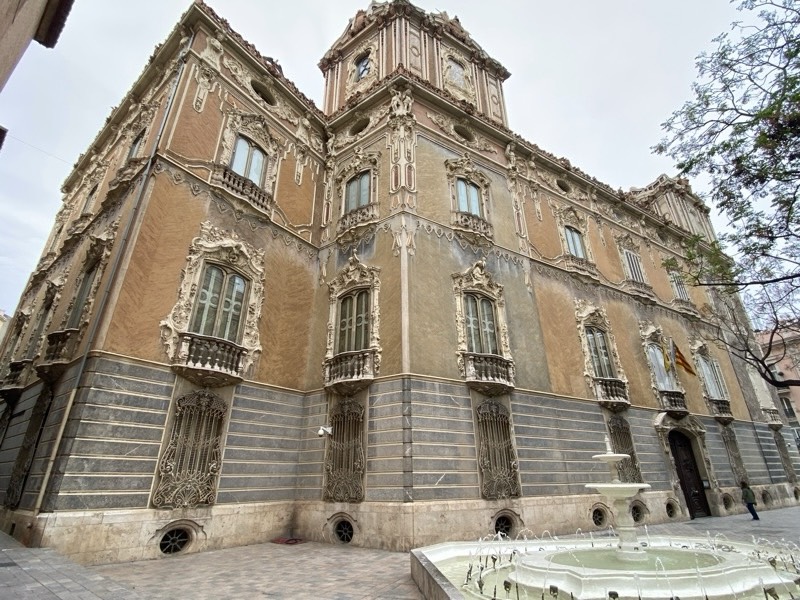
It is a stately mansion that was the property of the Marqueses of Dos Aguas and is currently owned by the Spanish State
As I walked up to the Palace I wasnt expecting to see such beauty! Everyone was standing around the building looking at the details in disbelief!
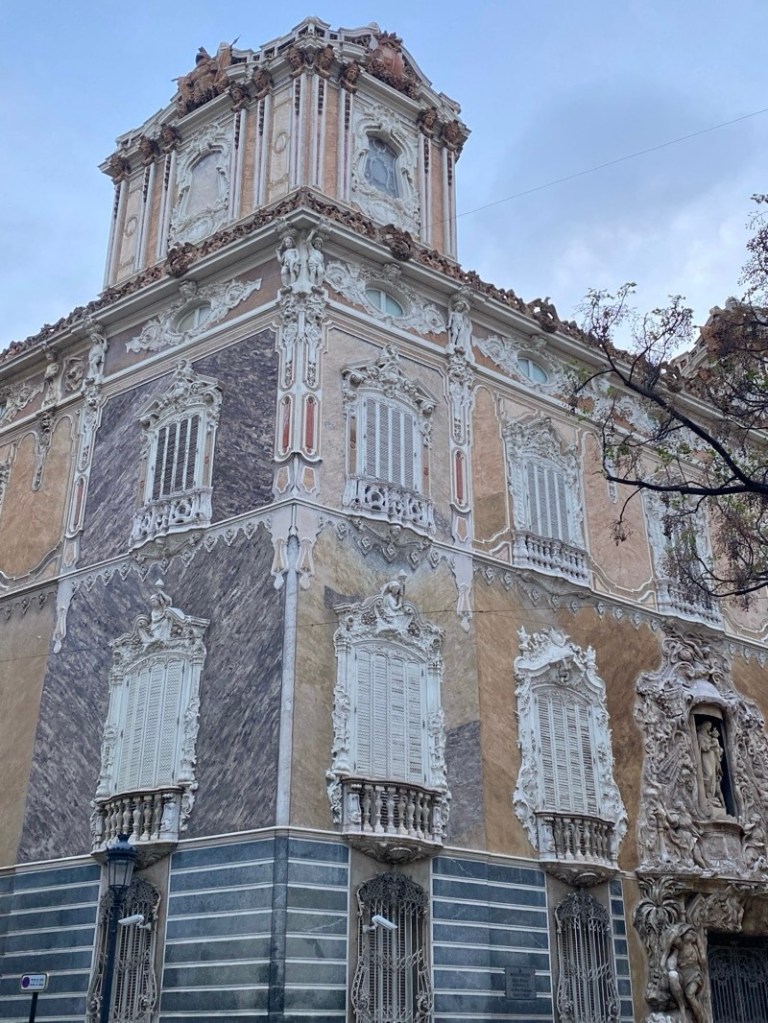
As you walk up and see the different coloured alabastar, it just looks like a dirty building at first but then you get closer and see all the absolute details on the facade of the building on all four sides!
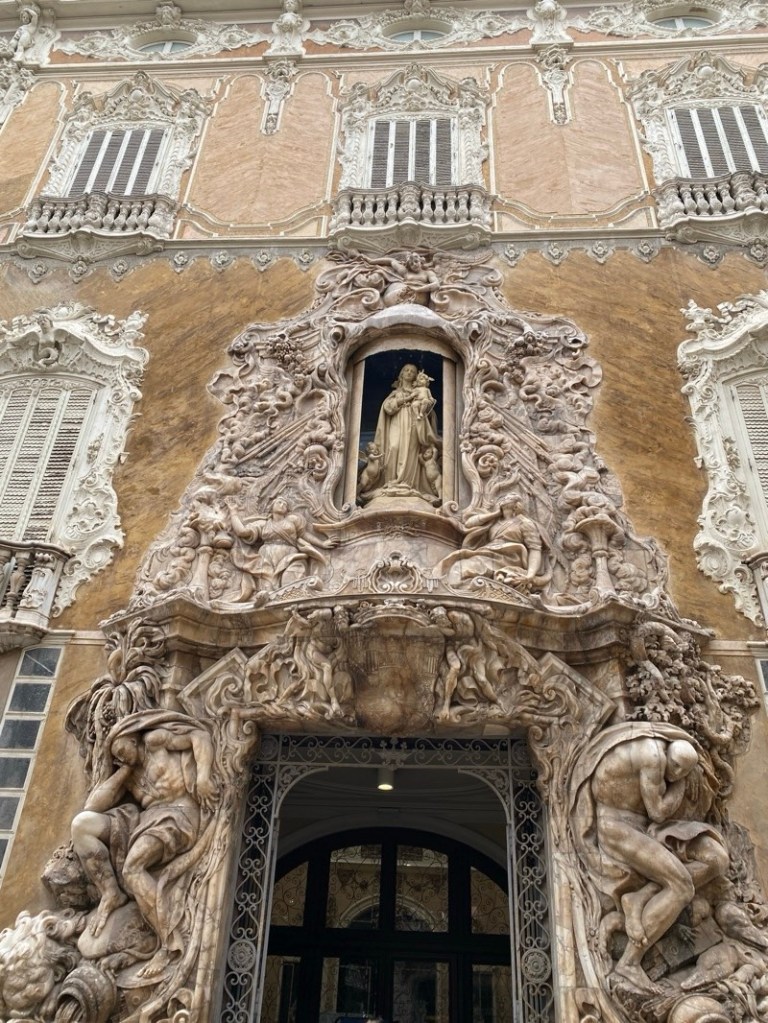
The main entrance to the Palace, made from Alabaster in Rococo style – Seriously, I was studying this facade for quite a while and did a bit of research of the story behind it… The level of detail and artistry is incredible!!!
Above the doorway is an image of the Virgin of the Rosary (originally made in wood but that was stolen so this one is a plaster copy), the patron saint of the House of Dos Aquas, below the Virgin are 2 matrons kneeling, one with the horn of Almatea which is spilling with fruits (agriculture and prosperity) and the other with a vessel at its feets full of coins (justice & magnanimity) around the Virgin are 2 small winged sirens
Above the Virgin is an angel with a trumpet which is proclaiming the greatness of the Marquisate of Dos Aguas – there is a little wooden door that closes and hides the Virgin whenever the Marquises were outside of the Palace so the people knew when they were home or not
What really caught my attention were the 2 naked human figures on either side – so beautifully created! They represent 2 of the largest rivers of Valencia, TURIA & JUCAR… these figures are ATLANTEANS!
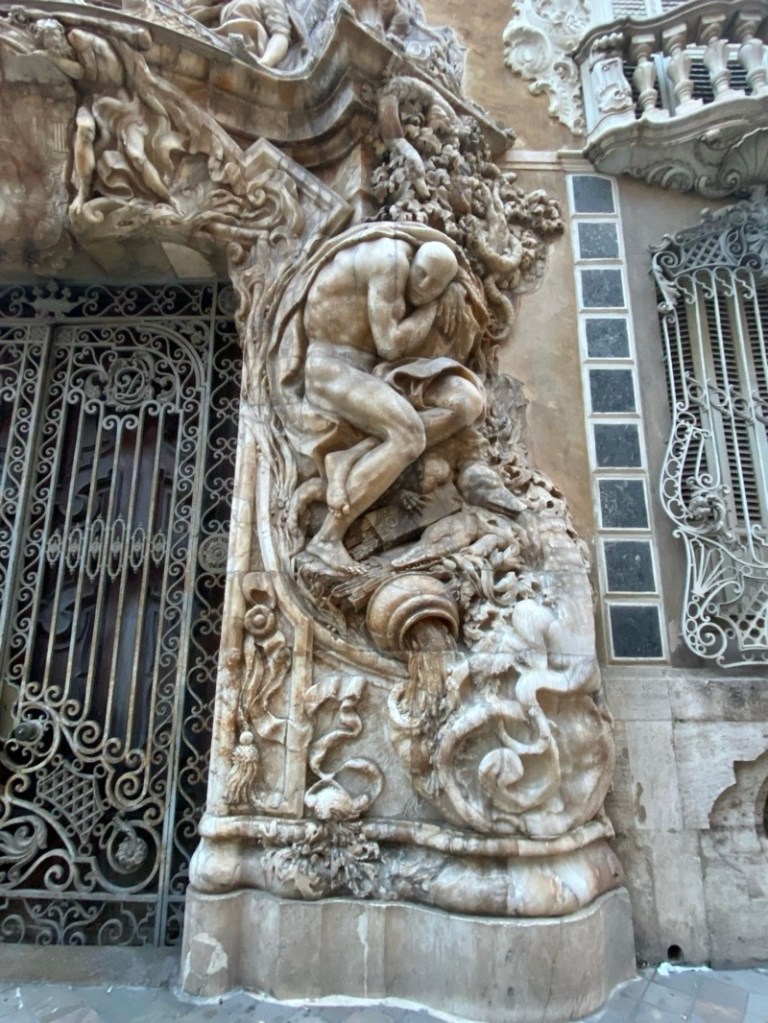
On the right side there are 2 heads of a crocodile, a quiver of arrows and above the great figure is a decoration of ivy and a snake
Underneath both figures are buckets which pour out water which is a reference to the title of the Marquises
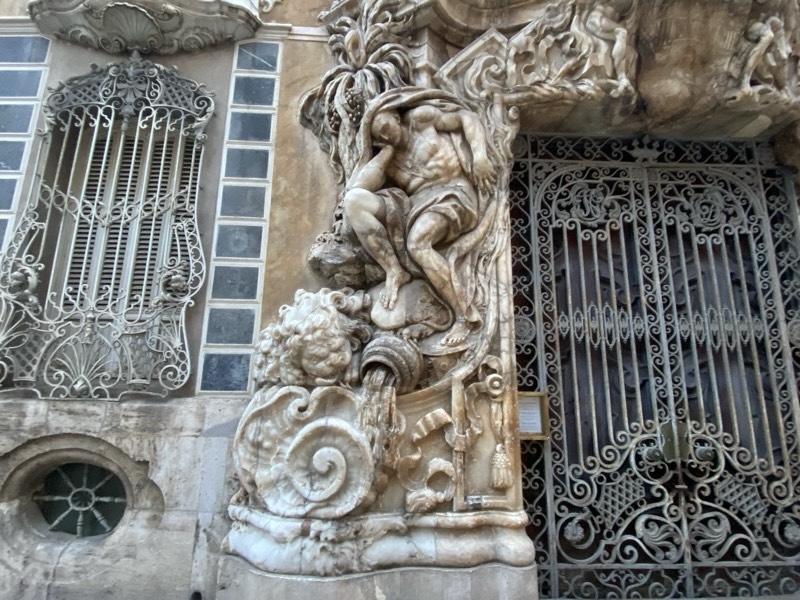
On the left is a reclining lion and another vessel pouring water and a quiver of arrows and above the figure is a palm tree and plants
The line was veryyyy long to go inside this Palace, I dont think people were lining up to see the ceramics! It was the see the rooms in the palace! that was my reason anyways…
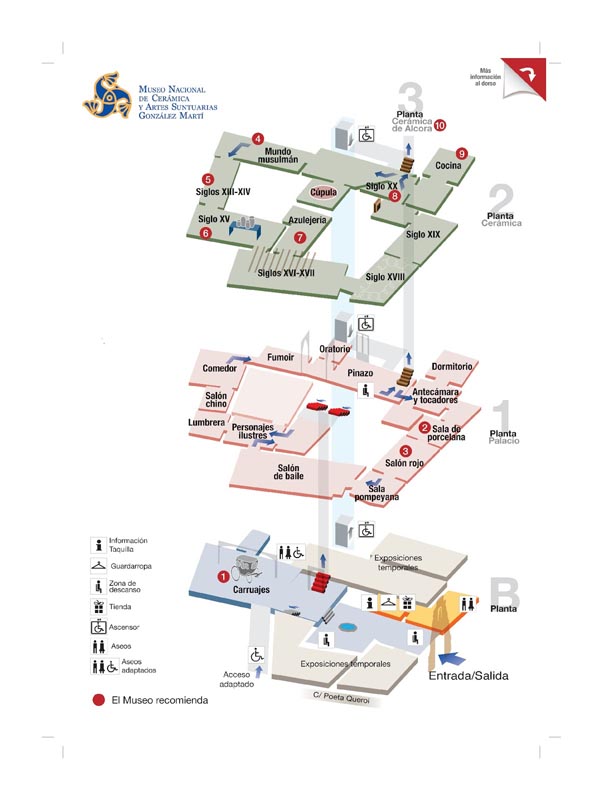
MAP of the musem
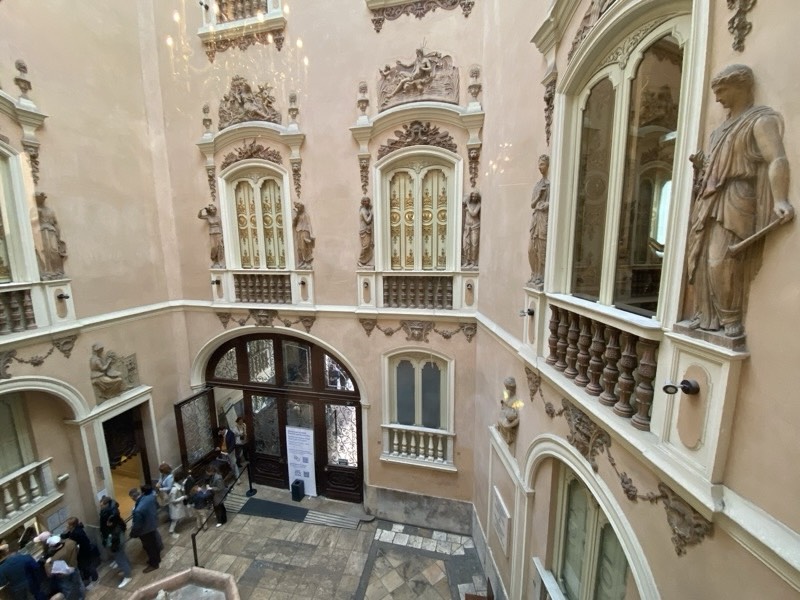
It houses the González Martí National Museum of Ceramics and Decorative Arts
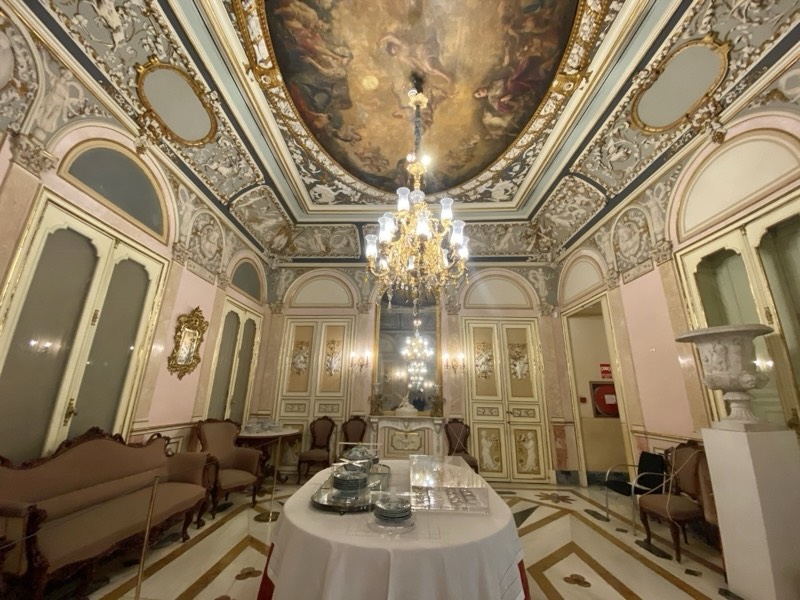
All the rooms were just so ornate and detailed and I loved them all!
The interior is decorated with beautiful paintings and artistic and colourful marble
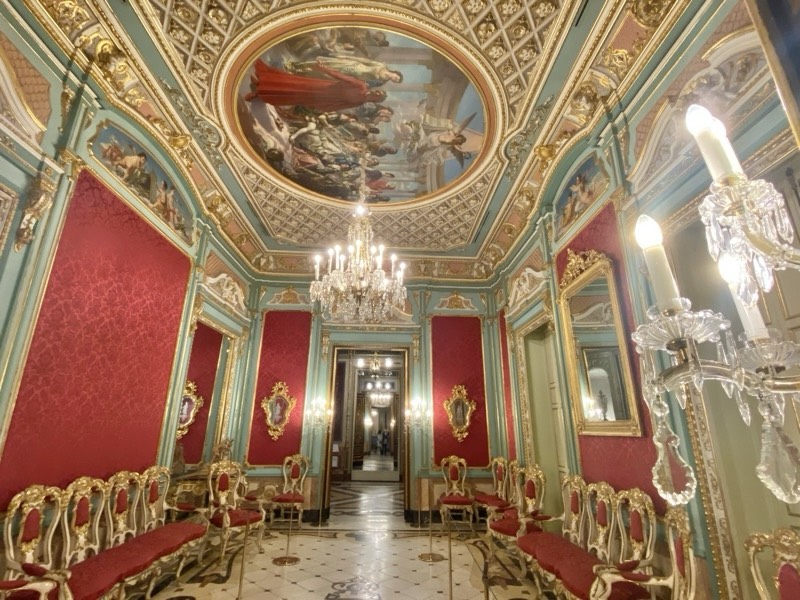
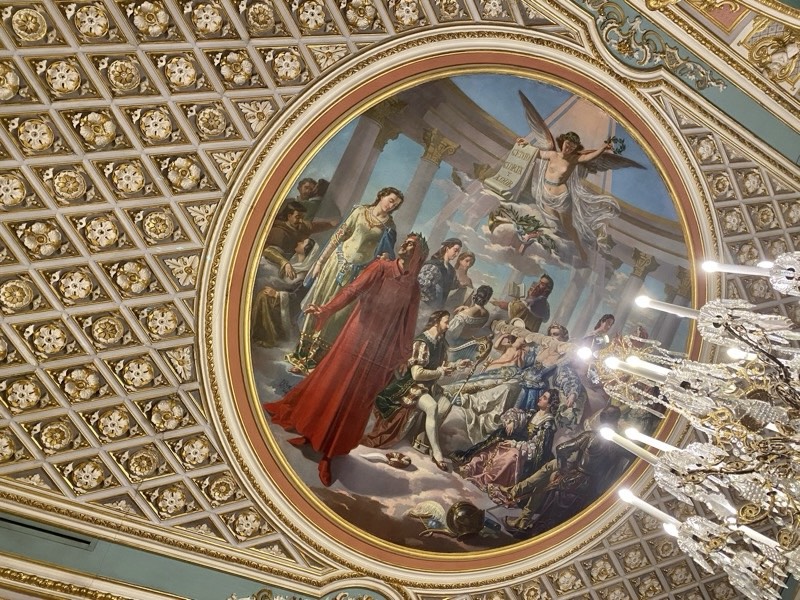
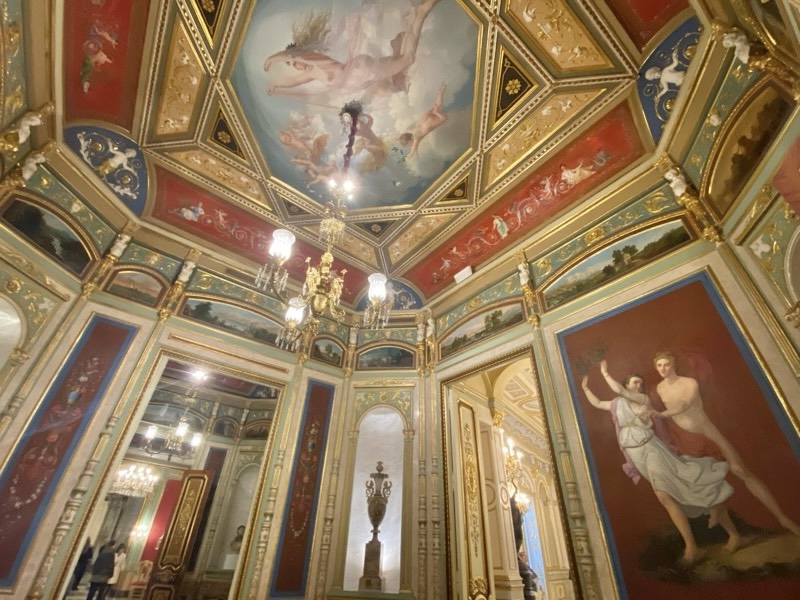
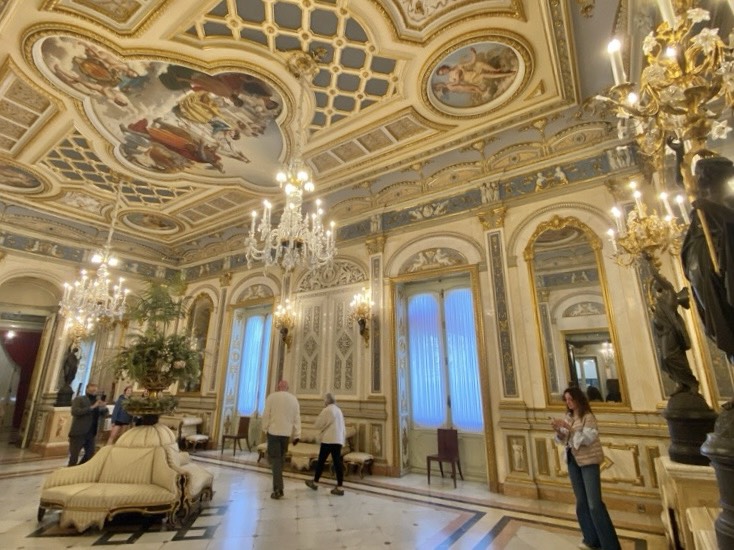
Many famous dances and performances were held in this palace
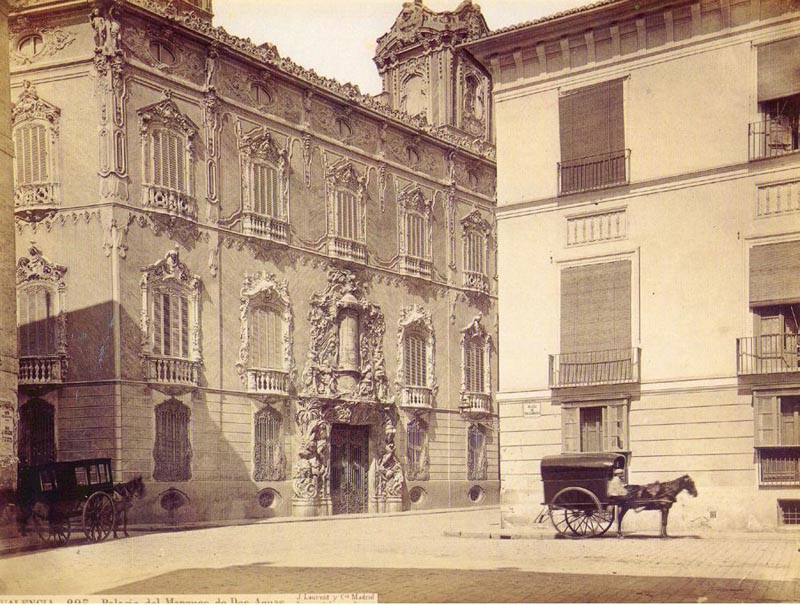
An old photo of the Palace in 1870s – still looks beautiful!
As you approach the Palace these days however, everyone is standing out front with their cameras and taking photos of the facade with awe, I truely believe we appreciate architecture like this more today
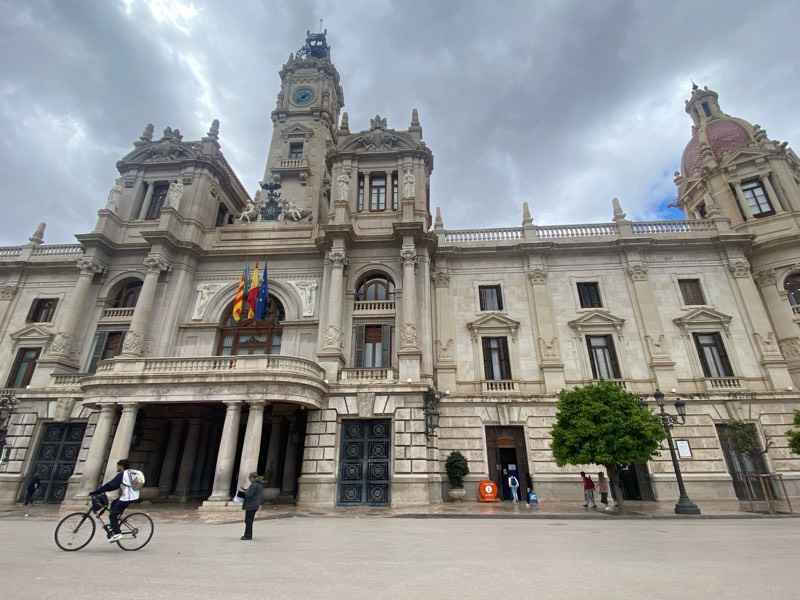
THE CITY HALL
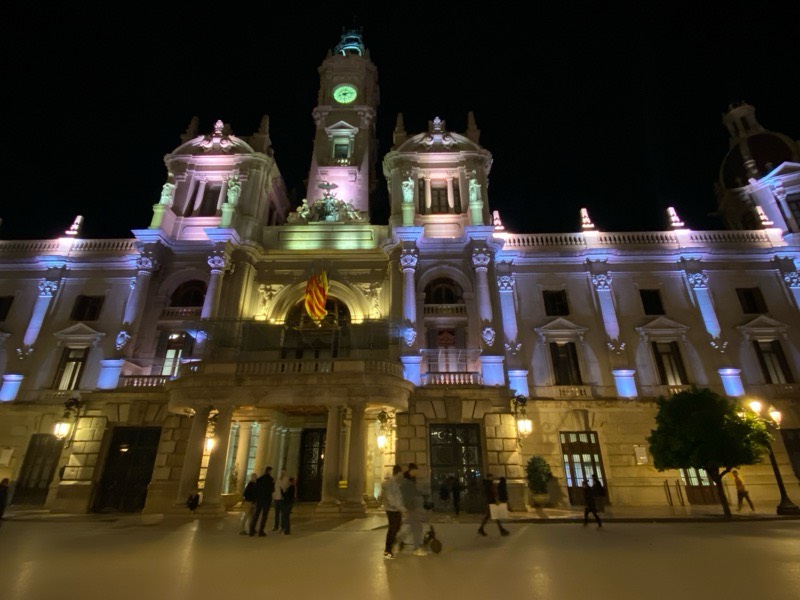
The seat of the local government – made of 2 combined buildings built in different styles
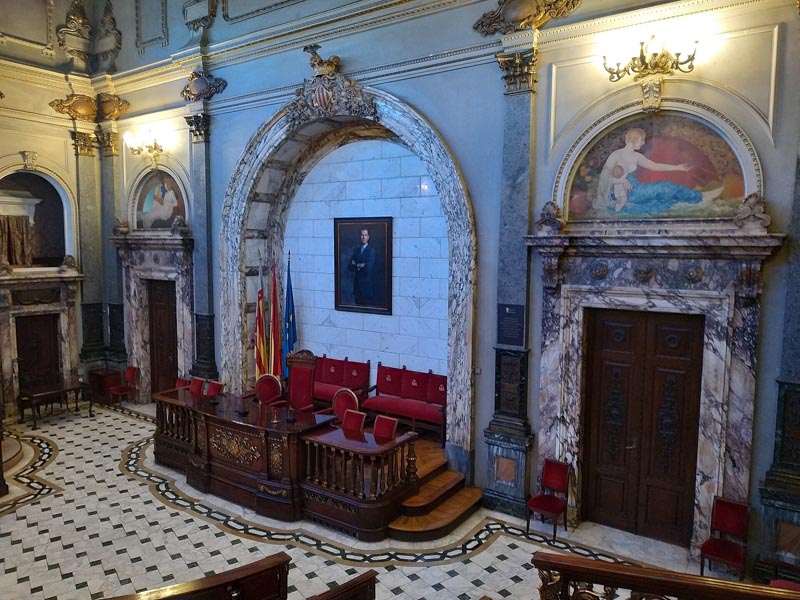
The Speakers seat
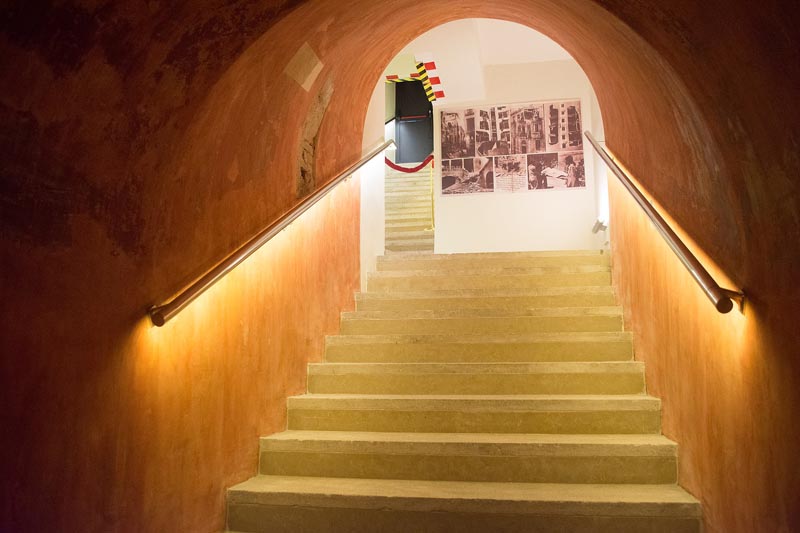
The underground bomb shelter which has capacity for 700 people – built after the Italians bombed during the Spanish Civil War in 1937
TORRES DE QUART (city gate)
Torres de Quart or Puerta de Quart (also called de Cuarte) is one of the two remaining gates of the old Valencia city wall. It was built between 1441 and 1493
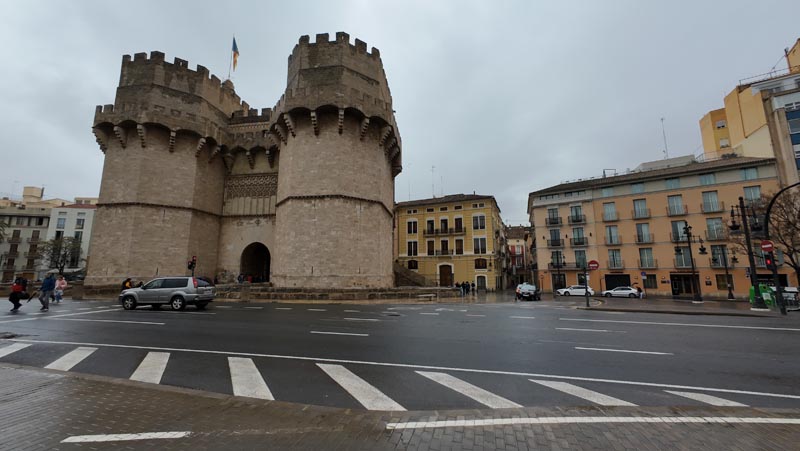
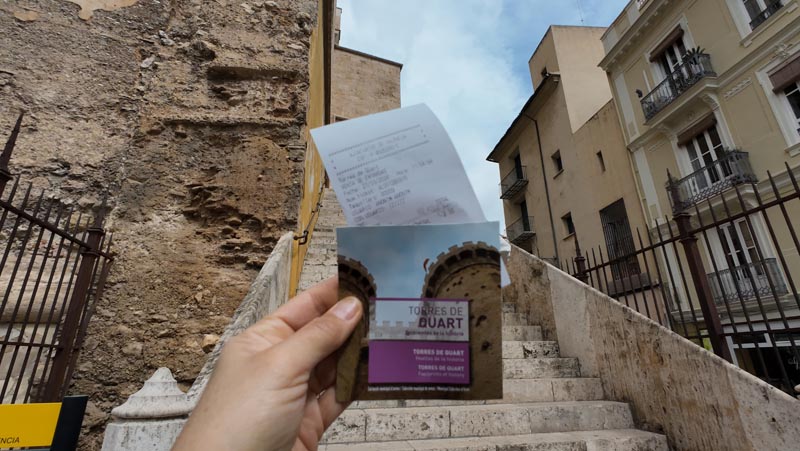
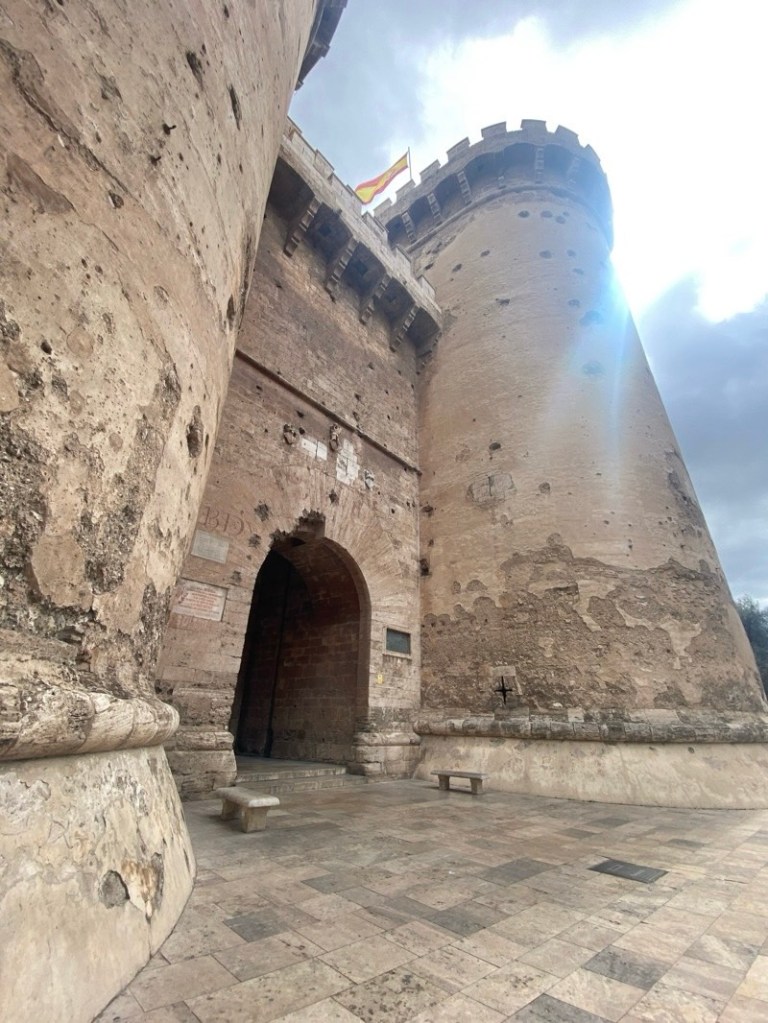
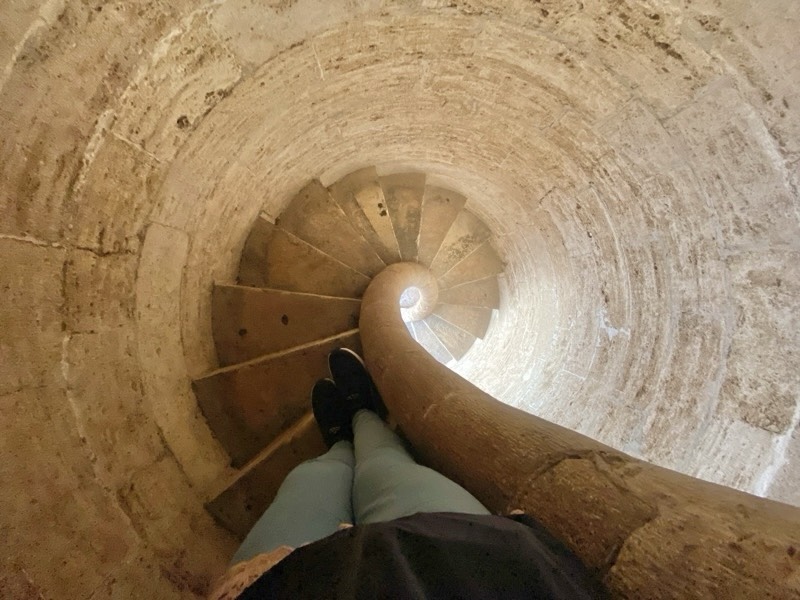
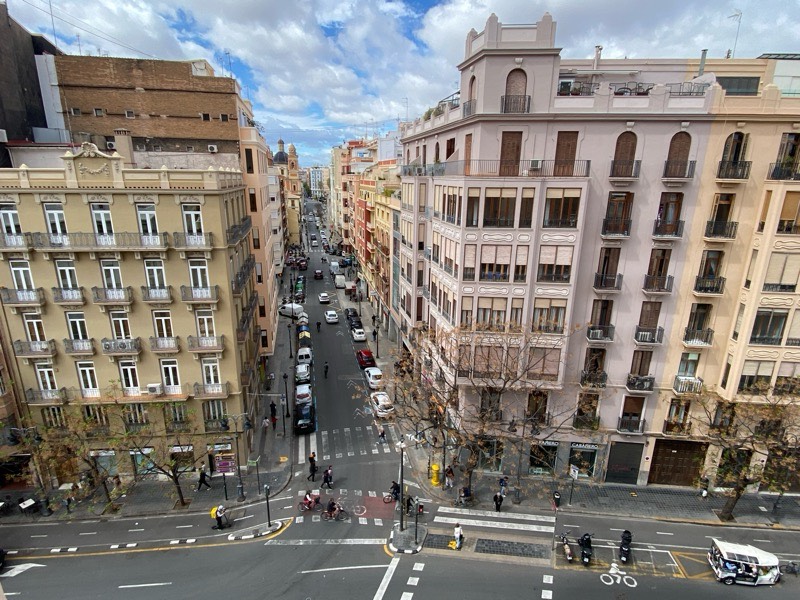
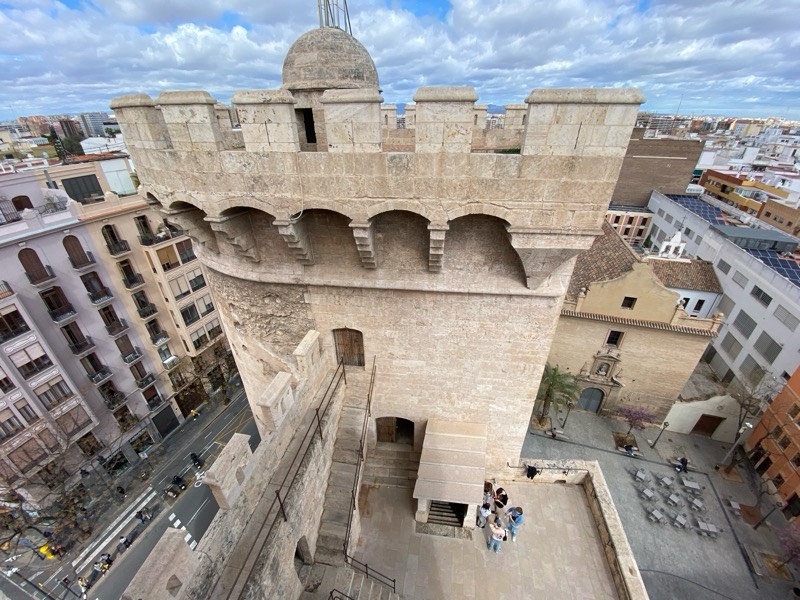
The Quart Towers played a vital part in stopping Napoleon’s troops in 1808 during the tar of Independence against the French
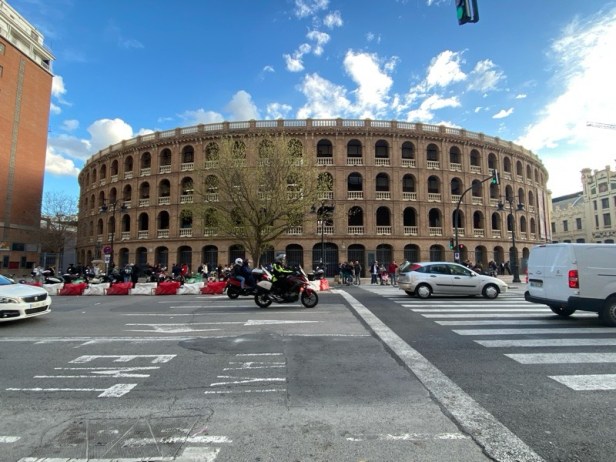
Walking a bit further out of town towards the North train station you come upon this awesome 4 storey bull ring in Neo classical design built between 1850 – 1860
LAST WORDS…
There really is SO much to do and see in Valencia
I reccomend at least 4-5 full days here to be able to explore the outskirts as well, i.e. the beaches and also the modern museum complex just outside the city
The old town itself needs a decent 2 full days as lines can be long to some of the more popular sites
MAR 2024
 The Wandering Passport