

My 3rd Onewaytours, and I want to try all of them! The tour started at 9am across from Komitas Park so it wasn’t too bad and an easy 15min walk from my place so I left at 8:15am and was the first on the bus to grab my seat
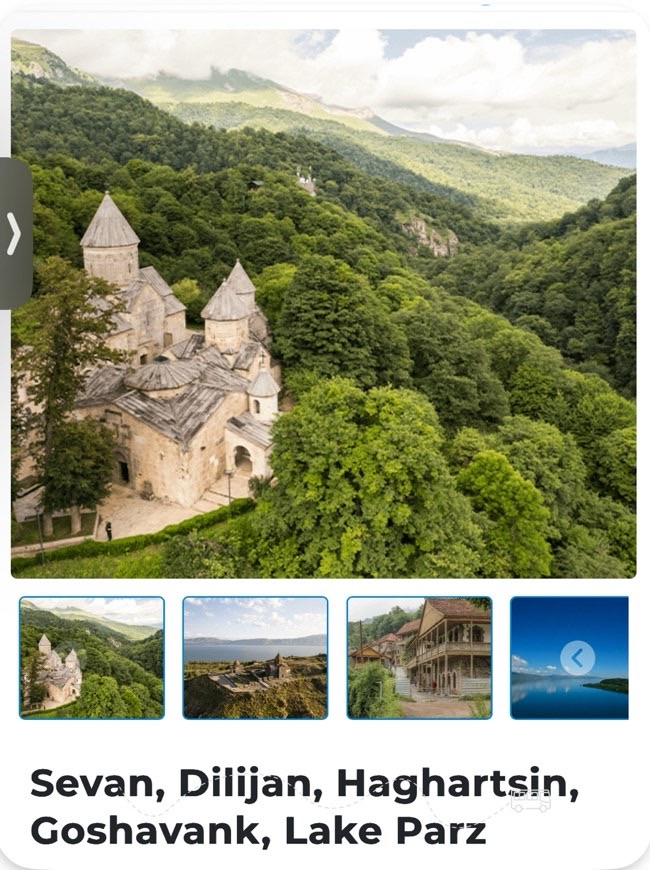
LOCATION
We are going to 2 regions on todays trip
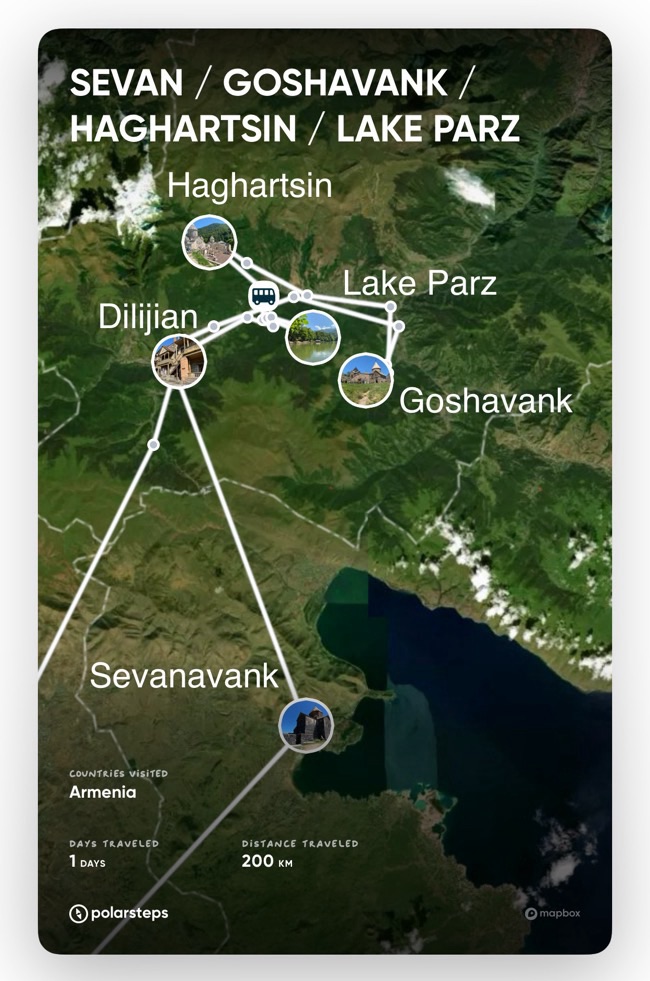
Gheghardunik & Tavush regions

It was a beautiful day today! Not too hot and perfect for a full day tourist adventure!

We had a whole diverse group of tourists, Greek / Italians / German / USA / UK / Syria

a bit of a history as told by our guide Hasmik…
This area is most tectonic and volcanic region in the world
“Europeans of Asia” this is what Armenians are called – we are hot blooded and fiery types!
We are now in the 3rd republic of Armenia, 10% of lands retained only as Armenia, the rest has been taken by the surrounding countries – Republic of Armenia – we are eastern Armenia that’s left
Eastern and western Armenian dialects are different – 60 dialects each village and settlement has own language and traditions – Yerevan has its own dialect and each area has own traditions
10 regions – we are going to 3 on this trip
Yerevan taken 14 times by Turks and all areas are mixed and combined with different histories and architecture
Yerevan is 2806 years old – when first fortress erebuni was built this is where Yerevan got its name from – old kingdom Urartu and we called ourselves Ararat – Elevation of Yerevan is 800m – 1300m
1918 became the capital – Yerevan has the most capital cities and country kept shrinking so had to change capitals – Financial centre is in Dilijian
Soviet period changed Armenia a lot, Soviet collapsed 1991
Tuffa stone – Yerevan called pink city
12m Armenians in the world – less than 3m in Armenia – Biggest communities in France and US and Russia – In Armenia today its 97% Armenians and minorities 3%
Ethnic cleansing 1915 – 1.5m killed
Christians 301 were Pagans previously – Armenian apostolic church – we belong to oriental churches
Etchmiadzin – first official Christian church first to take on as national religion
1968 – ski resort created in tsaghkadsor
Hrazadan river – water supply flows through
Resources – 2 gold mines near lake Sevan / Mineral water spring water – called “country of free waters”
Kotayk – beer production here / started 5th BC / wineries occupies 3% of the region but produces enough
Azerbaijan issue – conflict with Azeri / turkey – turkey was the instigator – different tribes and turkey then encouraged by turkey – they want to unite all Turkish speaking tribes in one area/zone and armenia is in the way! Peace talking about it but there is still tension and there are now many military bases and soldiers setting up
Artsaghk taken from Azerbaijan recently and no armenians there – its very volatile as they demand a corridor from Armenia to Nakhchivan and to this day there is still conflict and tension
Kharabagh – was on the map but was not recognised – war goes on in many different layers propoganda and political
SEVANAVANK
Sevanavank peninsular used to be an island water levels artificially raised 2 rivers directed into Sevan – according to some stories there used to be 8 pagan temples on this island and this area was a holy centre
Gregory the Illuminator and king Trdat named the island <<sa e Van>>, which means <<this is a monastery>> and then the lake were called Sevan – Before this, the lake was called Gegharkunik sea – There are another versions about origin of a word Sevan
Sevanavank has the best views over the lake!
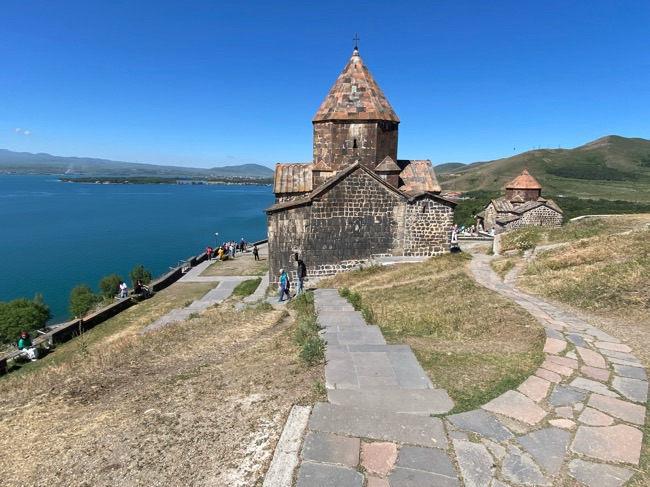
“Black Monastery” 9Th C 804 established
Sevan – why? Surya means water in russian and came from this – another version : black destiny and came from there as its colder for the people who moved here

The courtyard to the main church – the cross stones – each cross stone has a meaning
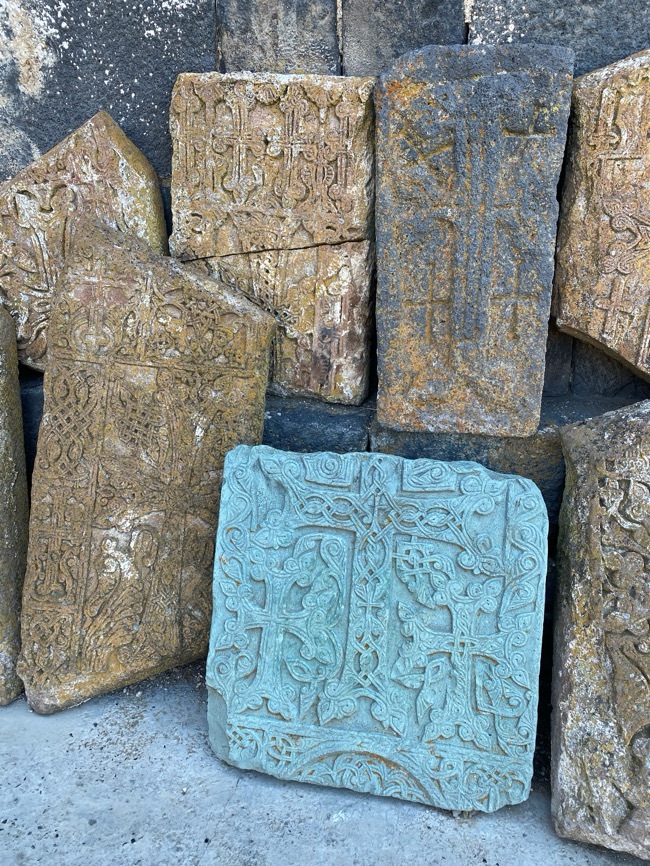
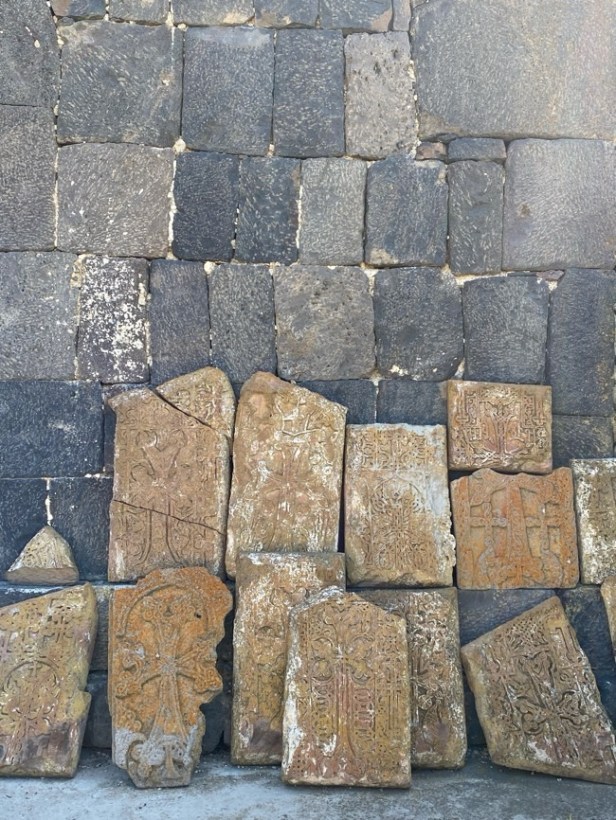
Mongols conquered this area – this cross stone has mongolian features

Amenaprkich or the All-Savior khachkar – The only “forbidden” cross in the area and has healing qualities and can touch it – Azeris were in the area and ruined the face of Mary on the cross stone
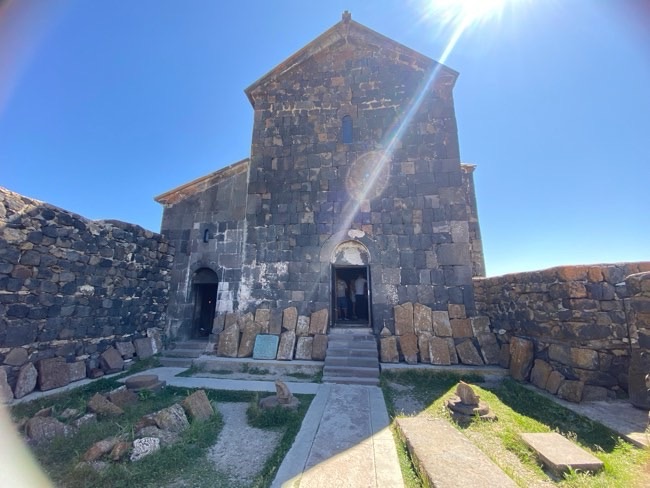
Inside are rich wood carved capitals, a part of these is kept in the Armenian State museum of History – The church is created with Grey basalt
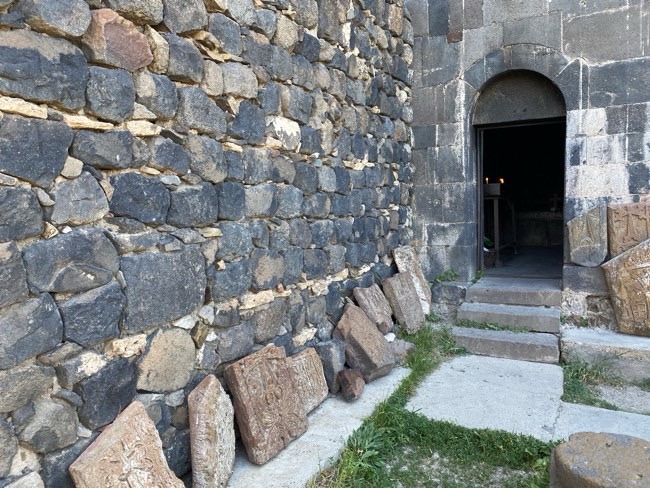
In 1869 a spiritual school opened in the complex and on the highest point of the island there is remnants of an old chapel

Worship on the east as final judgement will be from the east

Ive been here so many times but never have I had a boat ride on the lake! so I was pretty happy about doing this little ride
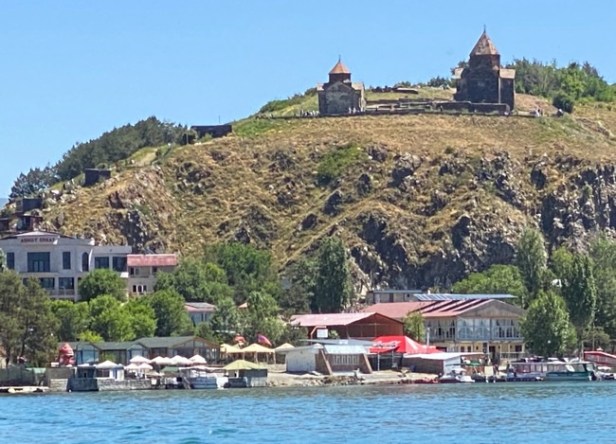
The views from the boat were the best of the 2 churches!
There was a settlement found 20m under lake Sevan when water levels were lower and there were wooden chariots found which are now in the museum

11:45am heading to the food stop along the way at Sevan intersection and I now know about this stop as ive been here before and went straight to the gata that I bought before and havent been able to find since!
I got a walnut gata this time, last time was fruit and nut one for 1400… for such a large piece is a great price! In comparison in yerevan city was 4-5000
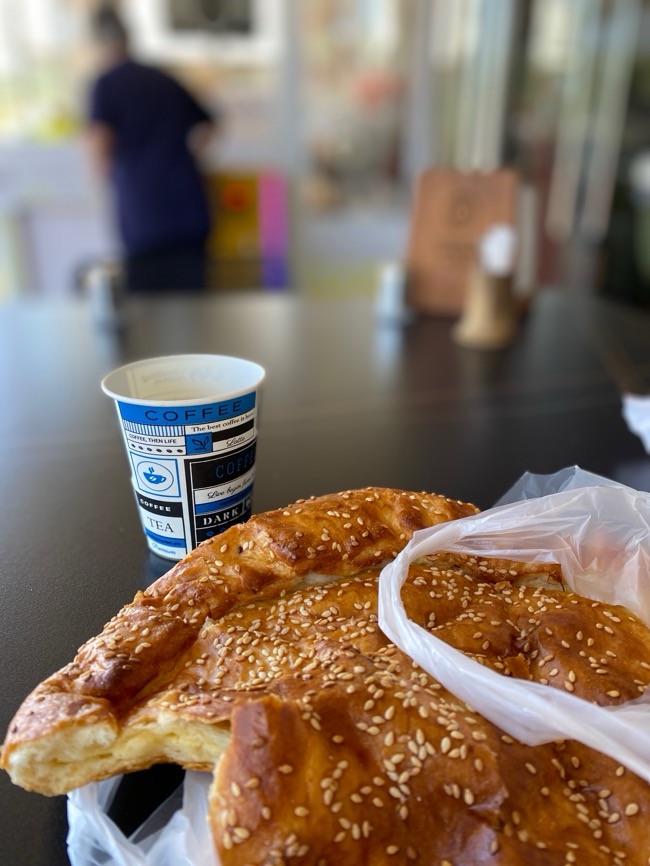
We stayed here until 12:30 and I had a espresso and an awesome pastry with cheese and greens 650amd and 100amd for the espresso

Watched some breadmaking on the process, its so cool and you gotta be athletic it seems!!

We headed off to our next stop!

The Tunnel we drove through was constructed in 2004 – this is one of the main roads connecting to Georgia and persian gulf countries and is the modern version of the silk road and buy passes windy roads saving a lot of time
Ijevan = in armenian means “stay for a night” means “caravansarai” as well for georgians
GOSHAVANK
Said to be named after a prominent Armenian scholar, public figure, thinker and a priest, Mkhitar Gosh
Built using Tufa stone, it merges naturally with the surrounding rocks and hills making it hard to detect the monastery from a distance

Built adjacent to Getik Monastery which was ruined during an earthquake, this monastery was first named Nor Getik, but after the death of Mkhitar Gosh (who built this monastery) it was renamed to Goshavank
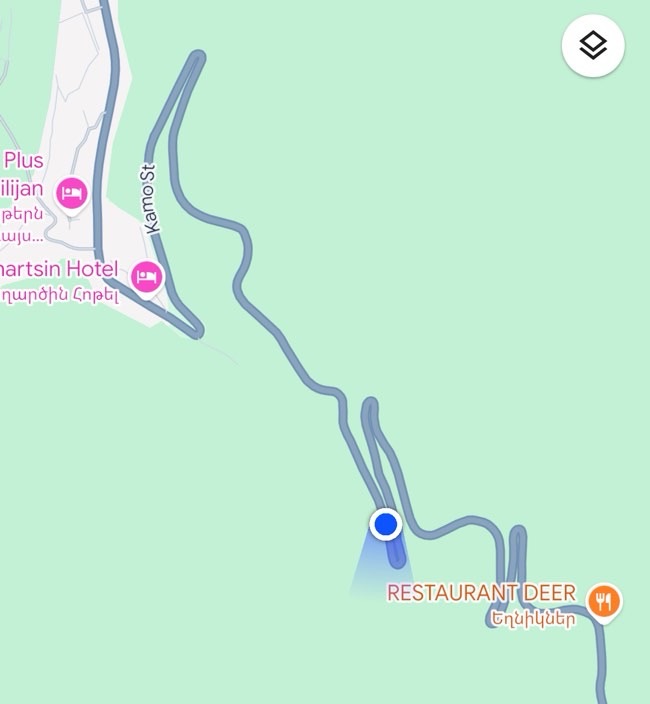
located around 75km from Yerevan, the drive was up some really windy roads, it was exciting as we got some breathtaking views over the valley and hills

We parked in the small car park and there was already heaps of activity with tour cars waiting to take people on an adventure drive, shops lined along the street and restaurants waiting for patrons, there was a hub Bub and hive or activity around this beautiful monastery

This was once one of the leading religious and educational centres of Medieval Armenia where Mkhitar worked for 25 years
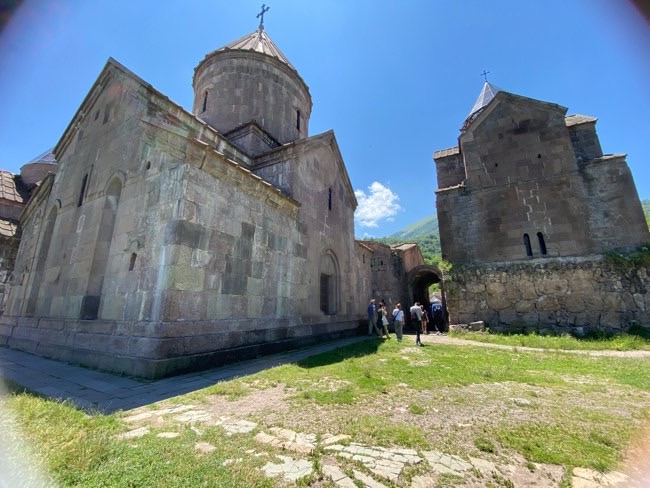
Sure Grigor Lusavorich Church – a single nave church with a really impressive interior with an altar decorated with arches and geometric patterns

I love the light streaming in from the hole in the roof of the church, its usually in only 1 of the main churches in the monastery and not all

The state of Mkhitar Gosh, he has a book in his lap and scales of justice in his hand
The monastery’s main church Saint Astvatsatsin was said to be built in 12th c
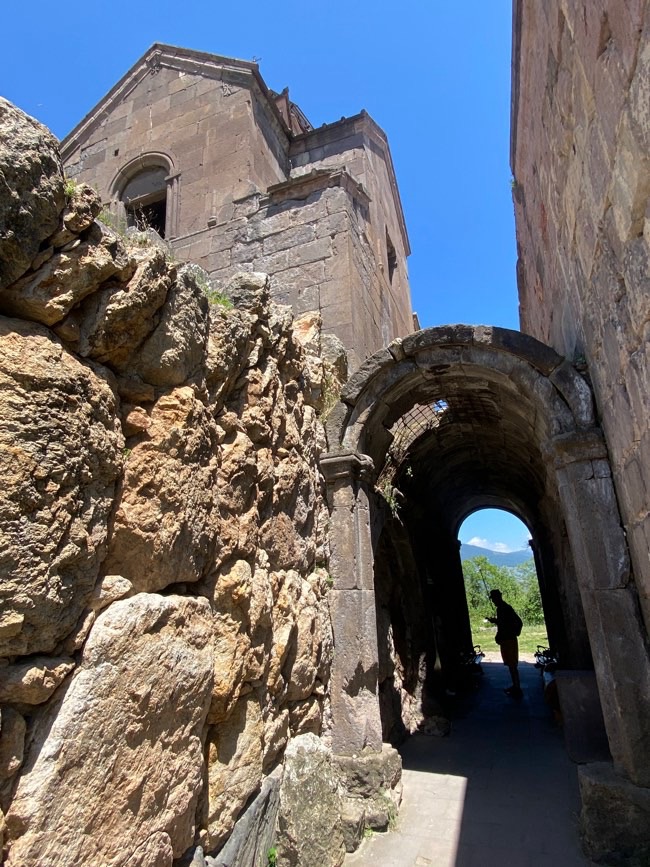
The entrance to the church with beautiful high gavit, there are so many different nooks and crannies to explore at this site!

The beautiful masculine arches of the nave really stood out as you walked into this church

The intricate decorations on the inside of this church were very detailed and unique and had a dark tinge to the stone which could mean there were many candles lit inside changing the colour of the walls

I still cant comprehend the detailing perfection they had back in those days I do question how it was done and if it really was done by those people back then? Its like massive puzzle pieces of heavy stone put together basically without cement or glue!
HAGHARTSIN MONASTERY
Haghartsin Monastery is located near Dilijian in the Tavush region
Hagh means game and Artsin mean Eagle – “Game of Eagles”
The monastery was built during Medieval Armenia (9th-11th c), which was ruled by kings from the Bagratid dynasty.
Originally it was the summer residence of the tsars, two of whom are buried here – tombstones of Smbat and Gagik Bagratuni (10th – 11th c)
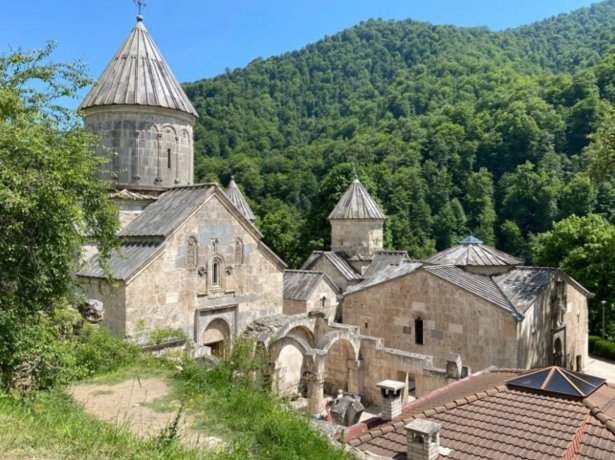
This monastery is high up in the woody mountains where the eagles play and you can see images of eagles in some of the walls of the churches here

For example, Its the 8th section of your day right now! Goes left to right – you can see the intricate Armenian letters carved into the stone
The Armenian alphabet were used as numbers to tell the time of the masses

This monastery was a major cultural centre for the medieval Armenians, there are ruins of a kitchen area and many more remains of chapels are the area

The medieval refectory hall of the priests which reminds me of Harry Potter scene!
Its the largest in the country and one of the most beautiful medieval compositions of Middle Ages Armenia
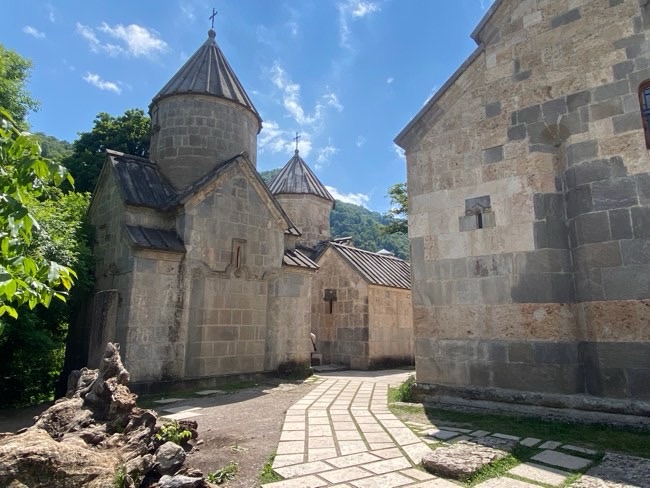
Walking around the complex you can see the scattered and different eras of build and rebuild and reconstruction, its a magical feeling finding little etchings along the side of a chapel and exploring the dark insides of the churches

Near the southern wall of St. Gregory church there are the ruins of two tombs of Kyurikid dynasty tsars with the inscriptions: “Tsar Smbat” and “It is the tomb of tsar Gagik” (10 – 11th centuries).

The inside of one of the smaller chapels, you have to crouch to get inside, I think done on purpose so you bow before you enter

In the complex there 4 chapels and the largest and main building is the Church of St Astvatsatsin built in 13th c. – there is also another church called St Stepanos built in 1244 and is a copy of the main church

One of the dark interiors of a chapel, there are tunnels from this particular chapel that leads underground and out into the valley, used for escape / safety

The valley and hills surrounding the Monastery – well hidden and protected
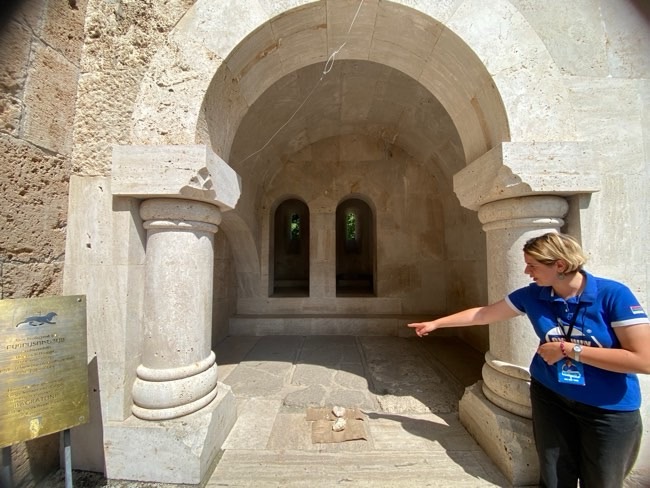
The tomb of the Bagratid Royal family of the 12th c lies here – renovations have been made of the original place, but we have a few left over medieval stones

The inscriptions above the door of the main chapel – tiny Armenian font etched into the stone beautifully
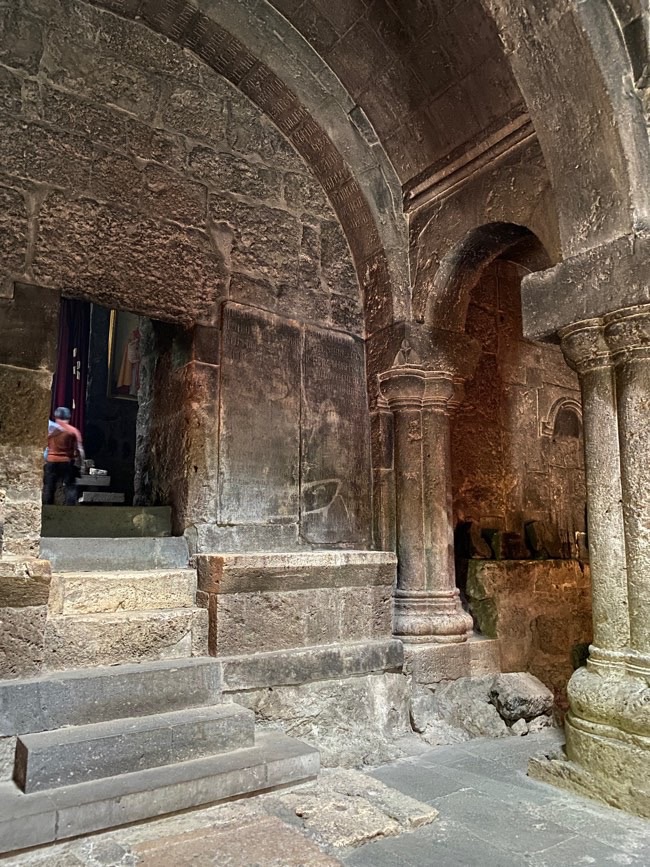
The inside of the main church and the steep entry into the chapel at the back

The inside of the main church from the steep steps leading up to the chapel

I love connecting to the medieval surroundings of the monastery…
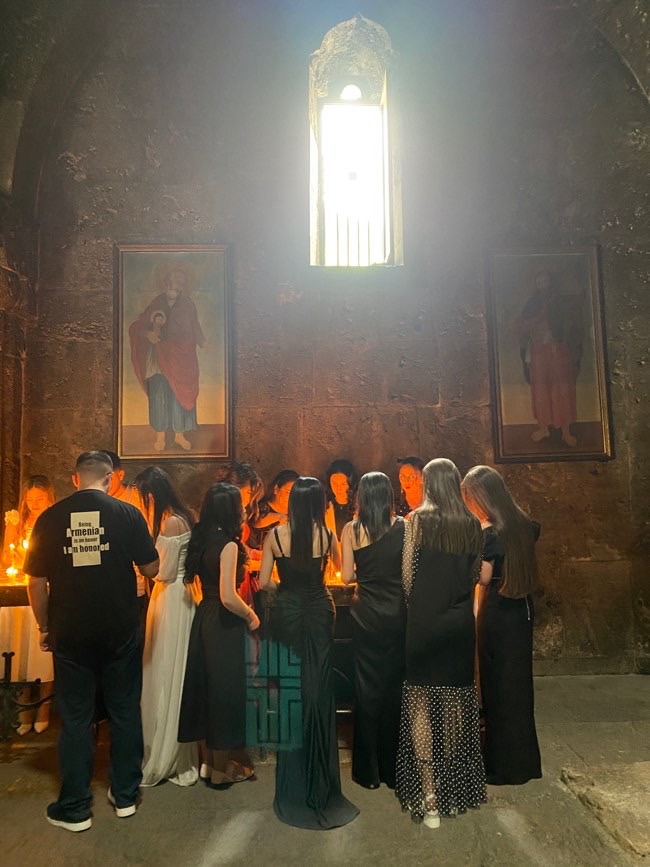
A group of Armenians making prayers around the candles
renovations took place in 2013 and the new road was opened making it easy to access this monastery
PARZ LIQ (LAKE PARZ)
We drove a little more on winding roads towards our next stop…
The largest lake in Dilijian with a total length of 385m and depth of more than 5m
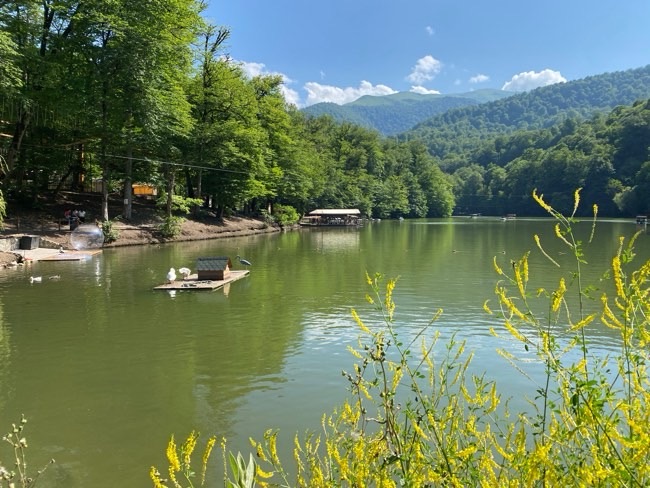
Natural lake with underground springs feeding into it, its clean and fresh water even if it looks green and mossy

There is a trail that goes around the lake which is a bit of a walk, around 40-45mins and gives you a bit of a sweat!
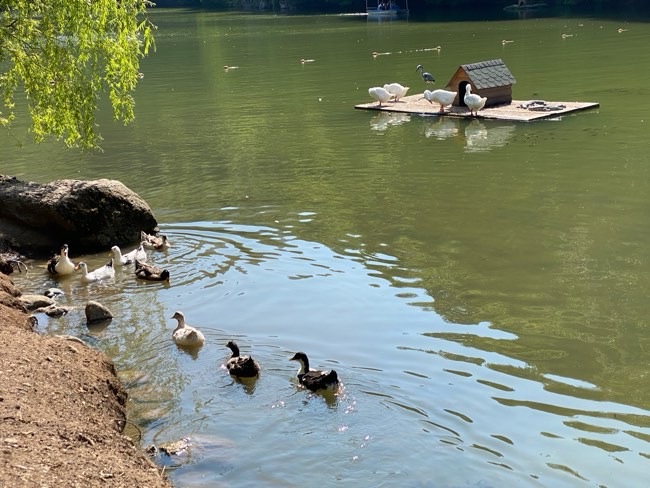
The lake got its name due to its transparency – “parz” which means “clear”
There are many wildlife around the area, the ducks and geese seem to be the happiest with their life on the water
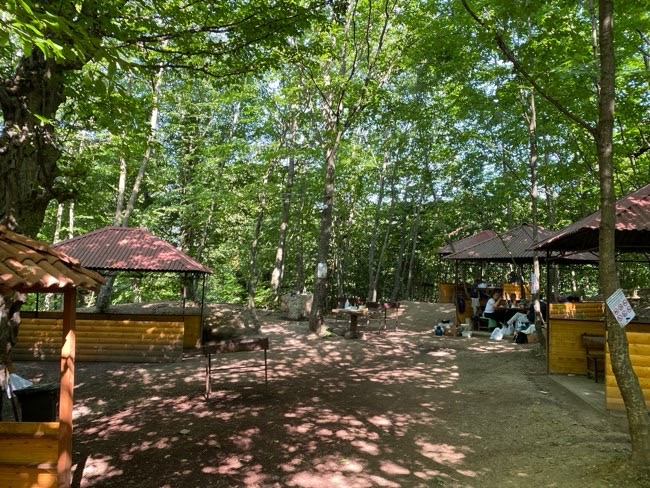
There are many BBQ areas a bit of a walk away from the lake and you can bring your own food and cook and enjoy the scenery and the greenery

There are a few animals around that are used to being hand feed greens

You have the option to go for a walk in the Dilijian National Park and breathe in the fresh air
There are said to be bears, squirrels, hedgehogs, forest seals, rabbits, wild goats, foxes and wolves in this area
I chose to wander around and go for a bit of a walk and then sat in front of the lake and enjoyed the air and the peace and quiet
DILIJIAN
We drove back towards Dilijian and stopped to take a look at the old Dilijian district with the 200 year old wooden balconies and old structures
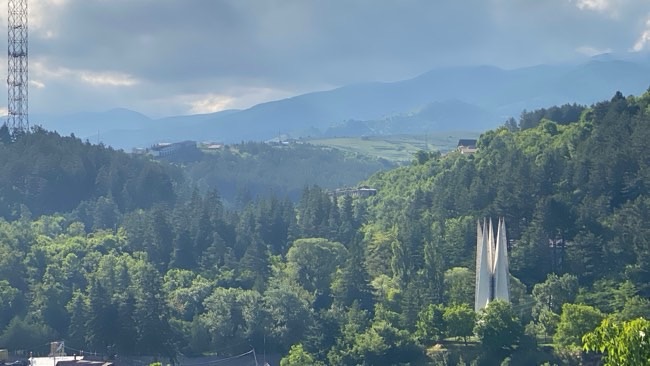
There is so much history in Dilijian! It used to be the summer residence of the kings – it used to be the crossroads of civilisations and cultures between east and west, with many political battles
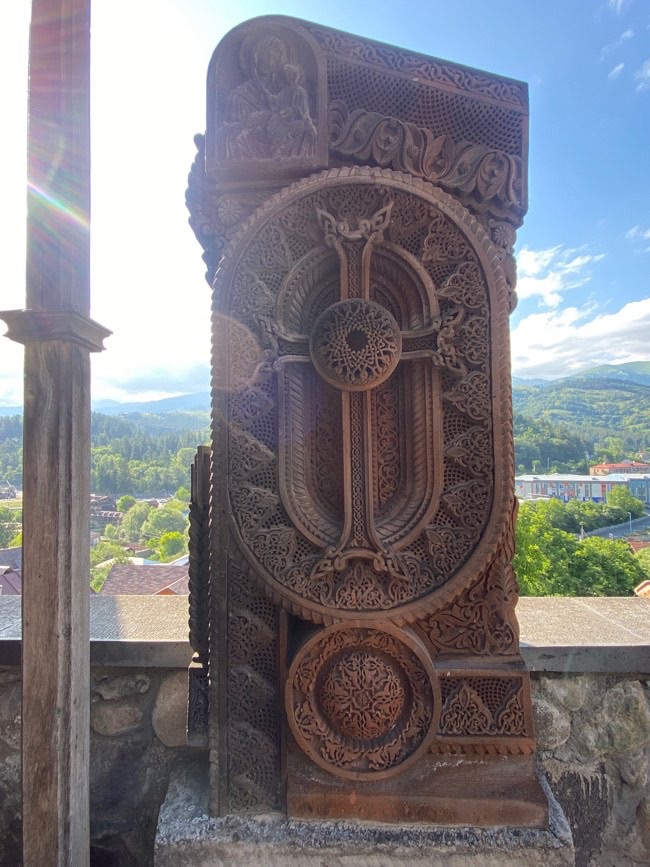
An absolutely amazing khatchkar which blew my mind! as you first try to get over the beauty of the khatchkar itself, you then take a look into the circle opening in the middle of the cross and you see….
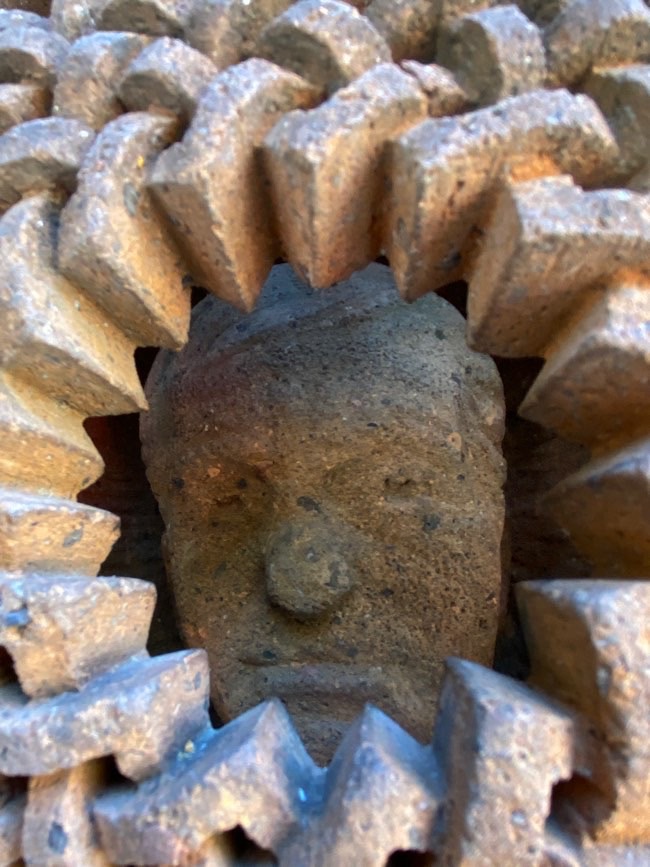
A mysterious face!!!
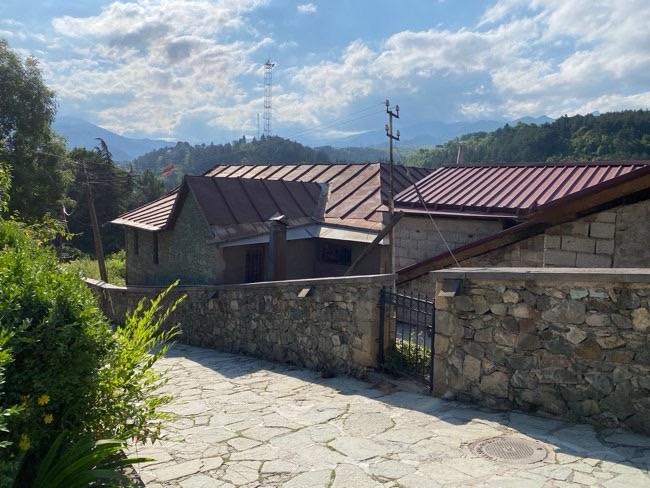
We went rambling down the old paved streets and enjoyed the views and the old Dilijian area
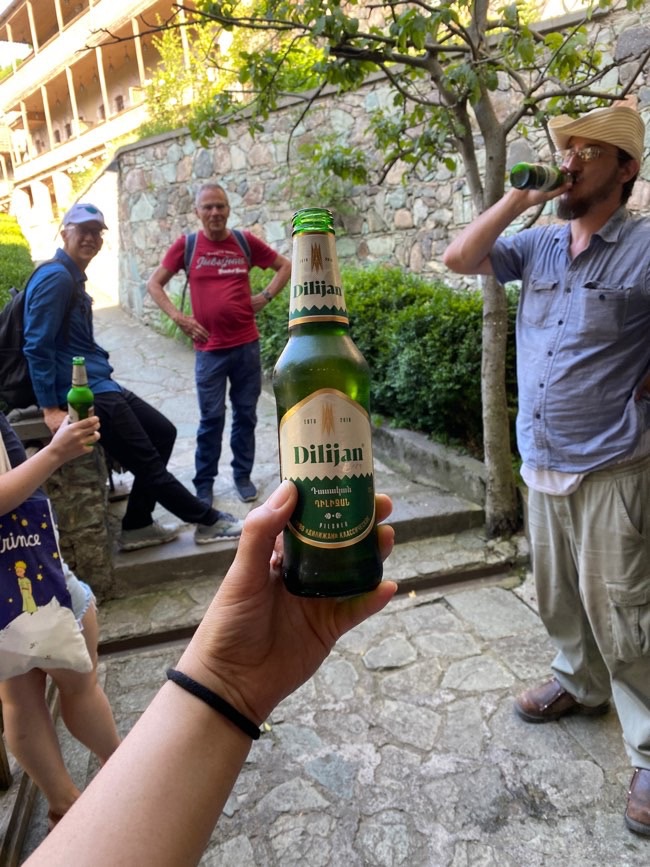
The American started it! he found a restaurant and bought some beer, we thought it was a good idea and I followed suit! went down well, went exploring again

We walked along historical Sharambeyan St where we saw the old 2 storey houses with their wooden balconies
It was the last stop for our adventure today, I felt amazing after all the places I saw and explored, it was a perfectly planned trip with quite a few sites to see and felt good to sit on the bus back to Yerevan and quietly look outside at the scenery passing by, happy and content with life and the new experiences added to it…
 The Wandering Passport