

CYPRUS
CAPITAL – Nicosia
OFFICIAL LANGUAGES – Greek / Turkish (Armenian / Cypriot Arabic)
GOVERNMENT – Unitary presidential republic
INDEPENDENCE – 16 AUG 1960
JOINED EU – 1 MAY 2004
POPULATION – 1.2m

Famagusta & Salamis
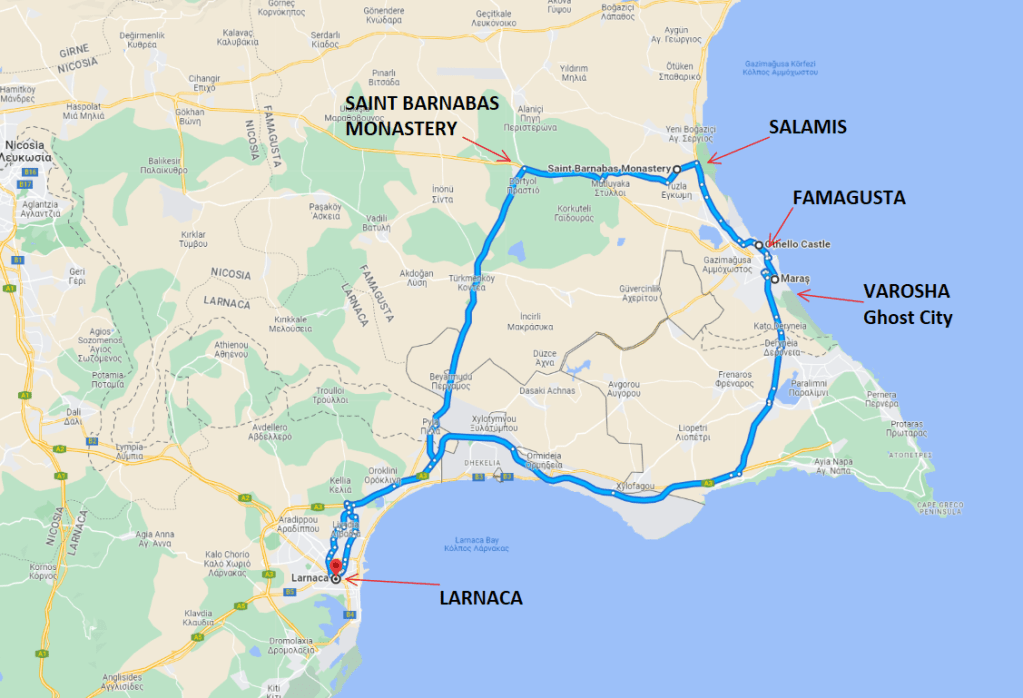
Larnaca -> Saint Barnabas Monastery -> Salamis -> Famagusta -> Varosha -> Larnaca
ACCOMMODATION
I always find the best prices via Booking.com – check out the DEALS page
https://booking.tp.st/eN4sBFl3
The bus left Larnaca at 7:45am to make the pickups along the way
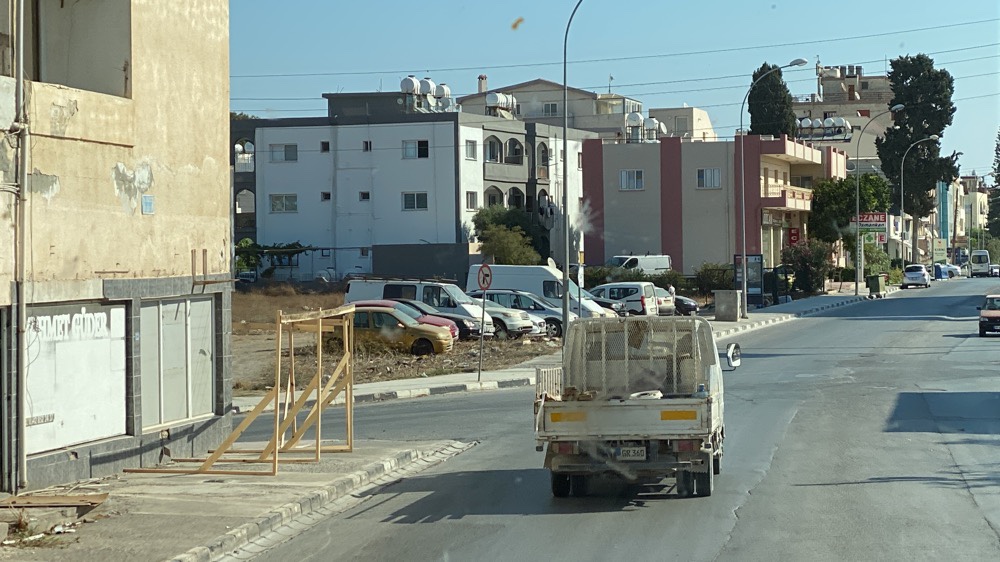
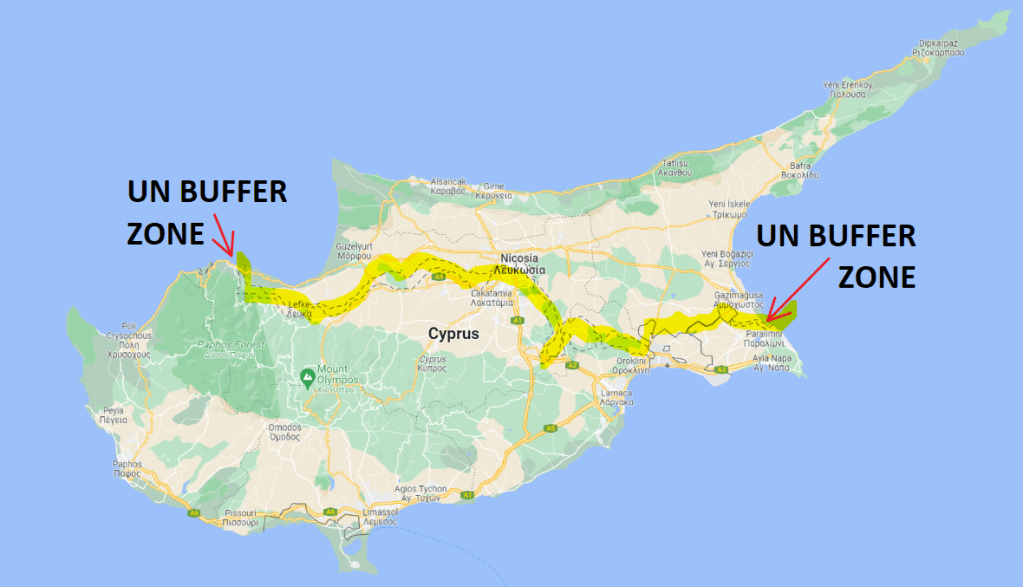
We then started driving out of Larnaca and saw some interesting sculptures, churches, mosques and pretty rolling hills as well as UN buffer zones
Cyprus has been an important island from a long time back and many civilisations have tried to conquer it
in 1925 they were part of the British Colony but rebelled and in 1960 became independent (British still kept some areas as bases though)
The Greek-Cypriots and Turkish-Cypriots lived in peace on the island for while and the British wrote a constitution to satisfy both communities

However… many Greek-Cypriots wanted Cyprus to be connected to Greece (which is what the British had been promising them for years) which finally created violence between the 2 communities that began from 1963 and onwards
15 JUL 1967 the Greek Military rebelled in Greece and took over the government, overruling the current President Makarios III – this also affected Cyprus as the Turkish Cypriots had stated that if the Greek Military tried to take over Cyprus that the Turks would get involved
The country went into chaos and civil war
The Turks were not happy and in response they invaded Cyprus 5 days after the civil war – 14 AUG a 2nd invasion happened and 37% of the island was taken illegally and was named the Turkish Republic of Northern Cyprus BUT it is NOT recognised as a legal country or government
Cyprus to this day has remained a divided island – UN peace talks have come to a dead end
There are many UN buffer zones around the island

We came to our first checkpoint heading toward Famagusta – Deryneia Border Crossing
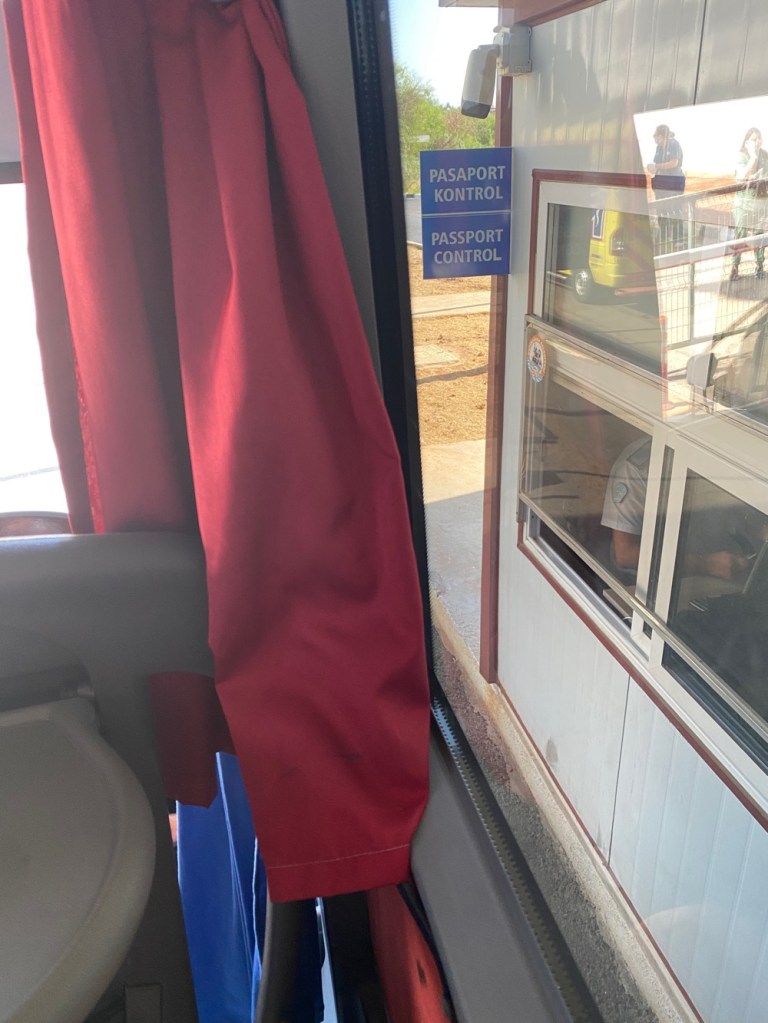
Drove up to our first border entry into Northern Cyprus, the Turkish part
We had to pass first the Greek checkpoint, stayed on the bus, gave our passport over, same wih the Turkish check point
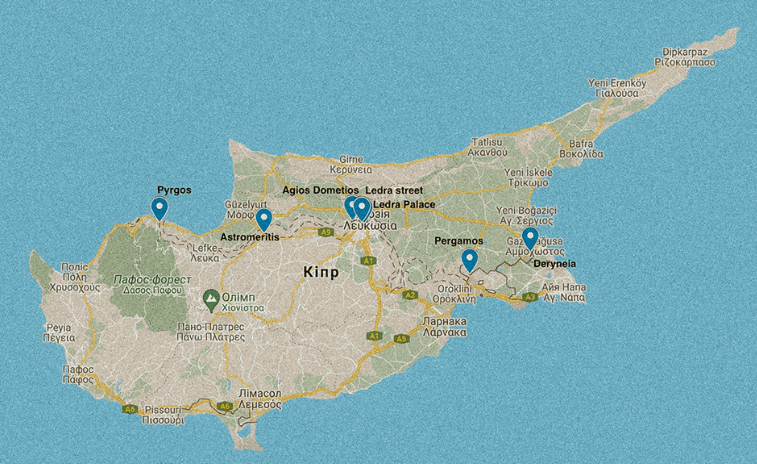
There are 7 checkpoints in total on Cyprus – here they are located on the map with blue arrows
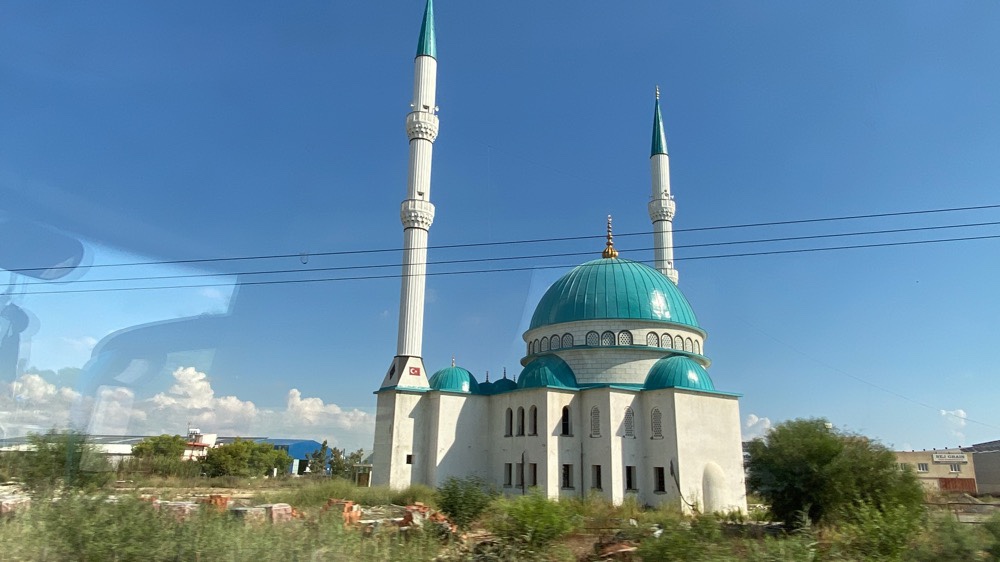
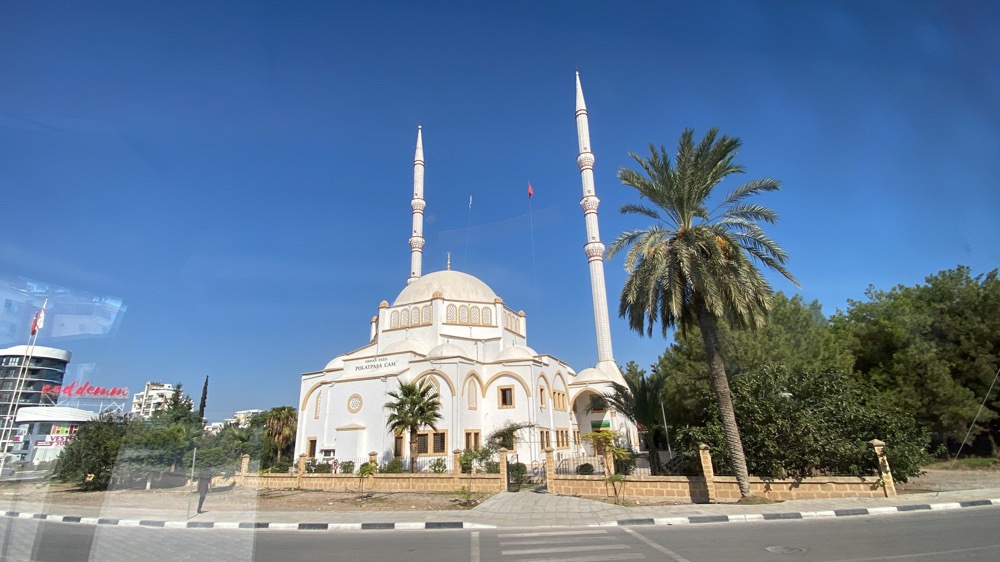
Some interesting Mosques
VAROSHA – GHOST TOWN
LOCATION ->
https://maps.app.goo.gl/zWZJhq2E3wSc2QDM9
6.2km sq – Varosha (Maras) was formerly a rather glamorous, affluent resort region – The rich and famous, such as Elizabeth Taylor and Richard Burton, frequented its many hotels, of which there were over 100, with a bed capacity of over 10,000. It was the place to be in the 1950s and 60s!
Since 1974 it has remained empty, taking on the title of Ghost City
It was due to the intervention of Turkey in 1974, after an attempted Greek military coup, to support the Turkish Cypriot community who had suffered from decades long interethnic violence, the resort was left abandoned

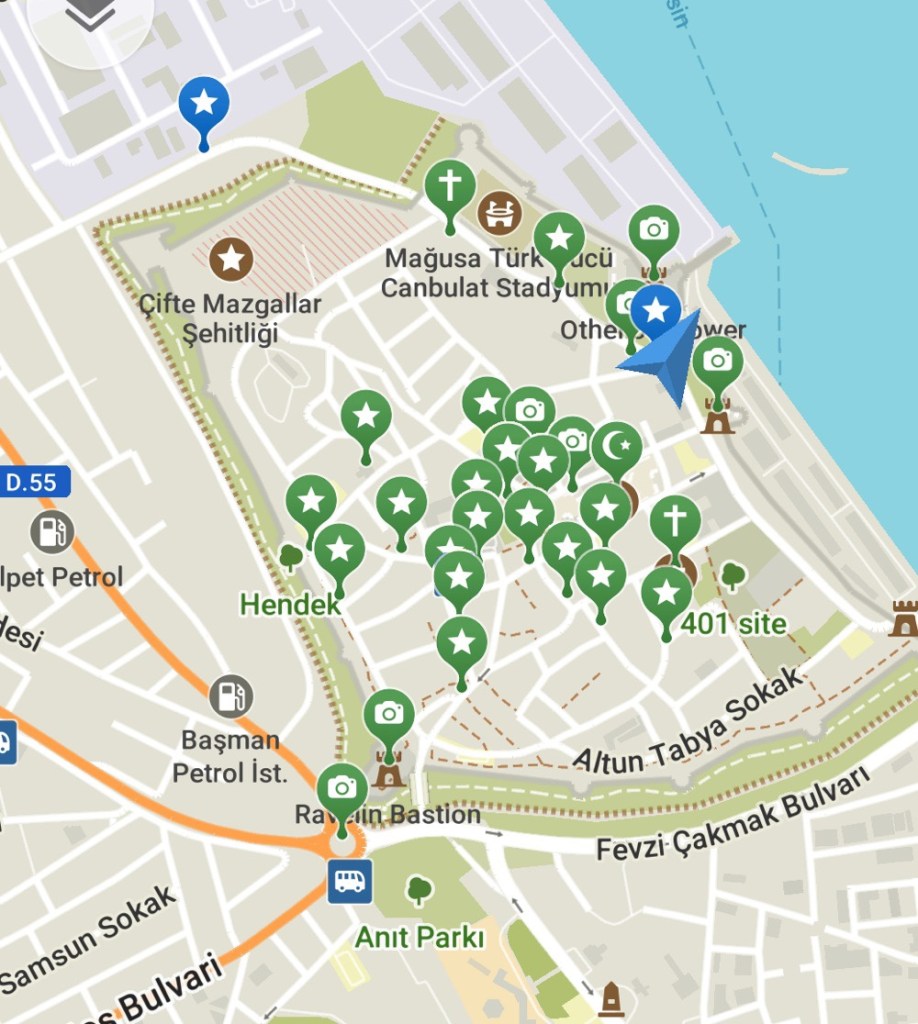
The red lines is the United Nations Buffer Zone, no one allowed to go here – they have only opened up 3.5% of the whole area
Outlined in red, is the huge boundary of the Ghost Town, it realy was huge! and the thing is its prime location right by the water – there are homeless people in Cyprus but noone is allowed to go into this whole area, doesnt make sense does it? All politics and $$$
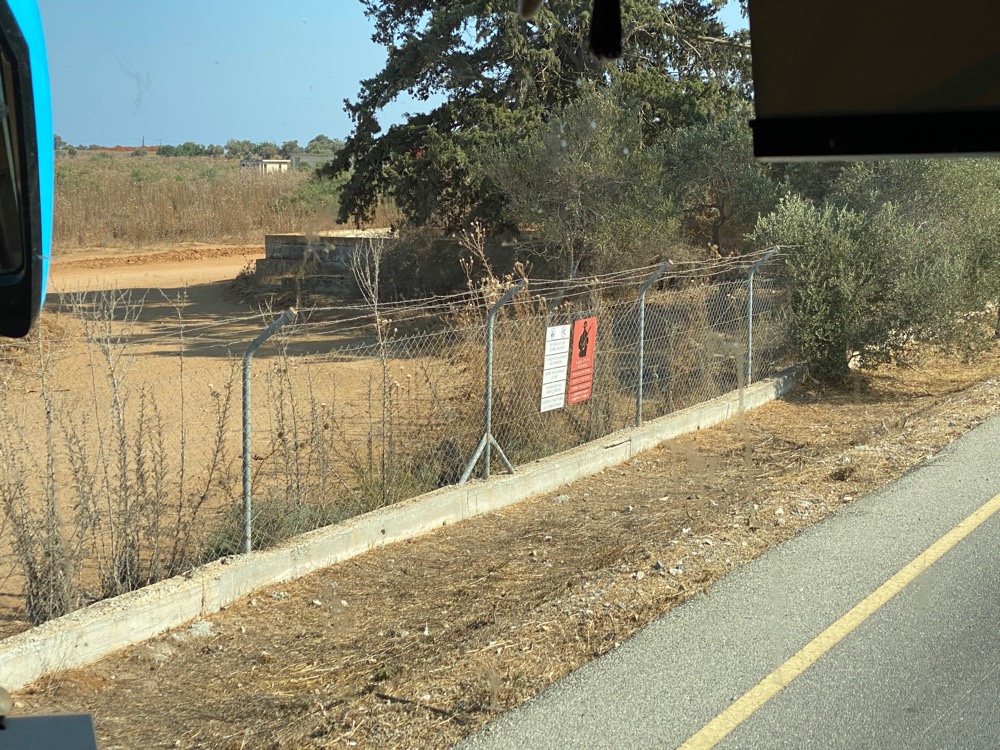
FORBIDDEN ZONE – We drove around the boundary wall and there are red signs all around making sure to keep people out
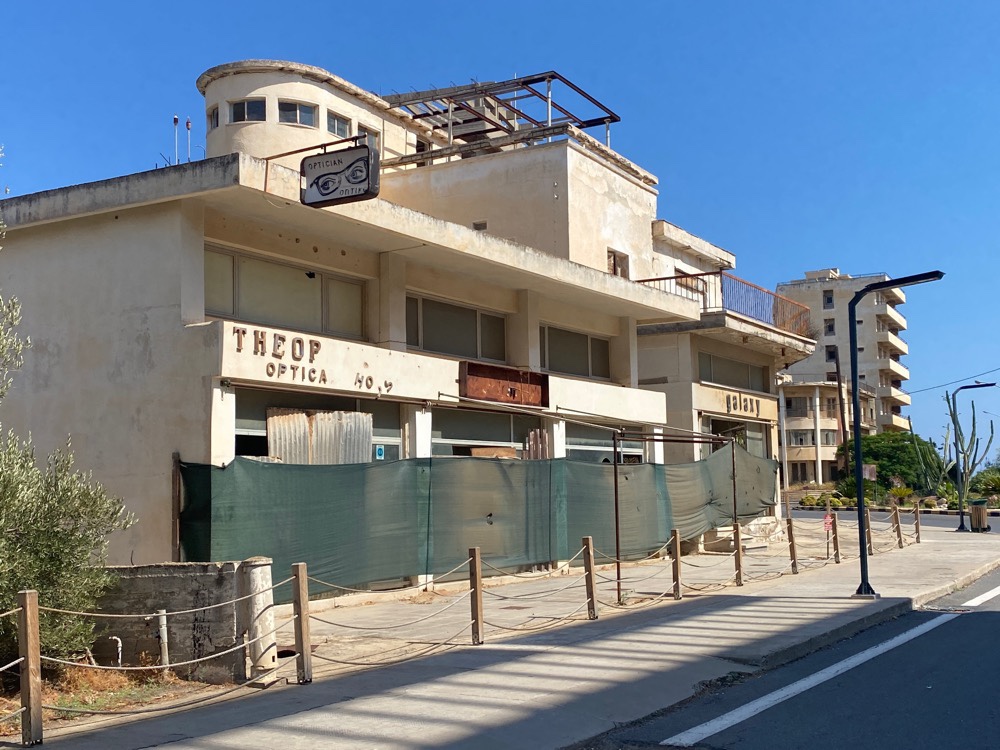
After the Turkish military took control, the 39,000 residents were forced to leave their homes, one of the guys on the tour knows a friend who owns a property in this town and he is not allowed to do anything to it, he basically lost it to the Turks
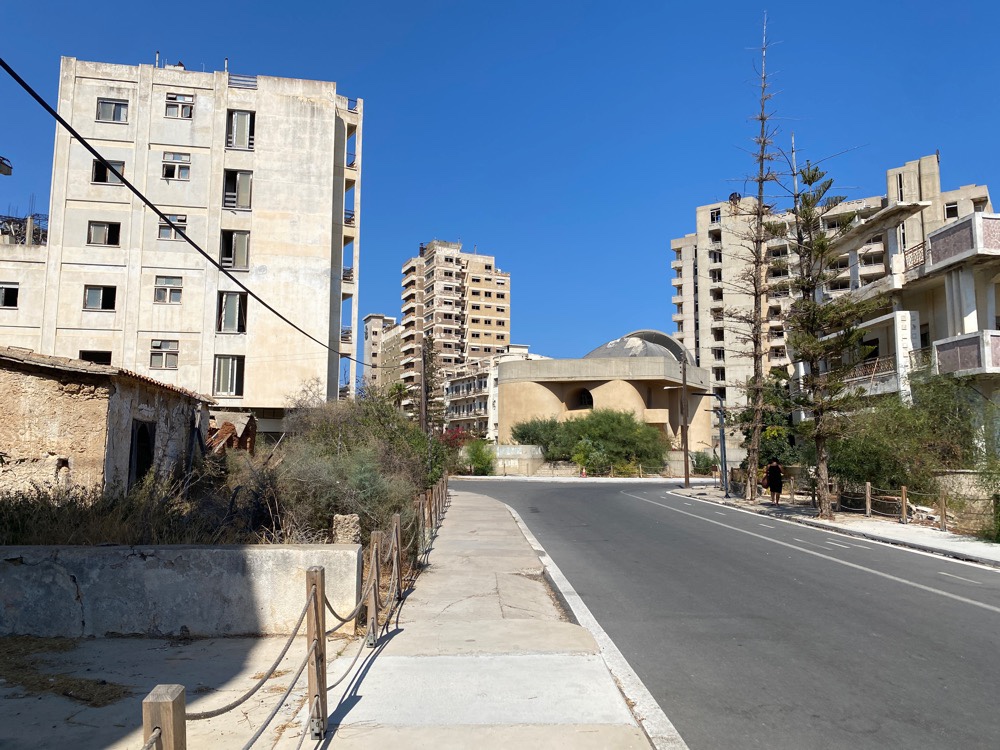
A 1984 United Nations resolution stated that the empty town could only be resettled by its original inhabitants. Efforts in 2004, under the Annan Plan, meant the area would have been given to the Greek Cypriots to control, however they chose to reject the plan, whereas the Turkish Cypriots voted to accept it. It’s derelict status thus continued into what is now 46 years

The beach has a half fallen over boundary line with the Turkish/ Cypriot side and you are not allowed to coss this area even when swimming to go to the other side of the meshed fence – its so wierd being in the modern world & seeing this type of politics playing out… it is really sad actually because this whole town felt so dead and decaying and it was awful to hear the stories and how it was the top holiday location in Cyprus

They have opened the beach area up for tourists recently, Oct 2020 to be exact, and already 330,000 tourists have visited, so the beach front is full of umbrellas and swimmers – of course you cant swim past the mesh fence on the Turkish side – they bulldozed the streets to clear them of debris to allow people to walk around, they secured the buildings and no one is allowed into any property
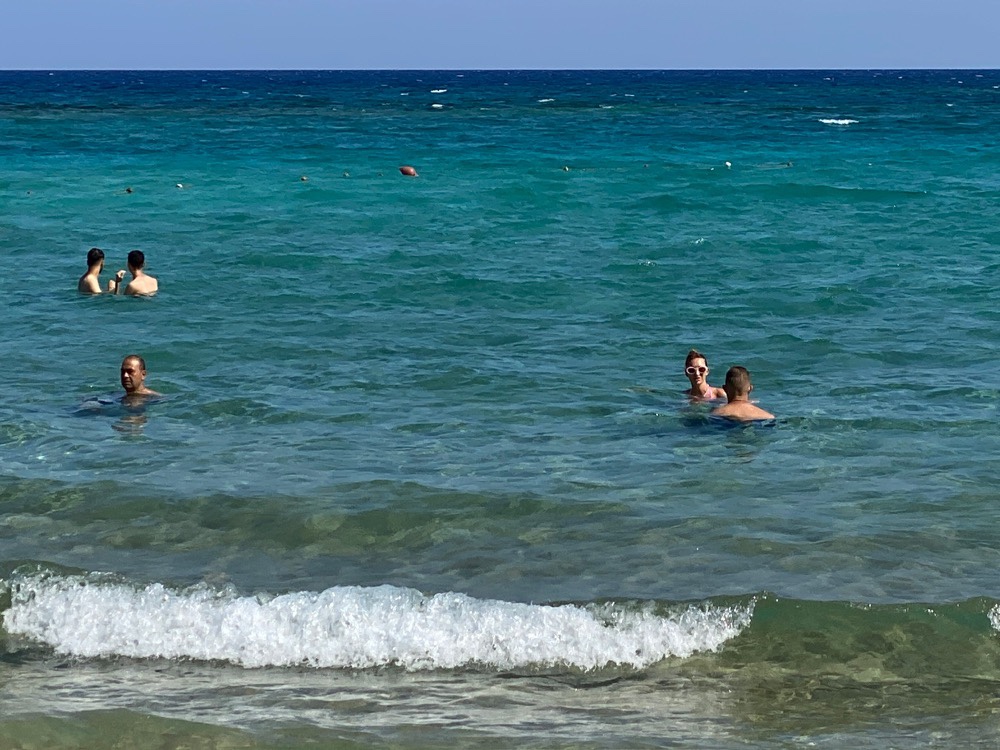
The beautiful aqua clear waters, both Turkish and Cypriot sides looked and im guessing felt as wet as the other lol sigh… politics
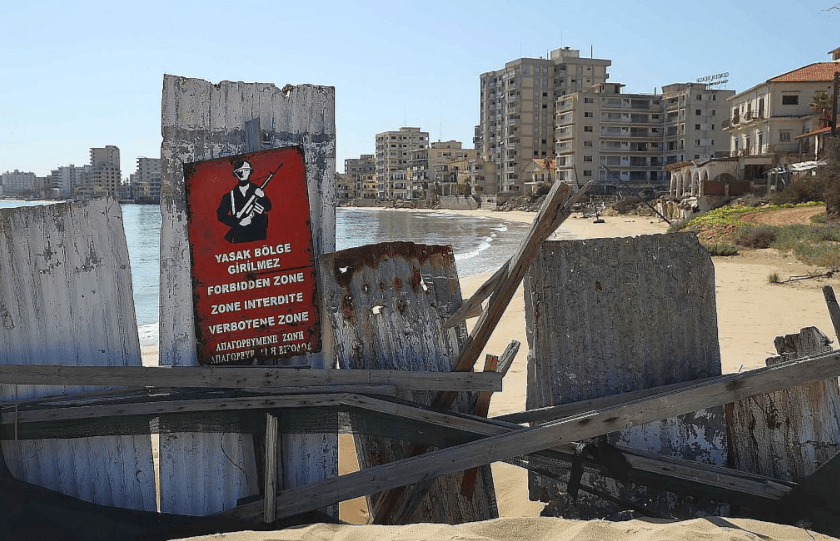
Secure fencing..

So many things faded and rusted with time, feel like in a museum walking through the streets on my own

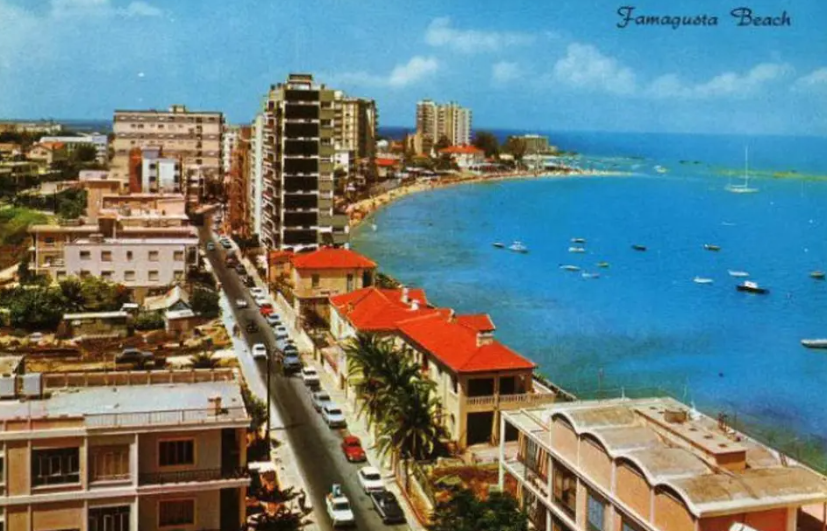
Postcards from Varosha : This was the BEFORE shot – it was known as the “French rivier of Cyprus” So beautiful and lively! Used to attract 700,000 tourists a year
FAMAGUSTA
Famagusta was once the most important port city on the island and it was during this time that the region began to flourish with wealth, which was shown through the building of the many churches of the city
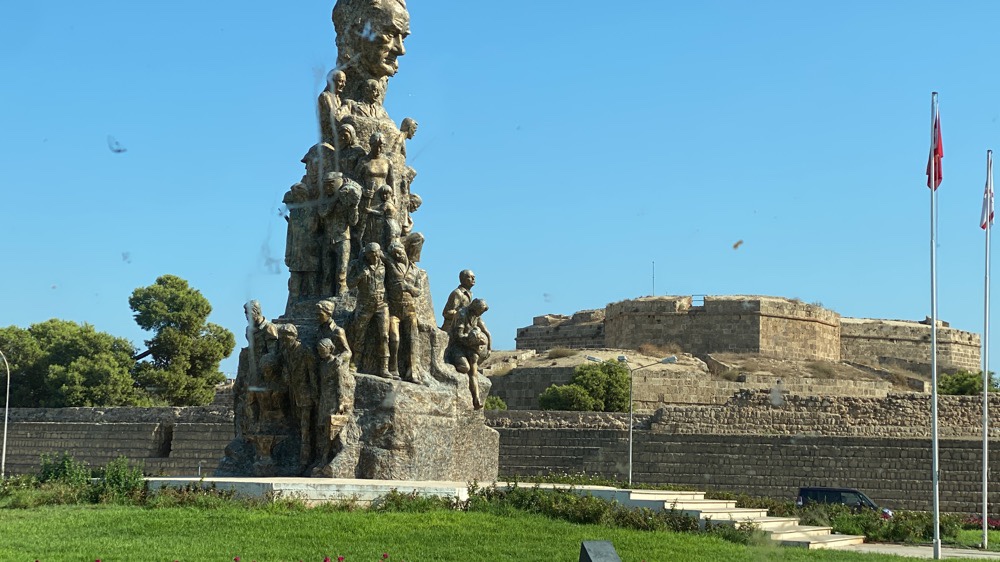
This interesting statue outside of the old Famagusta walls
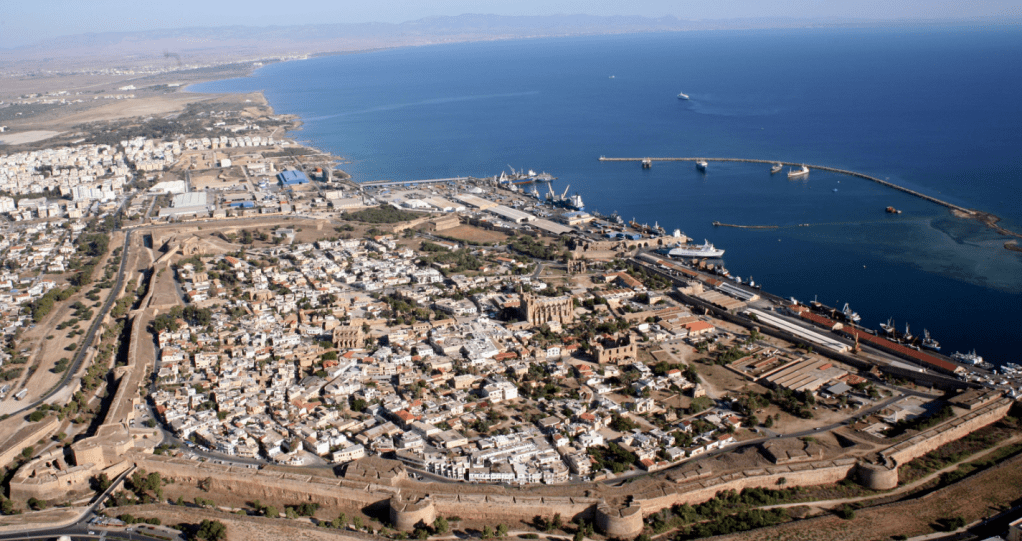
Overhead shot of beautiful Famagusto

The old city walls of Famagusta
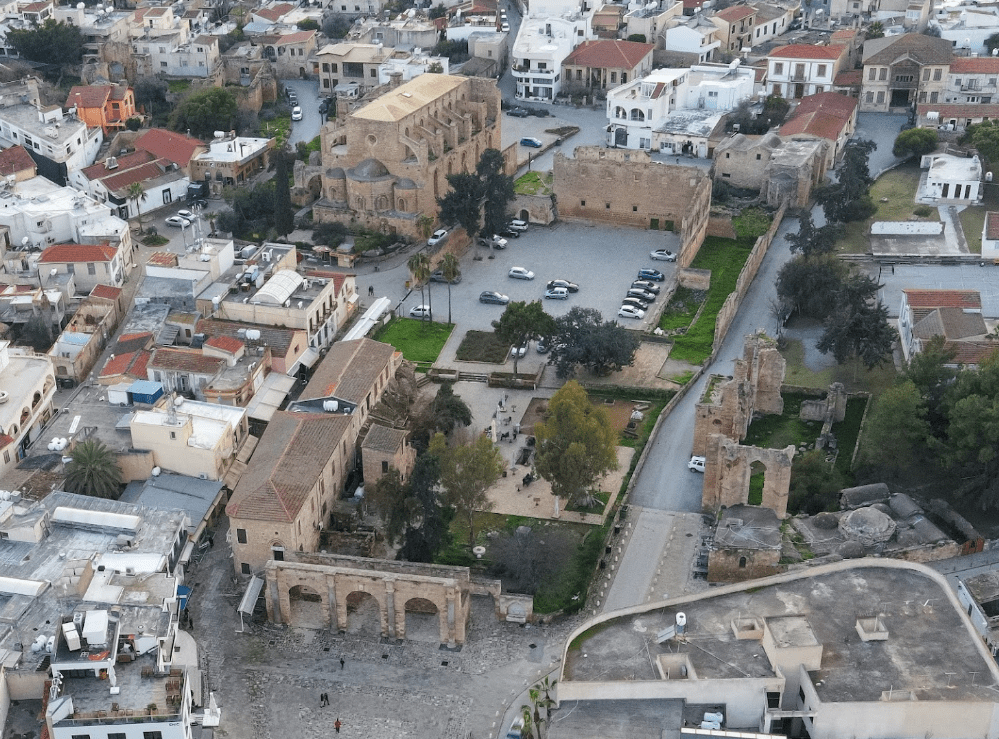
Famagusta from above, there are so many ruined, converted and re-used shells of once elegant and important buildings – I really was in awe yet a little sad too when walking around the quiet old town centre
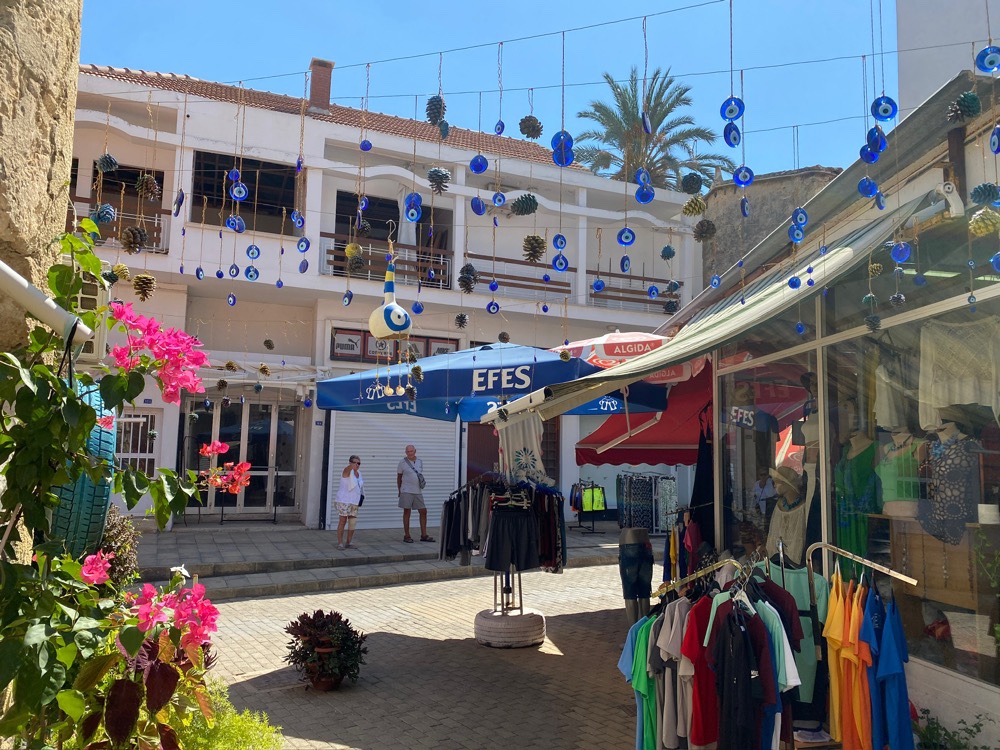
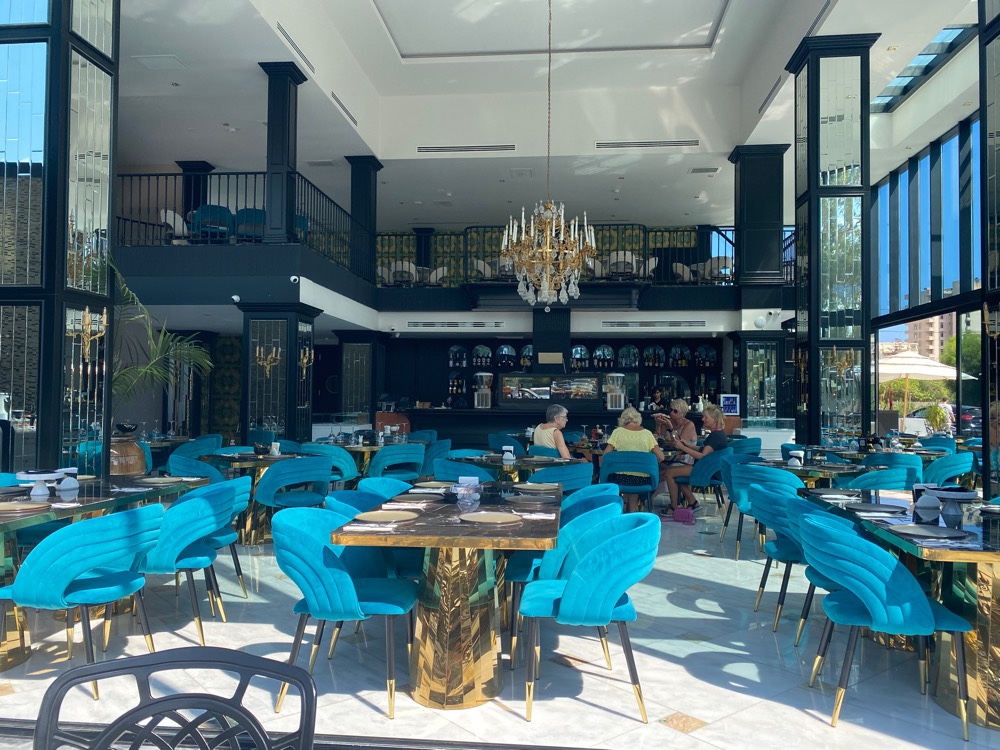
There were some really luxurious touristy places as well – like this restaurant!
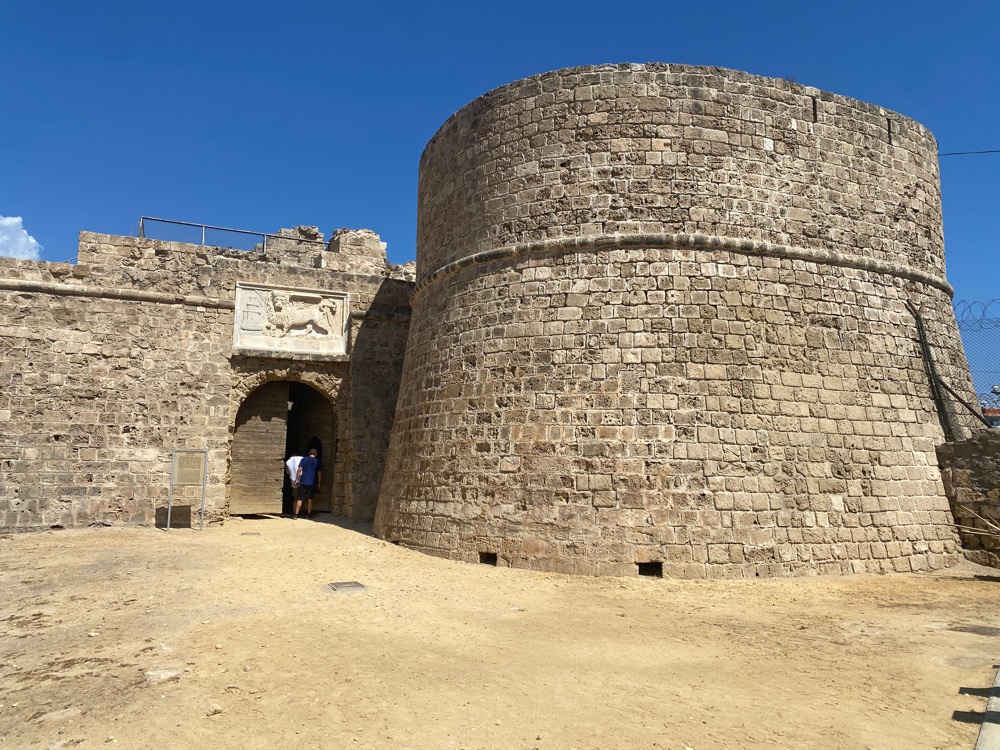
In the Turkish side – I was the first to jump off the bus so excied to see…well.. EVERYTHING
I ran off to Ortello Castle! Eager to explore and get the view of the beautiful aqua water from the top of the castle
I reached the entry gates and realised that I didnt have any Turkish Lira or Euros! DOH and the cost to get in was 3 euro, he didnt take card… 2nd DOH, I tried my best to bat my eyelashes and I sighed out loud and said I didnt have any money and hit my forehead with my palm – the man at the ticket office just looked at me and shrugged – I stood there then I dug into my purse to see what I had.. I found 2.50euro! so I sheepishly walked up and held my hand out and asked if I could get in with 2.50euro? He looks at me then waves an arm towards the castle gate and says “FREE” … and he wouldnt take any money from me! I was so happy I could get inside and ran off before he changed his mind
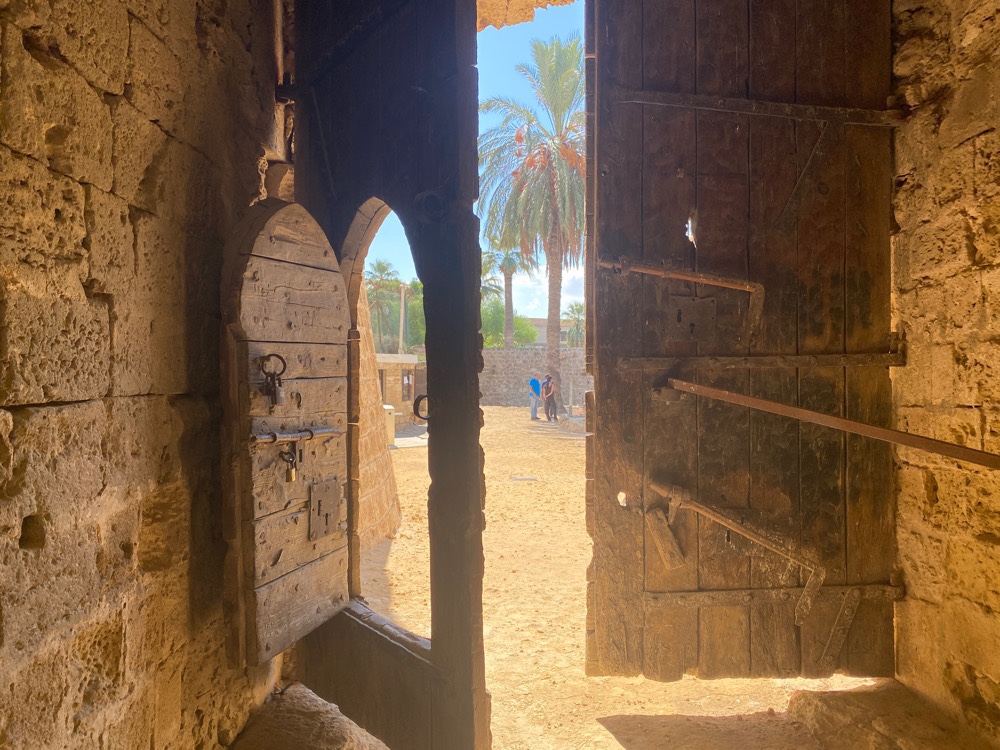
The beautiful front gate of the castle

And the beautiful view of the turquoise water from the top!
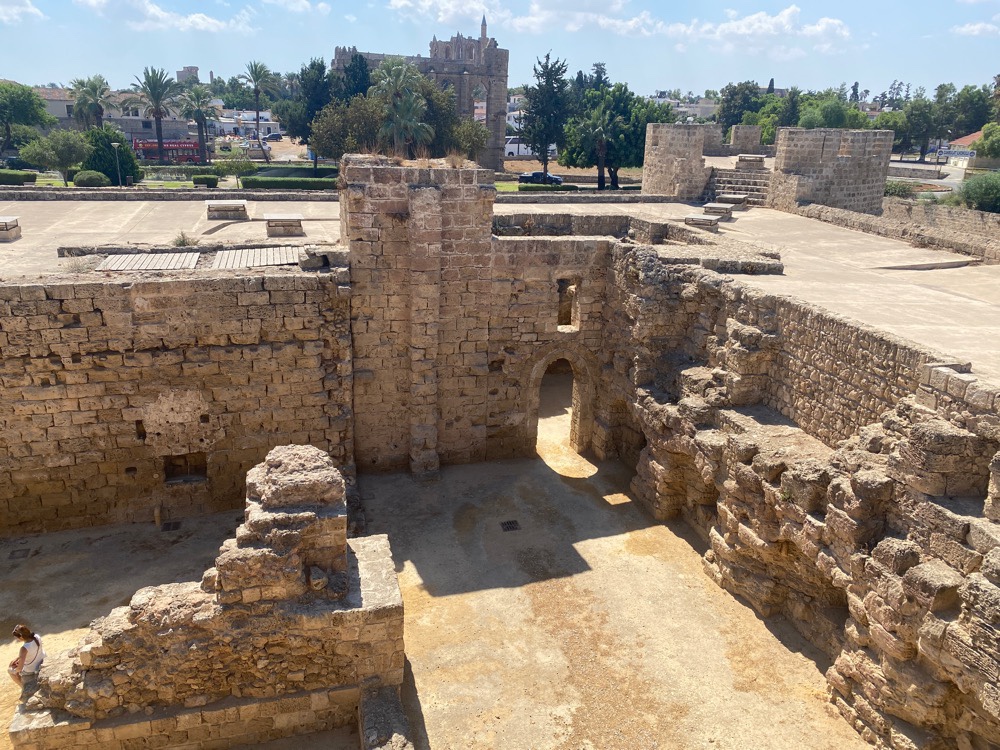
view from Othello castle towards Famagusta town centre
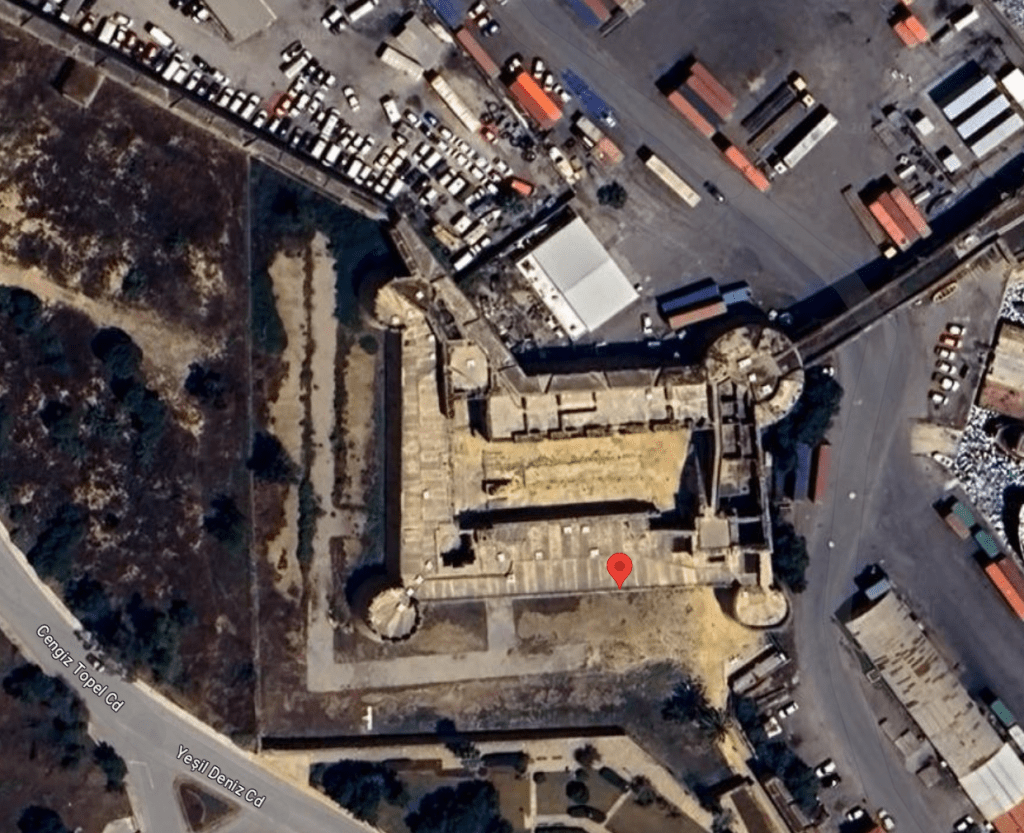
From above Ortello Castle
Churches were built all over Famagusta and it was known as the district of churches!
THere were so many churches here that it was said to have a church for every day of the year. Paid for by a local who was intent on buying their place in heaven!
Each church has its own unique story to tell
Ganchvor Sourp Asdvadzadzin Monastery
I found an Armenian church here!

Said to have been built by Armenian refugees from Cilicia in 14th c. built in typical Armenian style but with cypriot masonry
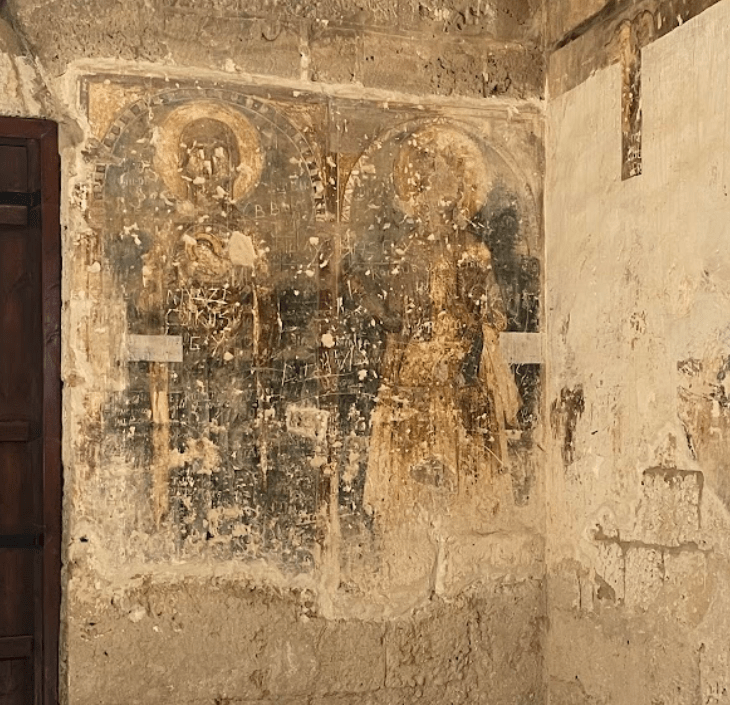
This building was an important part of Armenian history, its said that Saint Nerses Lampronatsi (who was an arch bishop of Tarsus, Cilicia in 12th c. and a significant figure in Armenian history) studied here in 12th c. so perhaps this was some sort of theological institute

The location is a little on the outskirts of the centre
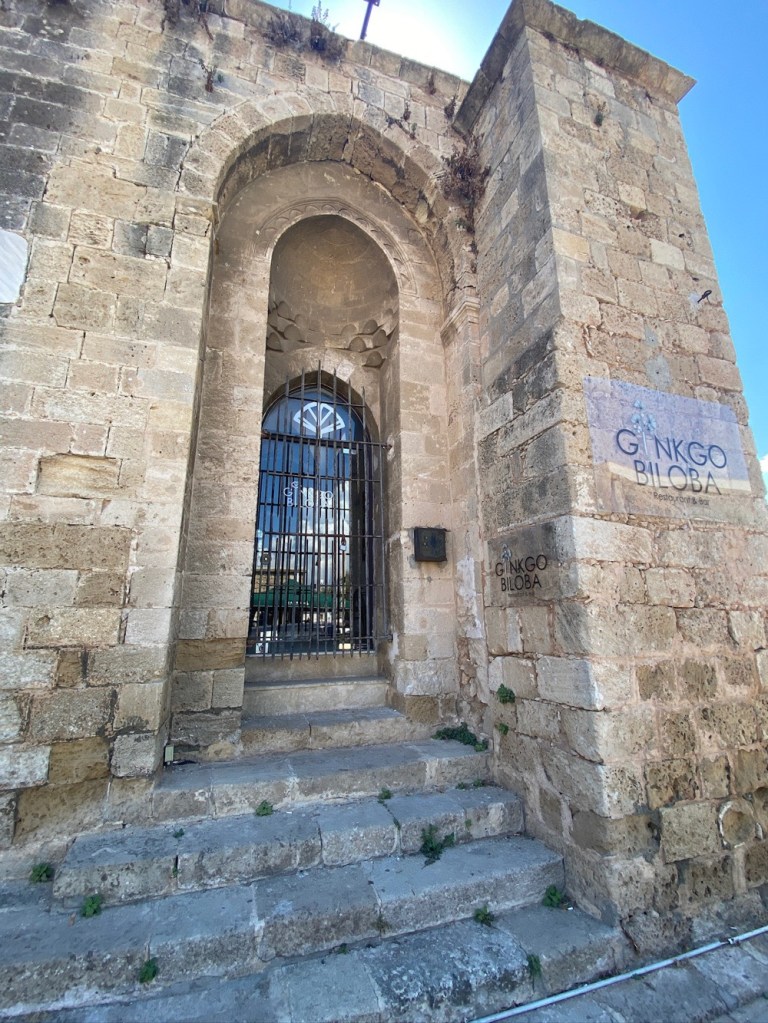
An old part of the Cathedral, now a cafe

So, as I only had a limited amount of time to explore the city and I was running around like a mad woman chasing a goat and I really wanted to sit down, take a break and have a beer BUT had to make a compromise and instead I bought this chilled beer from the convenience store and continued my exploring with this in my hand, really hit the stop on this boiling hot day!
Lala Mustafa Pasha Mosque
This beautiful building is the largest medieval building in Famagusta and was once the Cathedral of Saint Nicholas and later as Saint Sophia
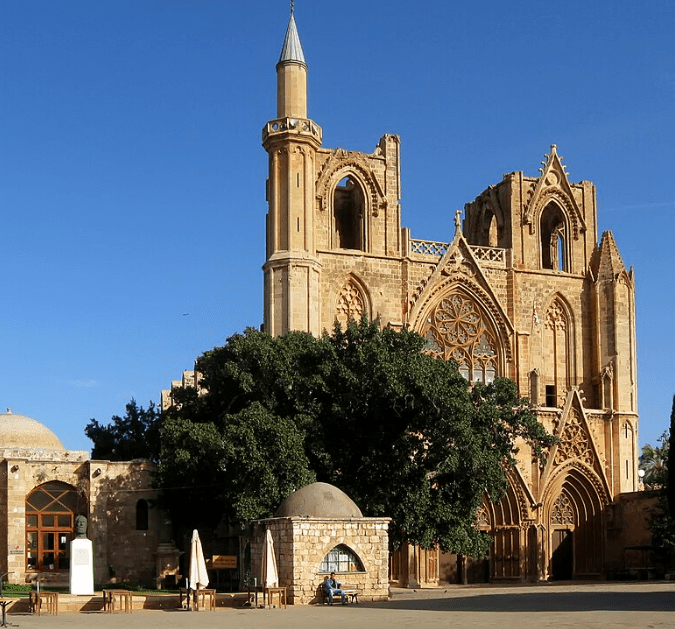
Built in French Gothic style, the cathedral was converted into a mosque after the Ottoman Empire captured Famagusta in 1571
The 2 towers were damaged due to earthquakes and also constant bombardment by the Ottomans in 1571 and were never repaired
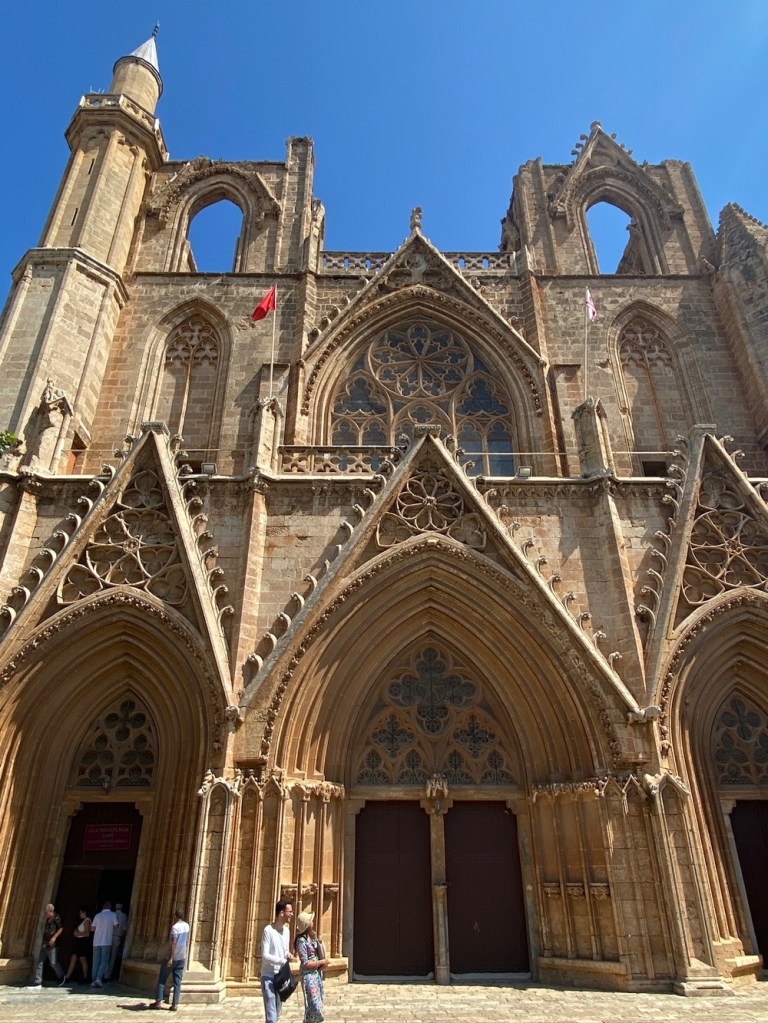
The west door and main entry way is in gothic style
I had to go inside and explore! Itook my shoes off and wore my scarf around my waist to make it into a long skirt to cover as much skin as possible

You know, the inside still had its original Cathedral feel to it, gorgeous high vaulted ceilings, it all just looked really bare boned and plain, like everything had been scraped off and back to minimum, like it had all its foundation and make up taken off with a huge make up remover!
Many paintings on the walls and the altar were plastered over or removed, tombs and altars gone
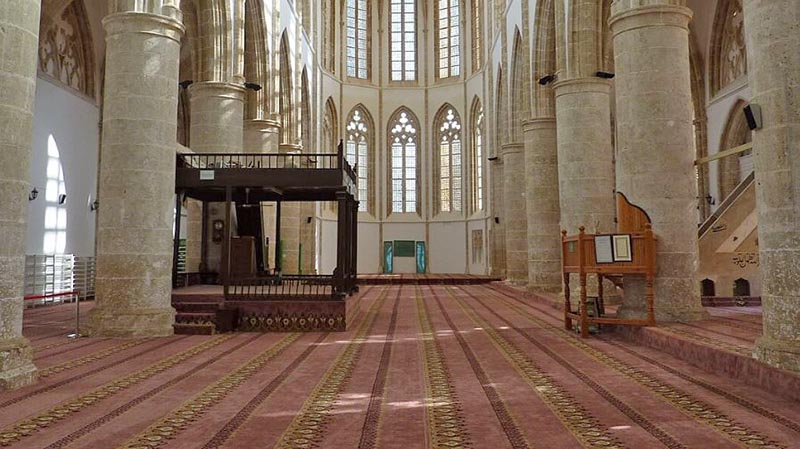
The floors were all carpeted and bare without any seating or anything else but cupboards for shoes
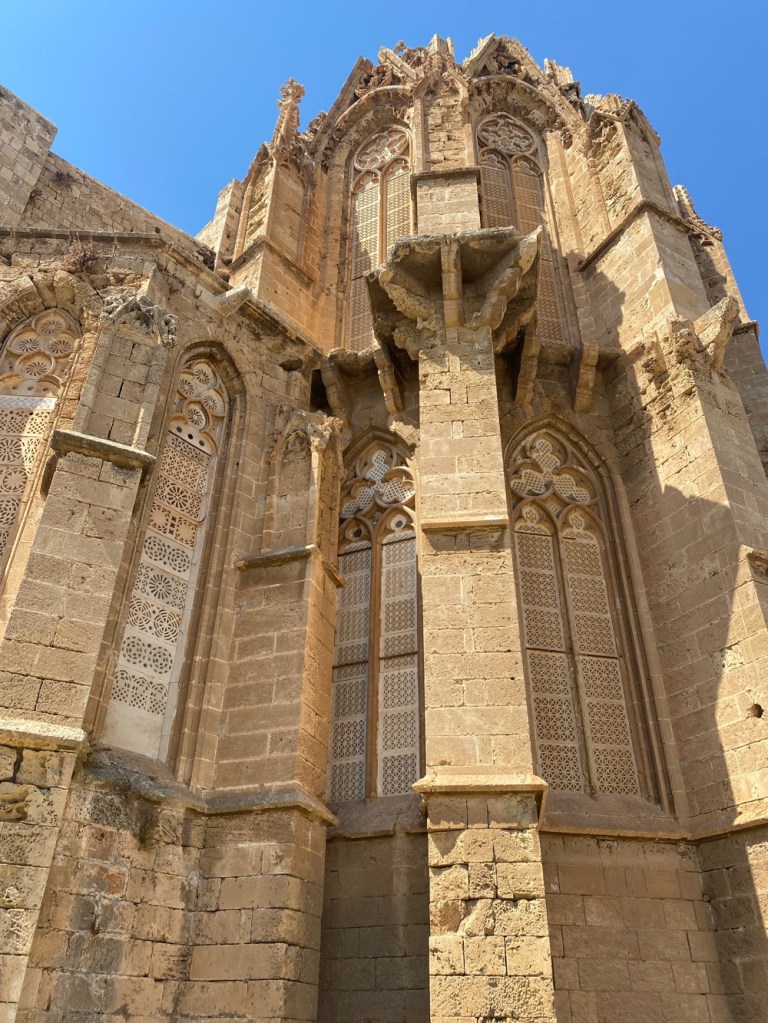
Even the stained glass windows had been removed and some had been replaced with some kind intricate (and beautiful!) stone or wood pieces instead – this was the back of the building

Inscription on the south side of the Cathedral recording the progress of the construction
“1311 – After an unfortunate episode when the current bishop embezzled the restoration fund – Bishop Guy of Ibelin bequeathed 20,000 bezants for its construction”
St George of the Greeks Church ruins
This church of St. George was an Orthodox Cathedral
Has a mix of Gothic and Byzantine styles – ruined in the bombings of 1571 by the Ottomans
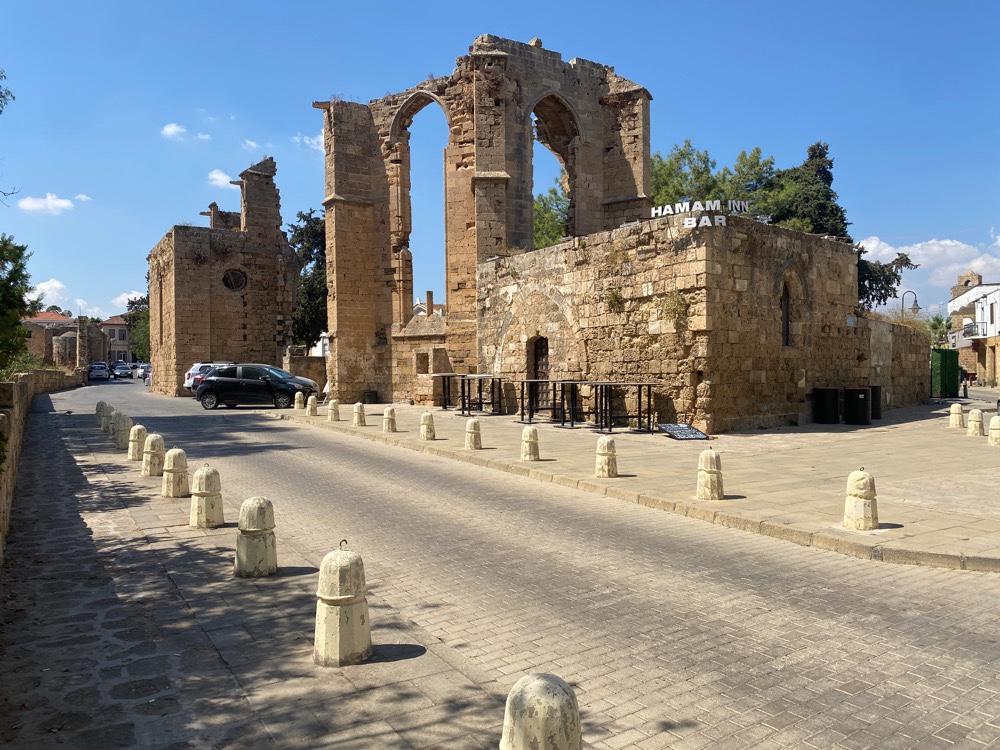
Makes me sad sad sad! There are 15th c. fresco fragments clearly visible in the three apses, these are fading fast and there is no move to preserve them!
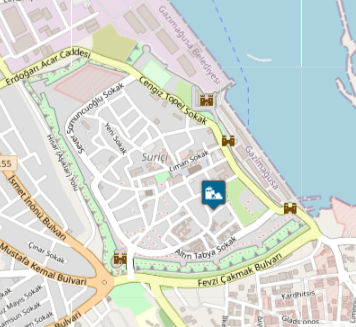
Hamam Inn Bar – attached to ancient history, a derelict and ruined church of some sort
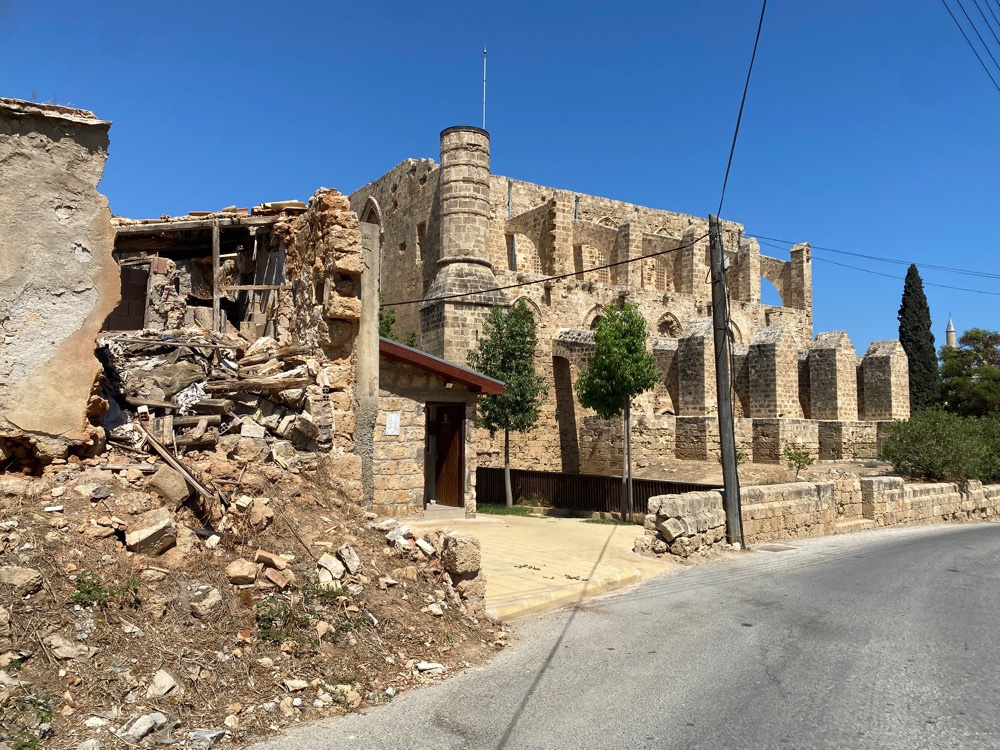
The sad thing was that there were SO many derelict and ruined buildings and some were ruins of once beautiful chuches which makes me really angry more than sad these days because of the utter ruins that are left due to money and greed of governments!
ST BARNABAS MONASTERY & ICON MUSEUM
This twin domed church is dedicated to St Barnabas who is the patron saint of Cyprus
It was said that St Barnabas was Jewish and came from Salamis emigrated from Syria to Cyprus – he travelled to the Holy Land to study law and while there he met Paul the Apostle, he witnessed some miracles of Jesus and in 33AD took up Christianity

He was made Archbishop of Salamis when he returned in 45AD and began preaching the teachings of Jesus – The Roman governor of the Island Sergius Paulus converted and in turn Cyprus became the first global region with a Christian ruler
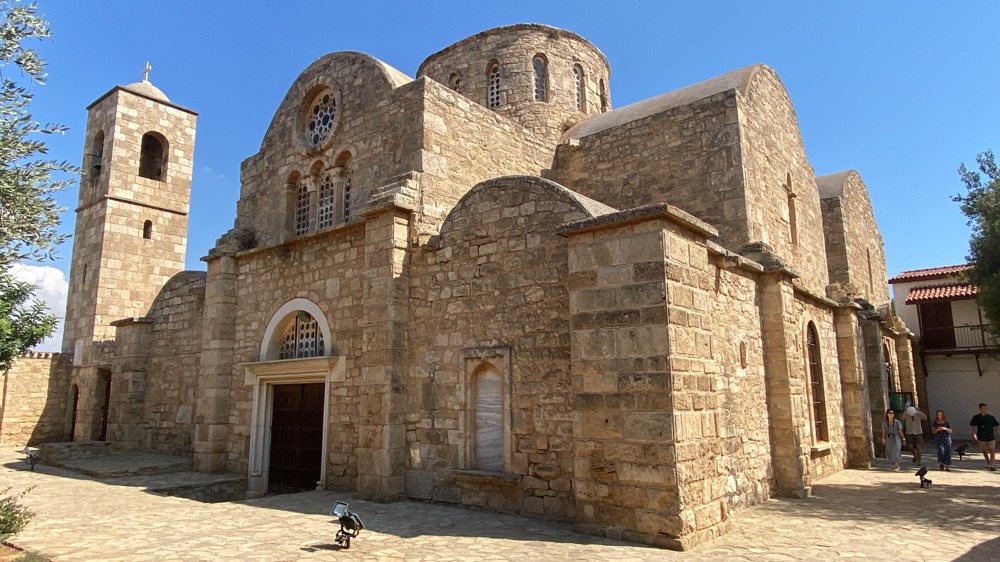
St. Barnabas Monastery as it stands today was built by the original ruins of the Byzantine church in the 18th
There is a courtyard at the back surrounded by 3 buildings which used to house a number of monks, as well as a place to stay for those pilgrims coming to pray at the monastery
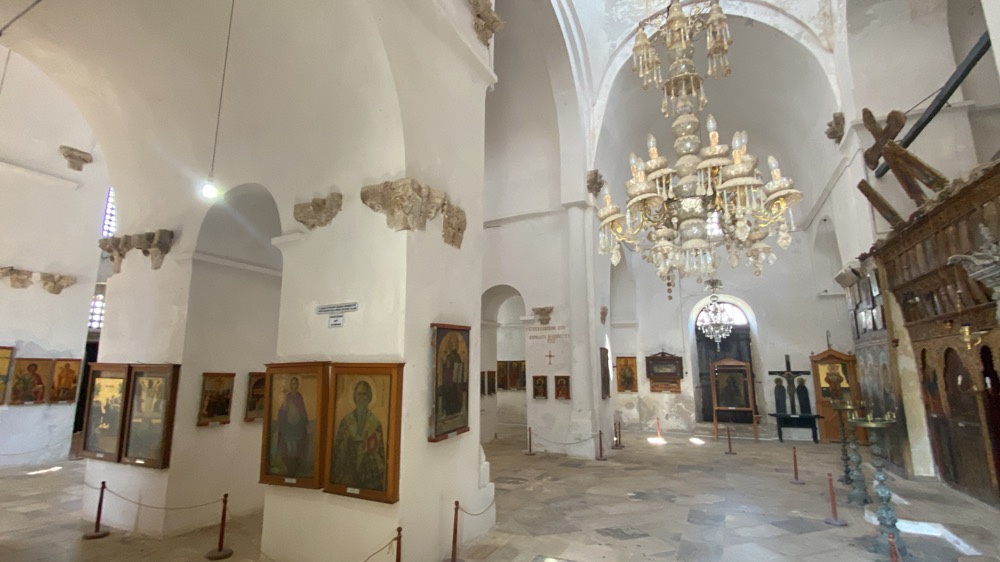
This monastery is now an Icon Museum which holds an asolutely amazing collection of Cypriot artefacts which dates back to 7th BC
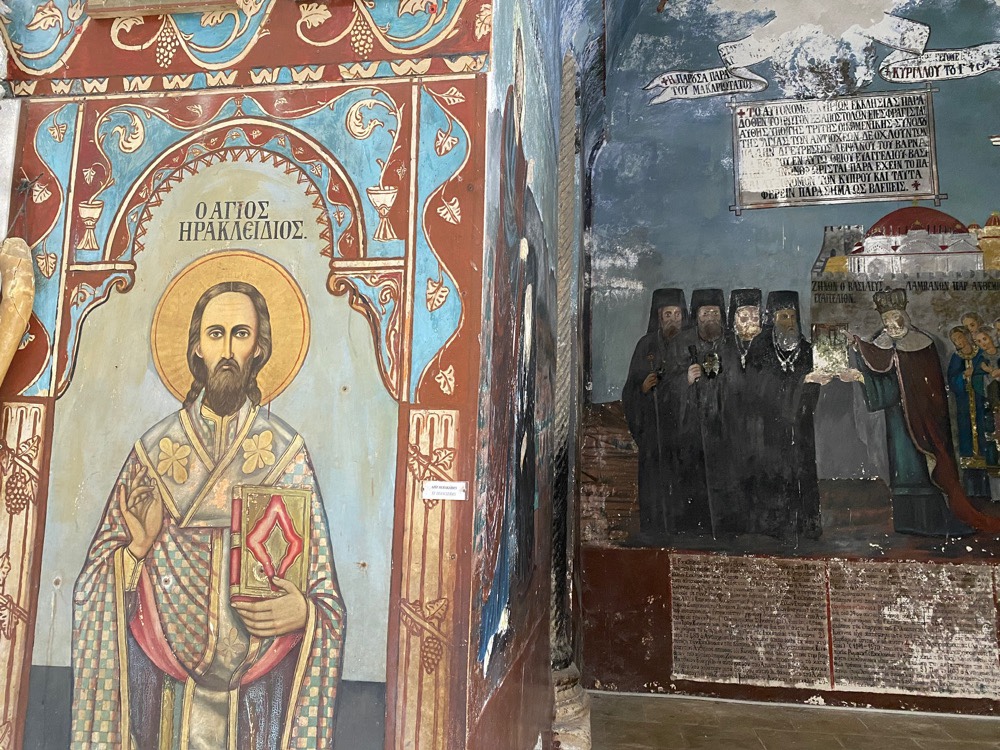
Once the centre of the Cyprus Orthodox church, the monastery is still in good condition
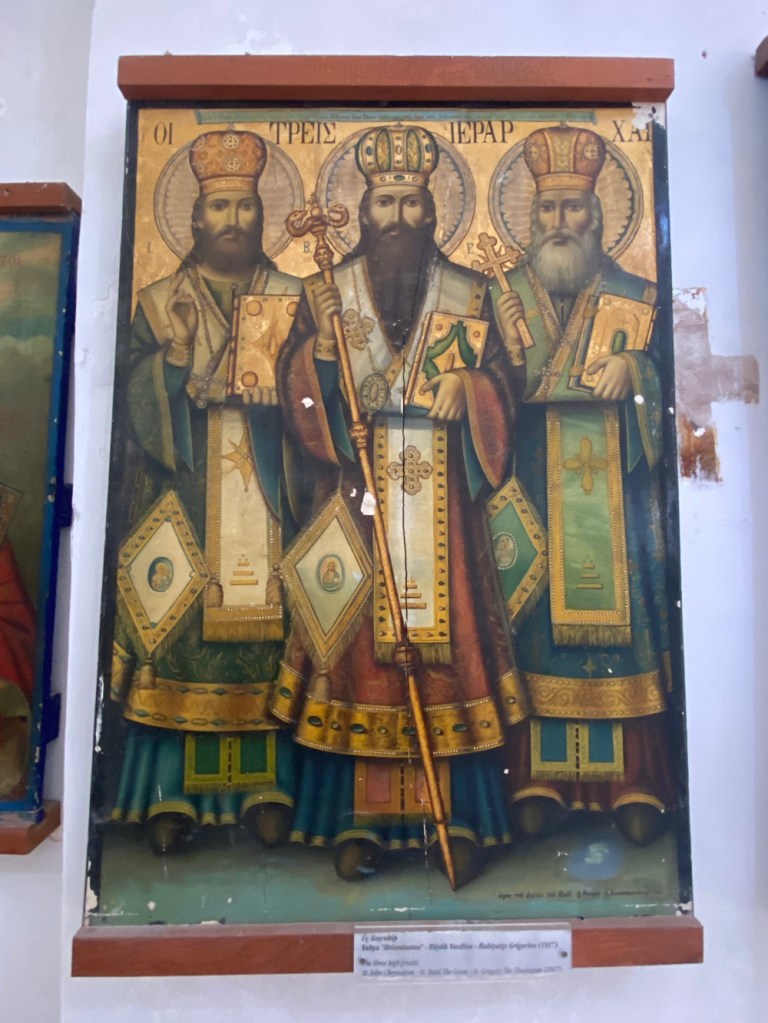
Over the years the resident monks reducd and by 1950s there were only 3 brothers who dedicated themselve to the church since 1917 – most of their time was spent painting many of th frescoes and icons on display
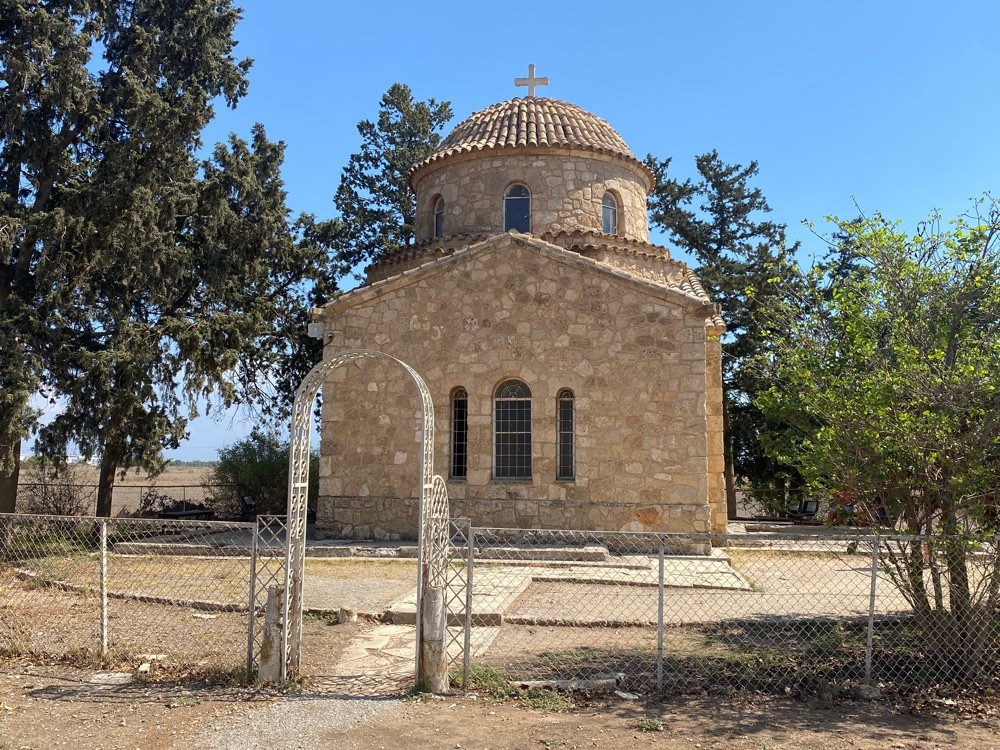
The 19th c mausoleum chapel which was built on the tomb site
the tomb was discovered in 480AD by Bishop Anthemios who had a dream about whre it was located

You climb down the stairs inside the chapel to access the tomb which is surounded by candles and flowers of those who have paid their respects – very dark, musty and eerie down here, and I was on my own
SALAMIS
1 square mile of beautiful tragic ruins of a past advanced civilisation!
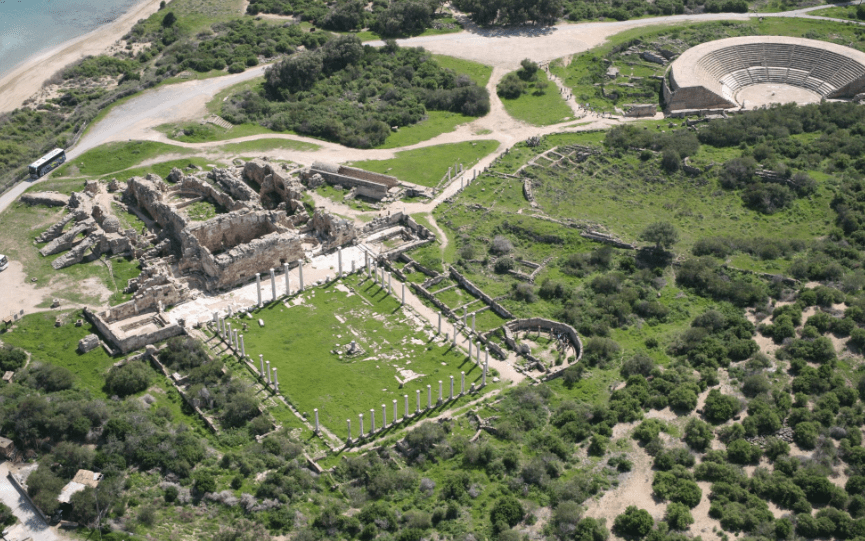
They say that Salamis was the ancient capital of Cyprus as far back as 1100BC (late Bronze stage)
During the Roman period it was an important trading centre with ships arriving from all over the world
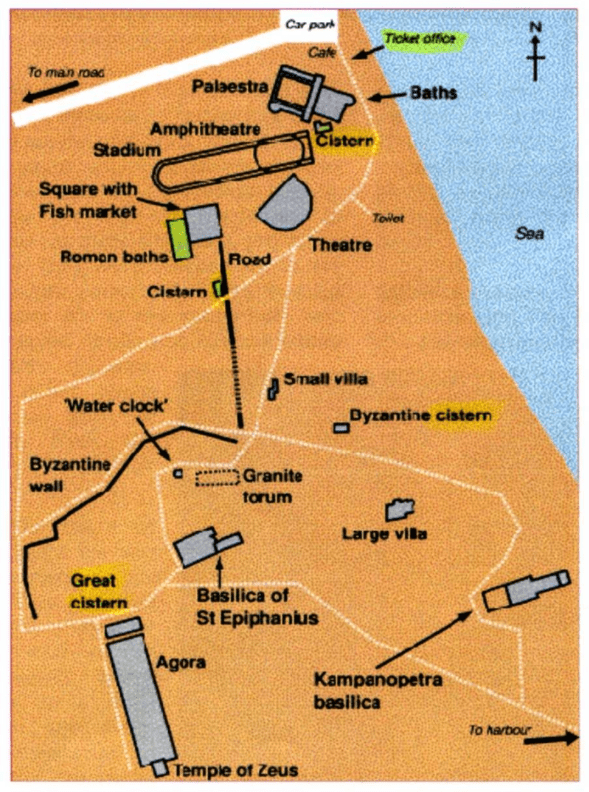
It survived successive occupations by many dominant groups over history, the Assyrians, Egyptians, Persians, Romans but its said it succumbed to the forces of nature
This city lay buried under the sand for 100s of years before being discovered
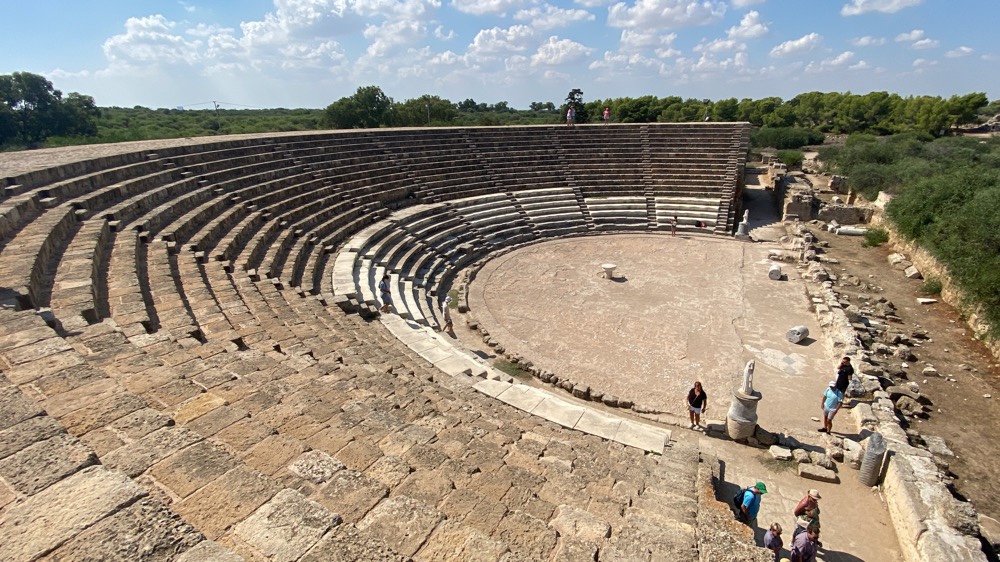
THE ROMAN AMPHITHEATRE – Lay undiscovered until 1959

They say it was built under the reign of Augustus during the first years of the Roman Empire – capacity of 15,000 seating

What is unique an intereting about this amptheare is the fact that it is facing away fom the sea and also that it is a free standing theatre where usually the Roman built into a hill which mae the construction easier
Only 8 rows of the original seating remains
To this day they sill hold performances and concerts which would be such an experience to have!
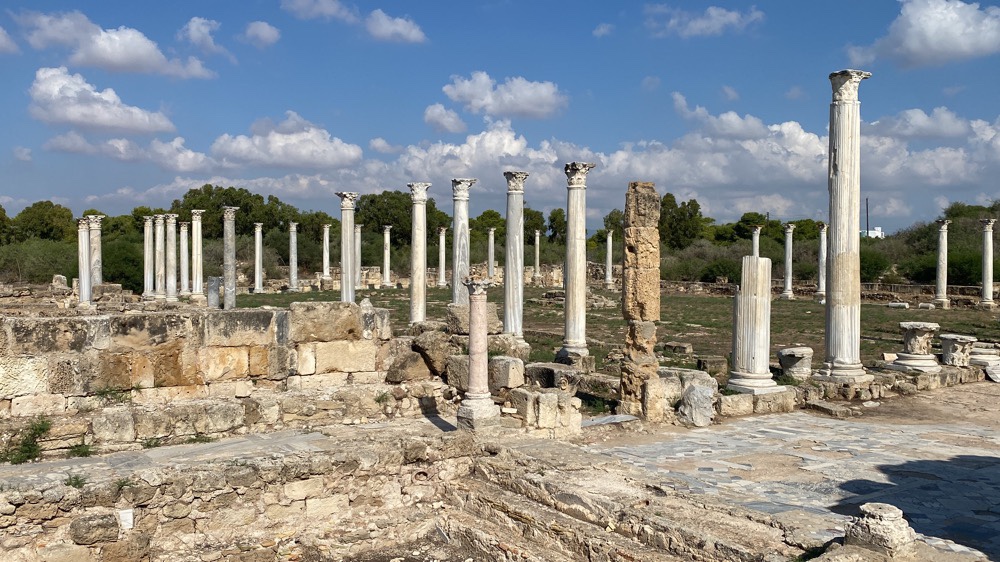
THE GYMNASIUM – The most impressive ruins in the whole complex!
Said to have been built by Roman Emperor Trajan and cousin Hadrian
There are different columns of diferent styles and sizes as some were destroyed by earthquakes

Heart shaped column!
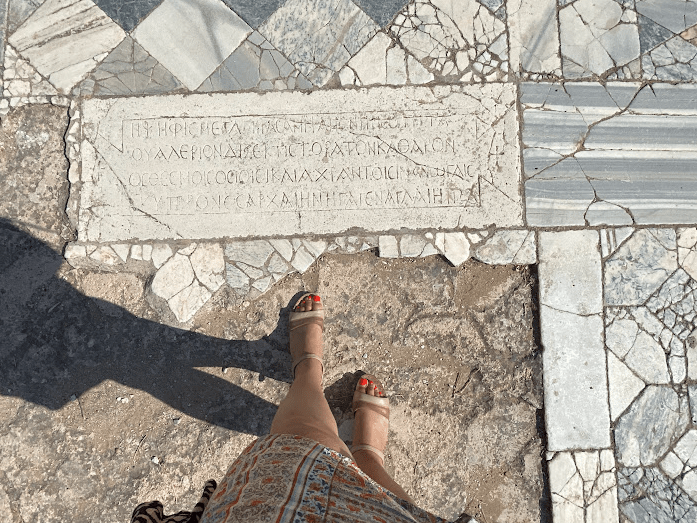
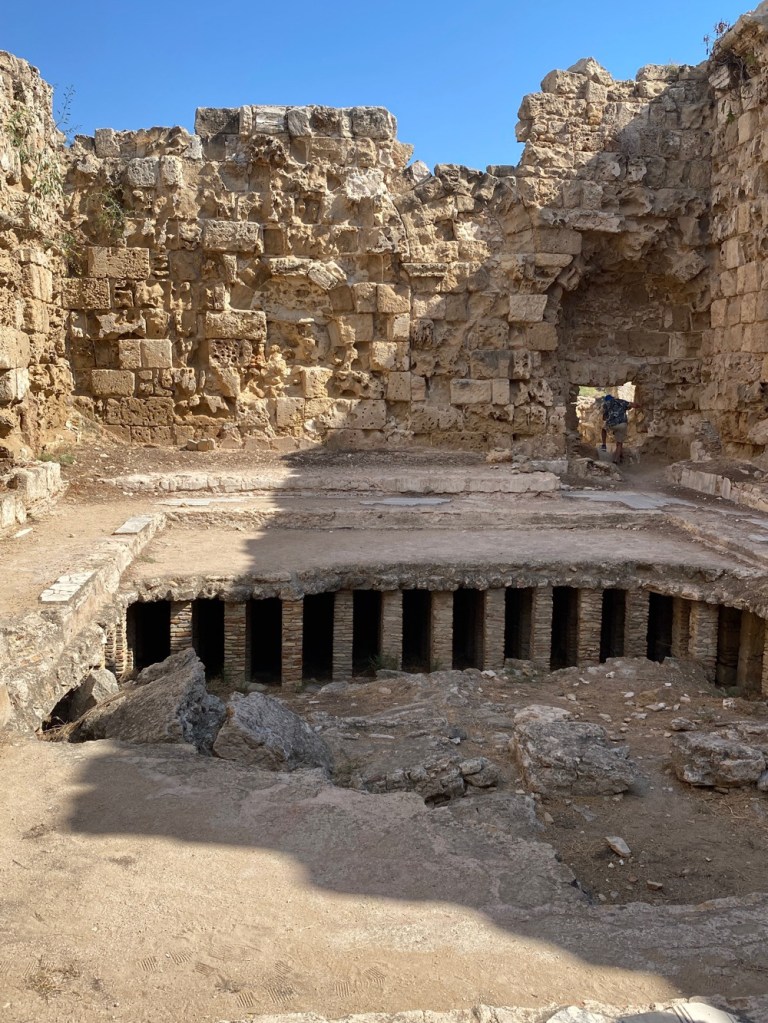
The bath houses where they heated the underground which are all lined with red brick columns
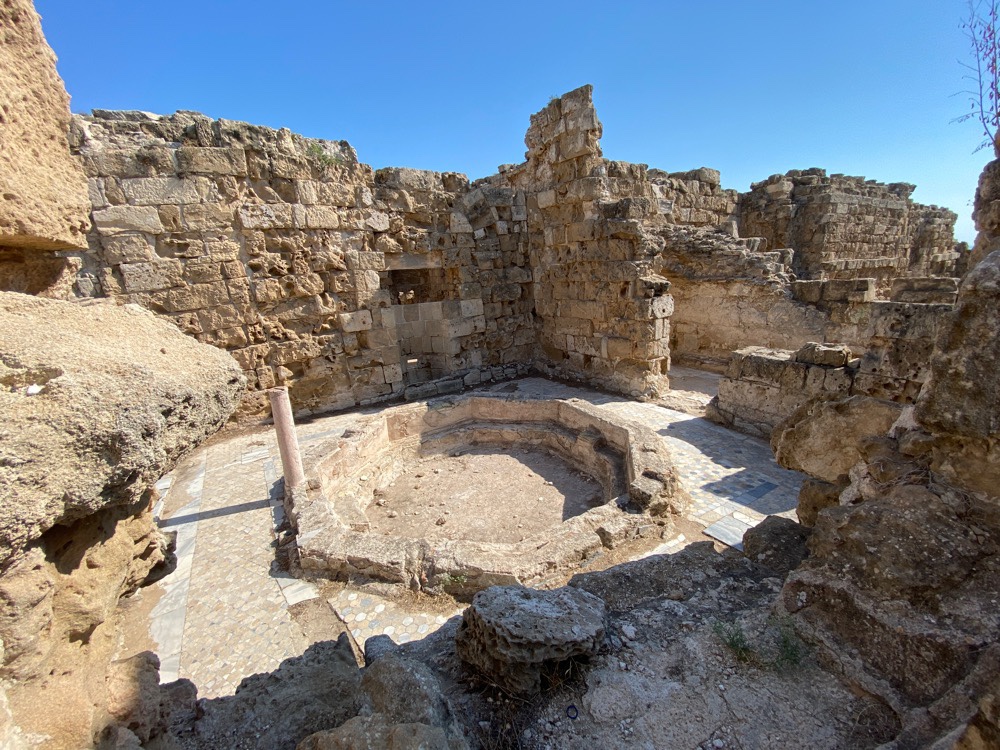
One of the bathing areas in the gymnasium area and you can still see some of the beautifully designed marble tiled floors

Got back to Larnaca at around 5:30pm so had plenty of time to relax and find some dinner, I had a falafel wrap and a KEO beer under the setting sun – great end to an amazing day!
TOUR INFO:
PRICE:
€28 for adults
€14 for children (2-12 years old)
Free for infants (up to 24 months old)
PICK UP TIME:
Protaras 07:40 – 08:05
Ayia Napa 08:10 – 08:35
Larnaca 07:45 – 08:05
RETURN TIME:
Larnaca 17:30
Ayia Napa 16:45 – 17:15
Protaras 16:45 – 17:15
A trip that gives you the chance to visit the beautiful coastal town of Famagusta and to go as near as possible to the abandoned part of the town that is known all around the world as the “Ghost Town” of Varosha!
The first stop is the Monastery of Saint Barnabas, the founder of the Cypriot Orthodox Church. There you will also have the chance to visit the Icon Museum of the Monastery as well as the tomb of Saint Barnabas who martyred in the area in 52AD (optional extra – not included in the price).
Our trip continues with a visit to the ancient city-kingdom of Salamis, founded right after the Trojan War by the archer Teucer who came from the Greek island of Salamis. Time will be given there for a guided tour around the archaeological site which includes a beautiful ancient Greek theatre and marble columns, Roman Baths and a Gymnasium (optional extra – not included in the price).
We then drive back to Famagusta Old Town Center, where free time will be given for lunch (optional extra – not included in the price) and sightseeing. During your free time there, we highly recommend a walk around the Venetian Walls that surround the old part of the town and a visit at the Gothic Church of Saint Nicolas and Othello Castle (optional extra not included in the price), which is mentioned by William Shakespeare in his play “Othello”.
Your last stop will be the beach located right next to the “Ghost Town” of Varosha. There, you will have the chance to swim in the crystal-clear blue waters of the beautiful golden sandy beach of Famagusta, whilst taking in the eerie sight of the abandoned buildings which have been desolate since Turkish invasion in 1974. You can also take a walk at a small part of the abandoned “Ghost Town” that opened for a public in 2020 for the first time after 46 years. On our way back we drive right next to the “Ghost Town of Varosha”, where you can see exactly how the area, that was once the best tourist resort of the island, now looks like!
NOTES:
* Clients that do not wish to visit Salamis and Saint Barnabas can have extra free time in Famagusta Old Town Center (4 hours total). They will be dropped off in Famagusta Old Town Center first before the visit to Salamis and Saint Barnabas.
* Clients that wish to visit Salamis and Saint Barnabas will have 2 hours total free time in Famagusta Old Town Center.
* Entrance ticket for Salamis and Saint Barnabas is not included in the excursion price. The entrance ticket must be paid on the day of the excursion (in cash only). The price of the entrance ticket is €6 for adults and free for children up to 12 years old.
* Passports or European Union ID Cards are needed on the day of the excursion. No photocopies! Only original documents allowed!
* For this excursion, clients staying in Larnaca area are transferred to and back from the excursion bus in Ayia Napa with mini bus or local bus service.
SEP 2023
 The Wandering Passport