
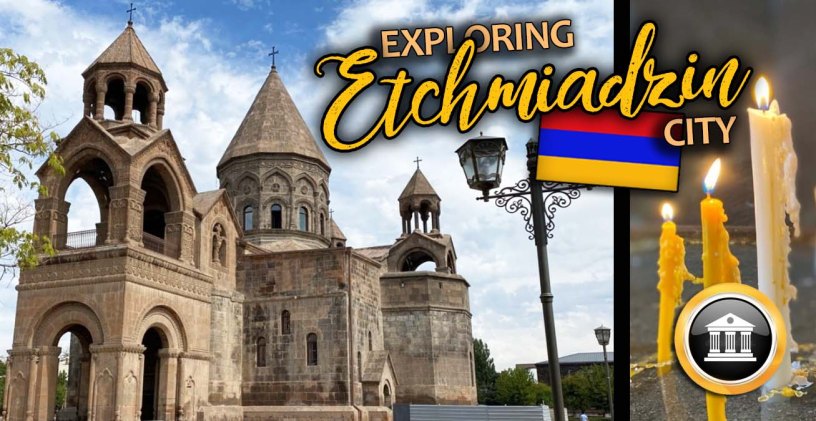
Etchmiadzin is the theological capital of Armenia and is also the seat of The Catholicos of All Armenians, it is also know as Vagharshapat – located in the province of Armavir
The feel of this place is really relaxed… well, coming from Yerevan of course it would be I guess 🤣 but the people and even the street dogs are chilled as an Armenian lolig (cucumber)!

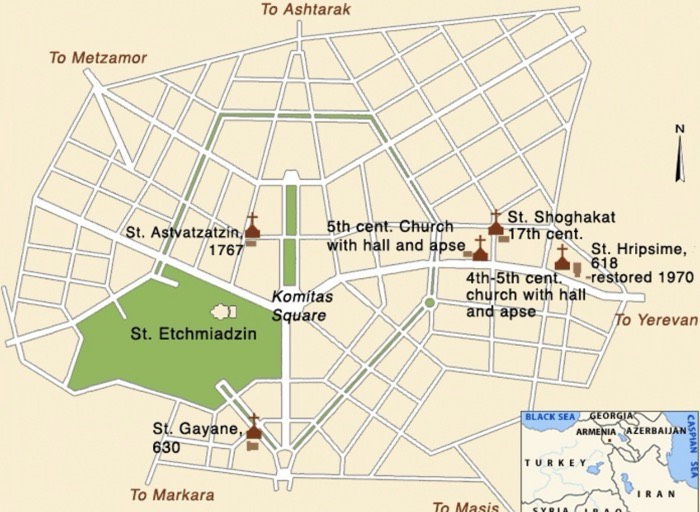
I got here the easy way, by taxi! – it wasnt too far and I thought why not a bit of comfort 😅

Komitas Square – This is the main roundabout area connecting 3 of the main streets of Etchmiadzin
This place has always impressed me with its beautiful old buildings but ive never made time to really explore and take a look, so decided to spend a full 2 days here to really get a feel and explore what it has to offer

Ive become more aware that the more rules that are put in place in a society, the further apart we as individuals are distanced from each other… being here has really opened my eyes to how we are living in the West, more separated from each other, more segregated than ever before, this needs to change and we need to go back to this simpler life, some how, some way 🙂

Abandoned social housing building
Etchmiadzin is known as a “Holy City” and considred the country’s spiritual capital. It was once one of the biggest cities and the capital of ancient Greater Armenia and it has been inhabited since 3rd c. BC
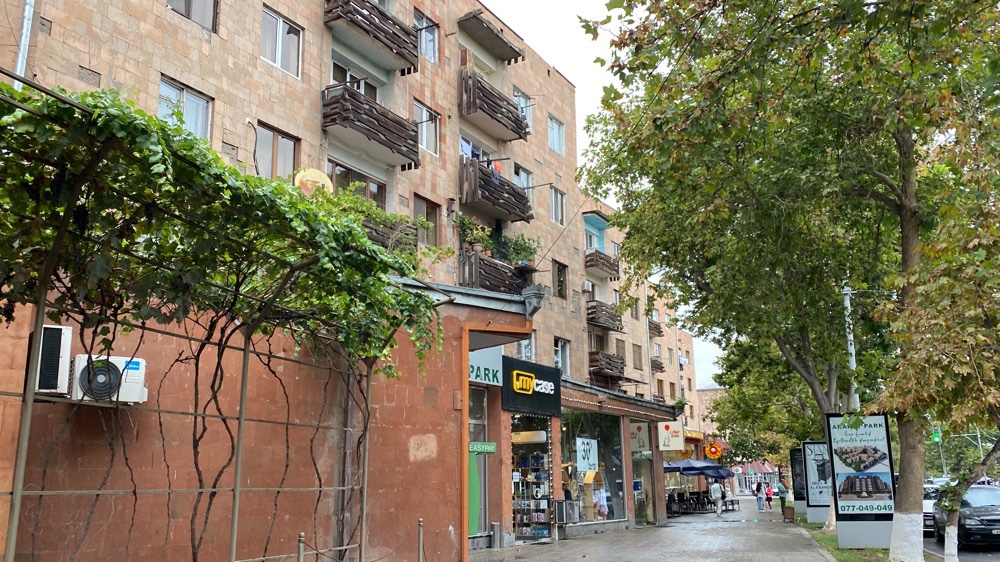
It is over 2000 years old and has such rich history and many things to do for a small town! There are even a few UNESCO heritage sites here
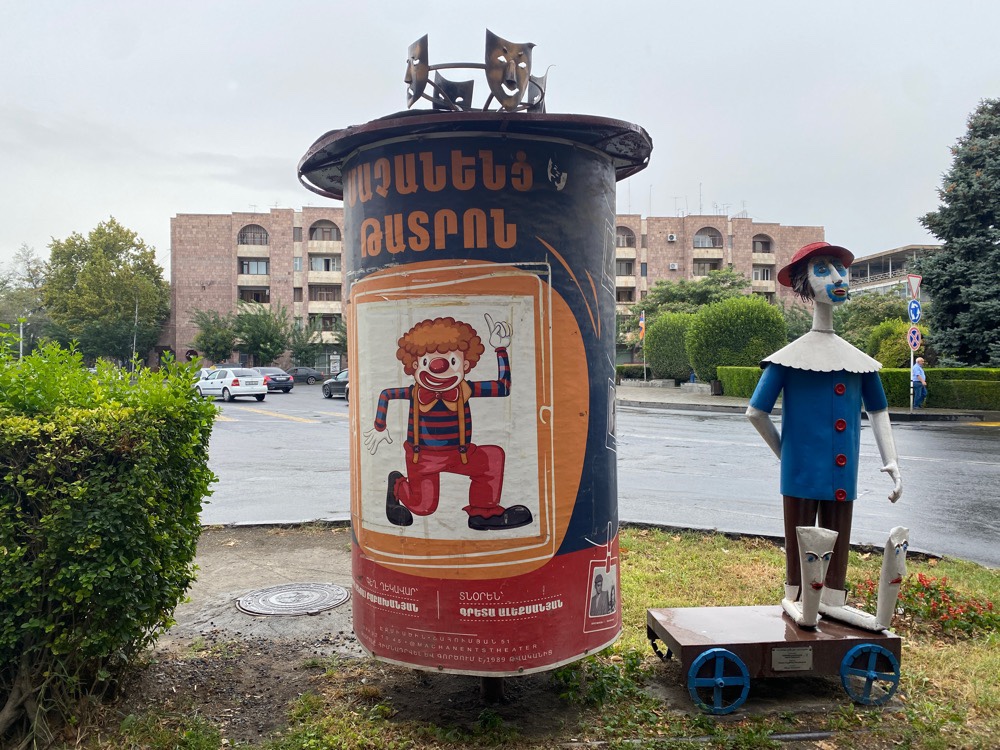
A bit wierd, a bit eerie, but I still love it here! Not sure whats going on with the clowns feet!

It is only 20km from Yerevan and an easy car, bus or GG / Yandex away and way worth having an overnight stay here as well… I suggest Machanets Art Hotel! Its a very unique and cultural small hotel with museums, a tavern, restaurant and more in its complex – definitely stay here!


ETCHMIADZIN CATHEDRAL
The seat of the Armenian Church, this place is steeped in history and this complex craves to be explored!
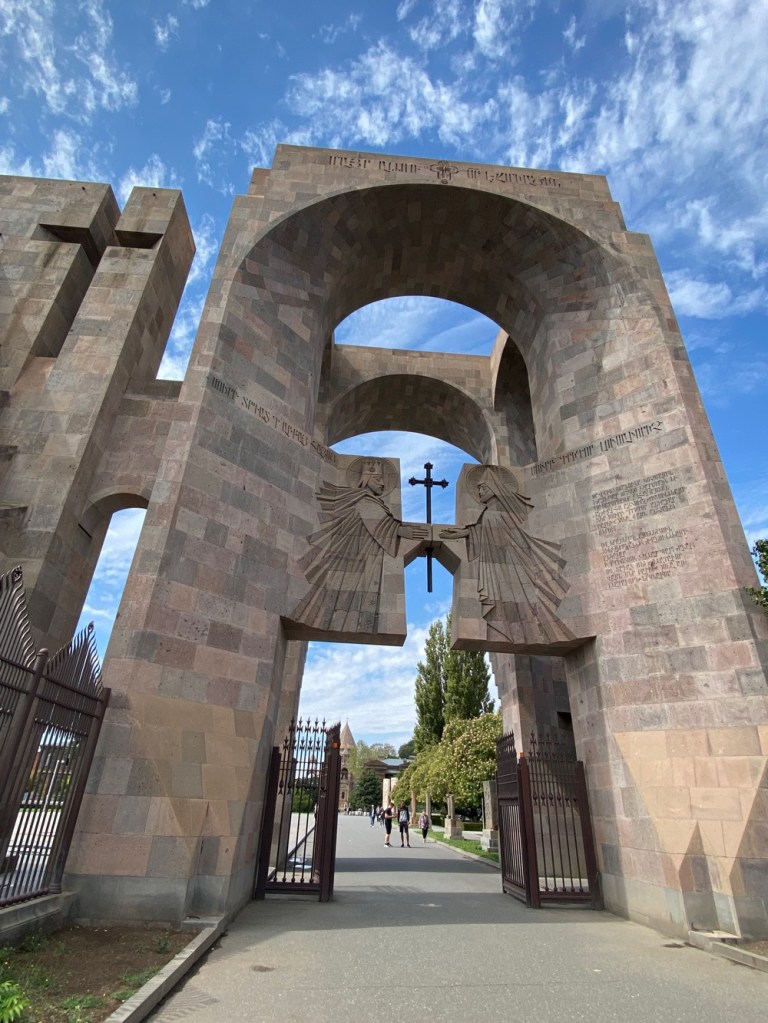
The Gate of Saint Gregory – built 2001 and the main entrance to the complex
Ive been here so many times before, and usually with a group and on a boiling hot day but this time im staying in Etchmiadzin, the weather has cooled down, so I am able to have much more time to really explore and take the time to go into more details and really appreciate it
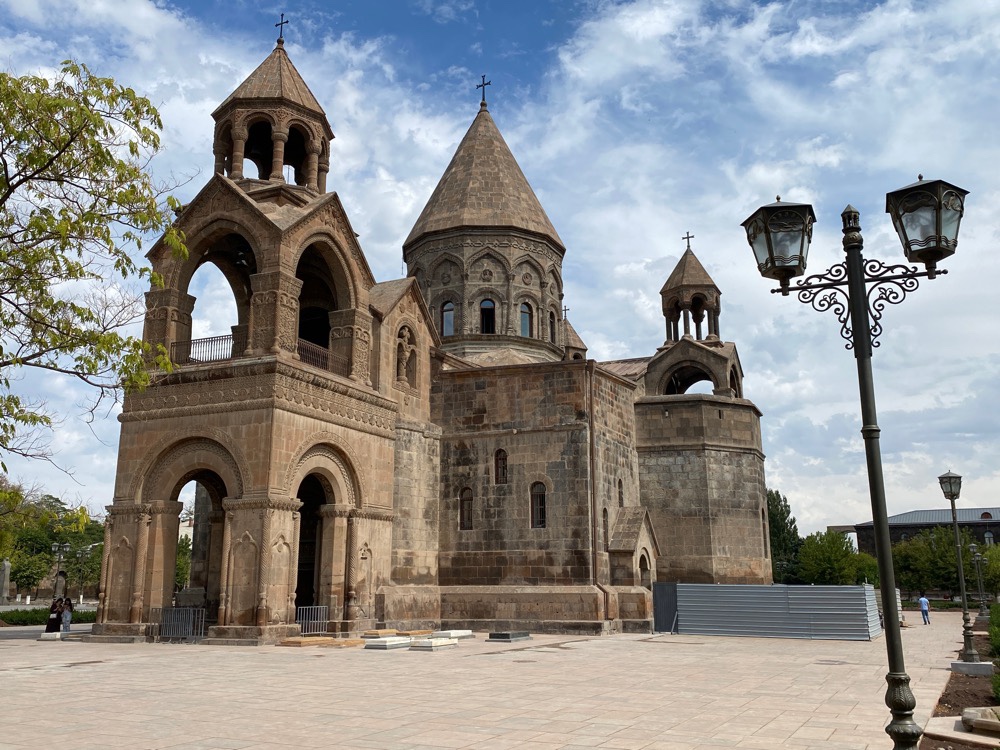
Built in 301-303 by Saint Gregory the Illuminator and is the oldest church built by a state in the world!

It is the seat of the Arch Bishop and many Armenians around the world make pilgrimage here pray and light candles
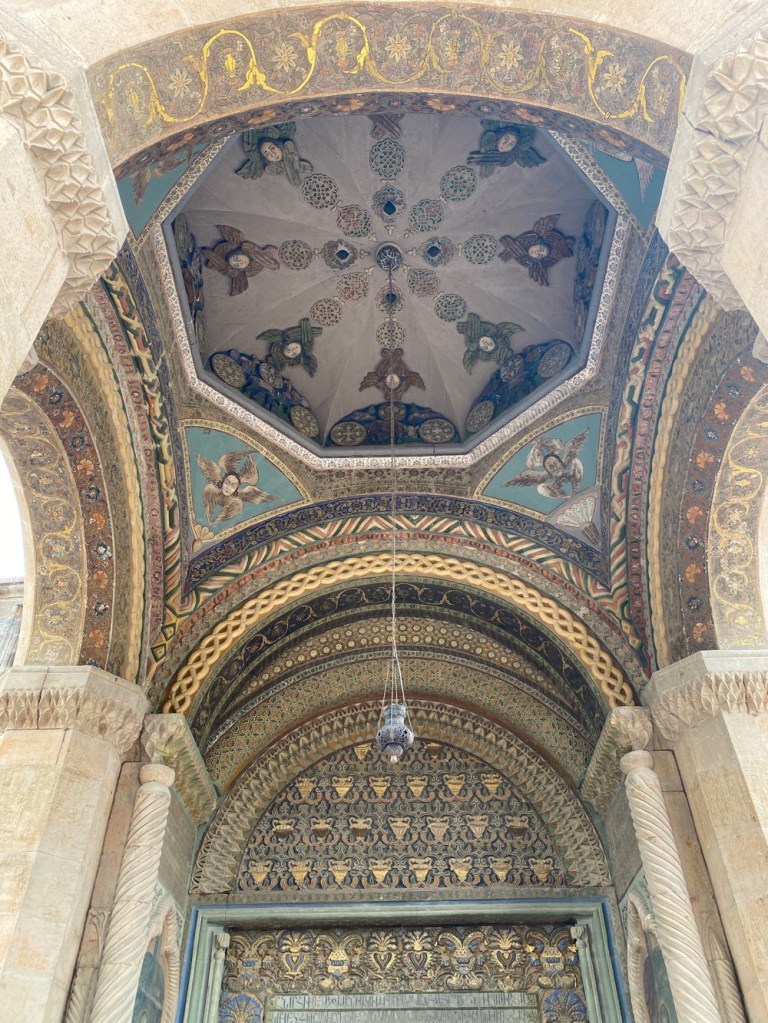
For some reason the rennovations have taken 7 years so far!
I spoke to some locals about this “renovation” I remember being here in 2019 and it was closed as well and being renovated, the locals are not convinced it will take this long to renovate they don’t know why its still going on, its not like they have anything else to do they said… just some interesting local feedback

The intricate geometric and floral detailed designs shocked me! It was like it was from another world! each design was perfect and beautifully carved – its such a shame its so high up from the ground that it can’t be appreciated so much more

Taking from online to give an example of what it looks like inside – (I have heaps of old photos of interior a ive been quite a few times but I dont have access to those photos from here)

The interior is really interesting and has a dark eerie feel, it is of Persian influence – the cupola has an arabesque feel to it and there are many detailed paintings inside and near the entrance of the Cathedral which have been painted between 1700-19th c. by different artists
THE BAPTISTRY
Located right next to the Cathedral is this beautiful and missed out on Church – usually everyone goes to the main church and misses out on seeing this gem
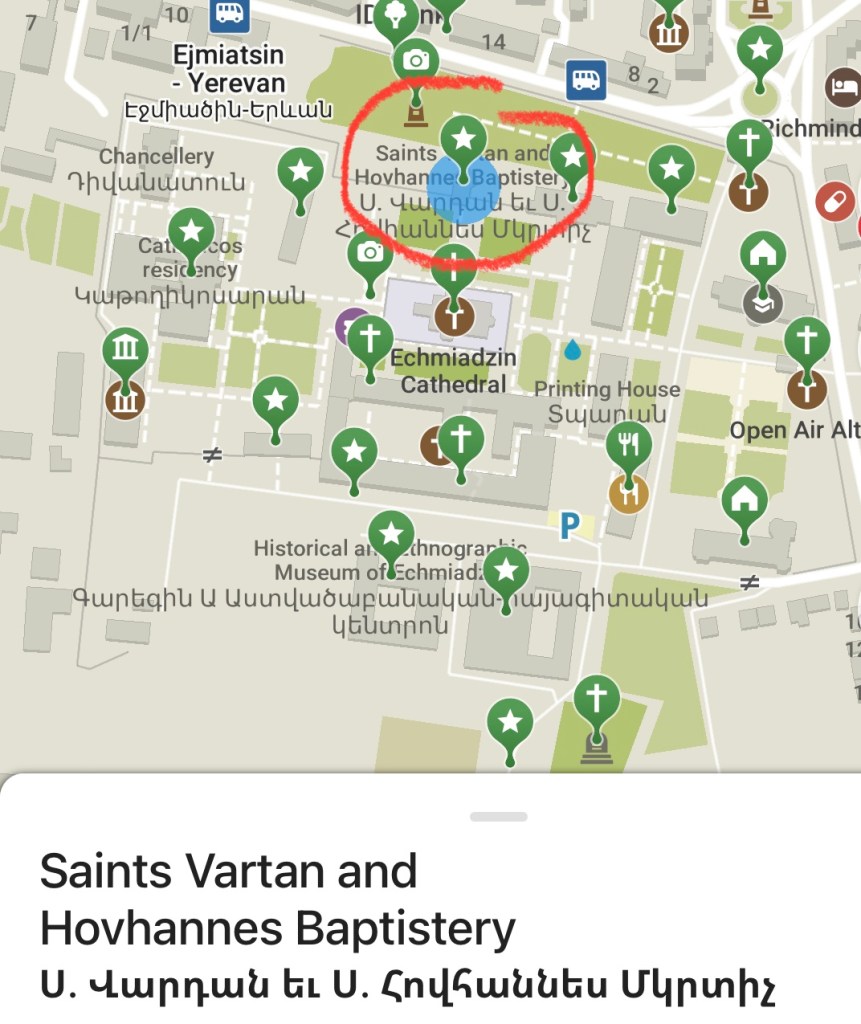

The three-domed chapel was designed by architects Jim Torosyan and Romeo Julhakyan. The chapel was consecrated on 26 September 2008 and the construction was funded by the British-Armenian philanthropist Armen Sarkissian
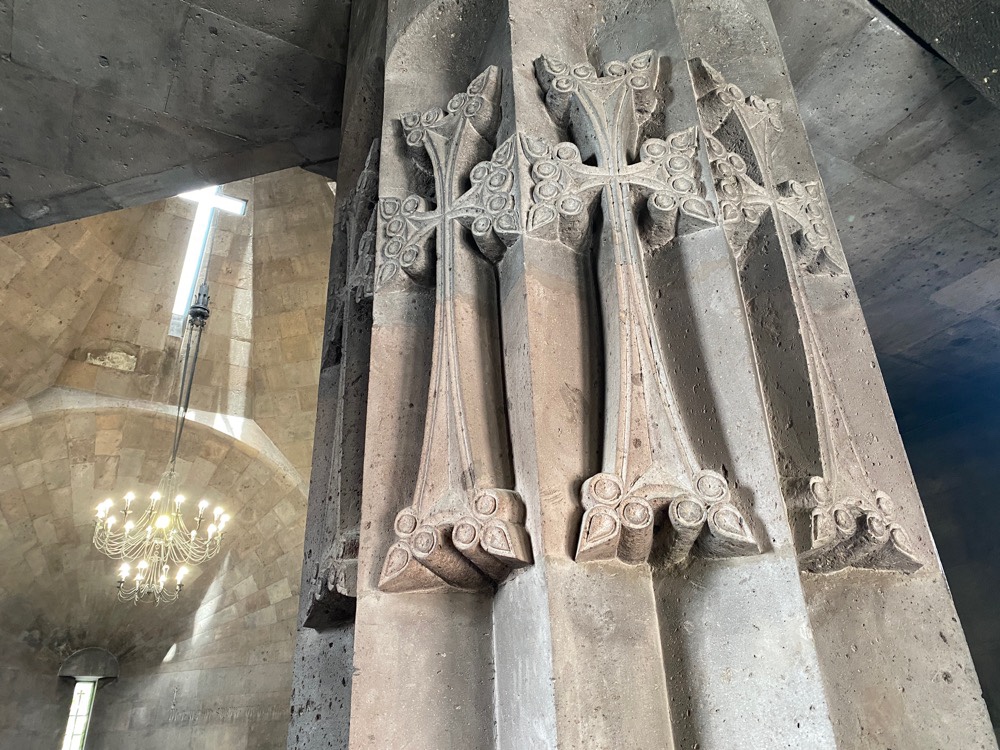
The intricate carvings inside the baptistry was so detailed and carved in such a beautiful way, I was just standing there looking in awe! I think the priest was looking at me funny lol

The main alter of the Baptistry in one corner
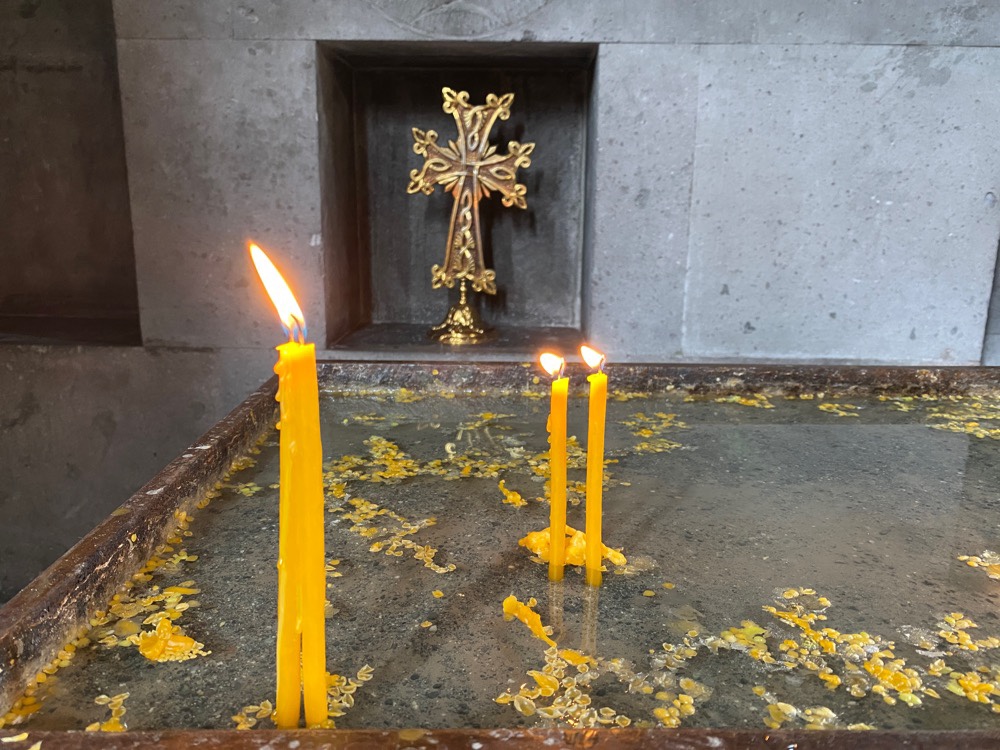
Candles lit all throughout the church
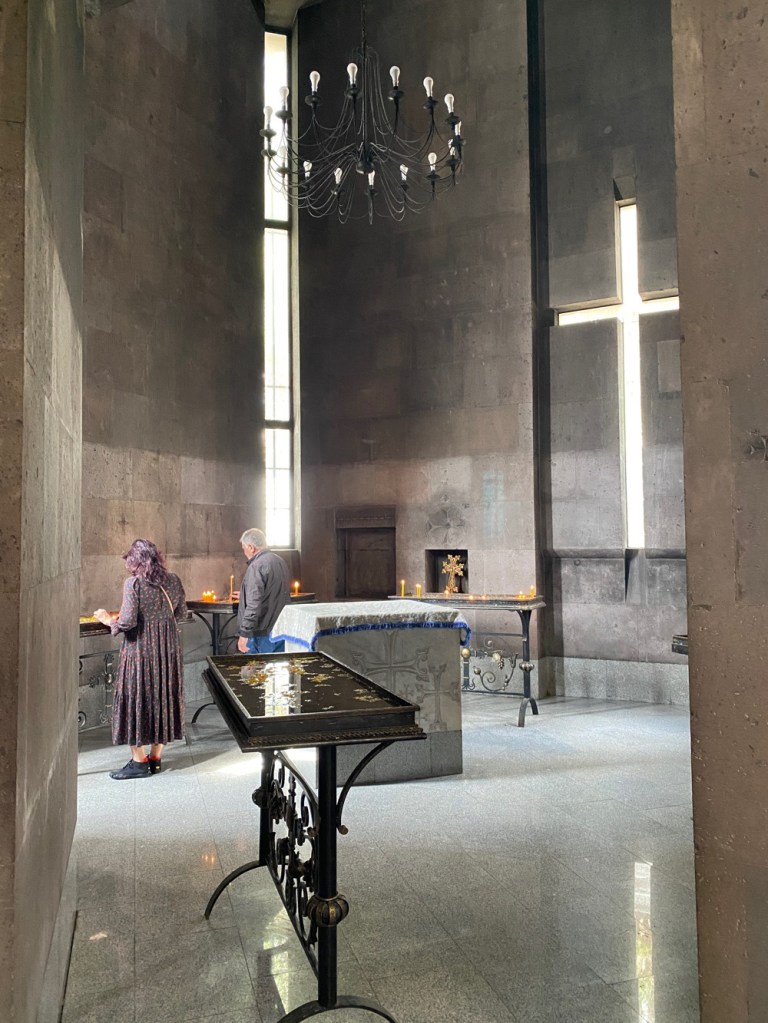
It was such a nice quiet place here, the Mother See is always so busy full of tourists but I dont think they make the effort to come to visit this church which is a bit to the side of the main Cathedral
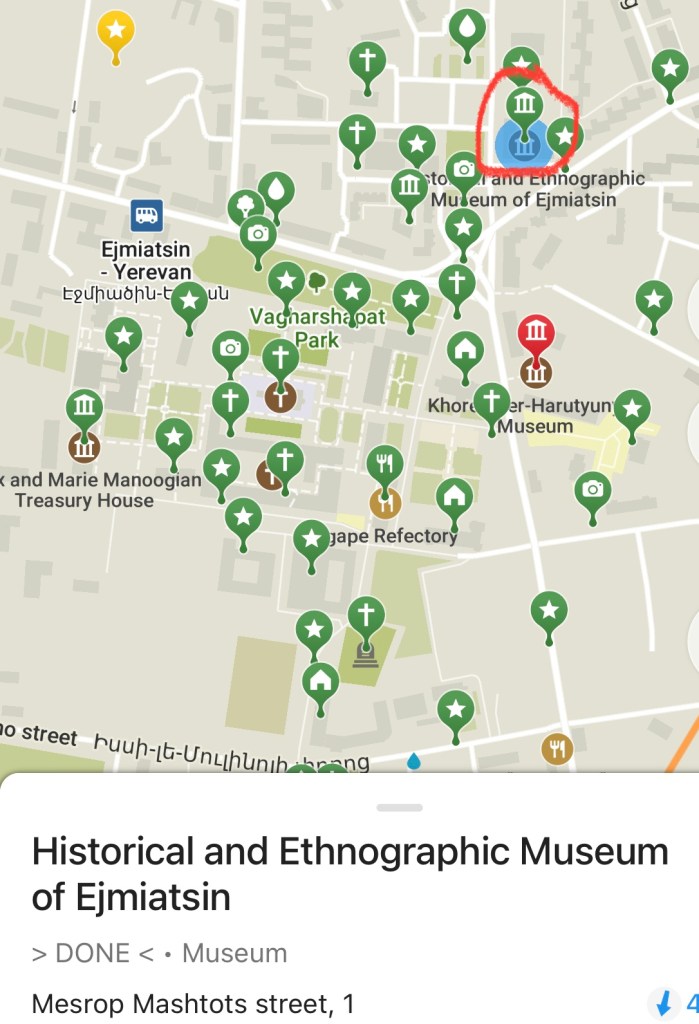
THE HISTORICAL AND ETHNOGRAPHIC MUSEUM OF ETCHMIADZIN
There are amazing exhibits dating from the Stone Age to the second half of the 20th-century – This Museum preserves about 15,000 exhibits and was founded in 1964

I walked in and was the only one around at the time so I had the museum to myself which was nice, the museum show cased the life of the natives of the Ararat valley and different regions of Armenia, Atsakh, Western Armenia

Archeological hall, this is where the every day life of the Ararat Valley is presented
Many interesting exhibits were on display, ranging from coins to pots, rugs, household items that were used at the time, furniture and clothins

Some beautiful silver jewelery Id wear those necklaces today!
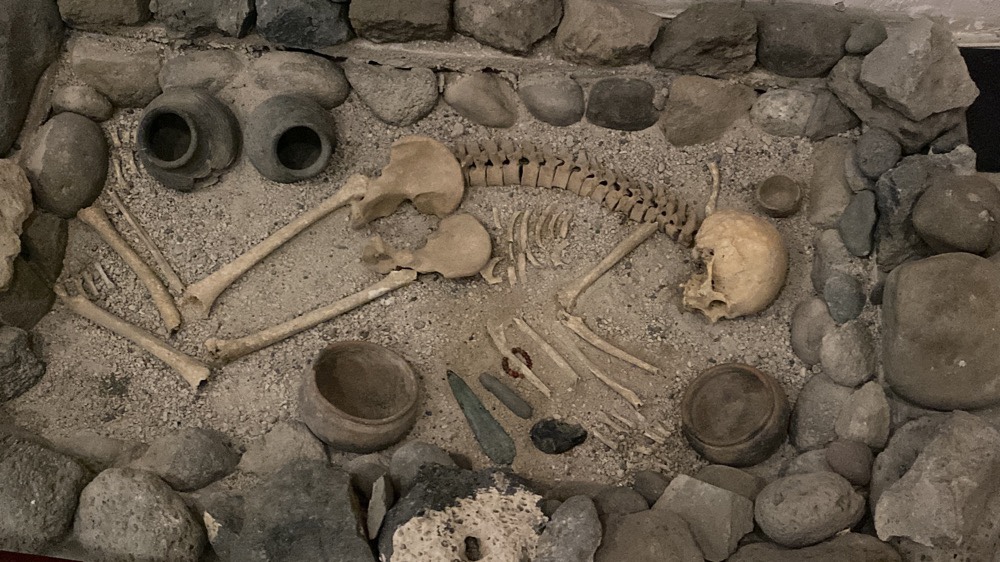
An example of a tomb that archeologists found in the area

In the archeologically hall there are examples of Traditional “daraz” of the women

A carved idol from the II-III c. AD
The chronology of the museum start from the Copper – Stone Age, early bronze age till the Middle Ages

The objects in this museum are of great importance and wont be found in Europe or Western Asia and scientists are constantly studying the artifacts to this day
There was also a typographical machine dating back to 1809. This typographical machine was a gift (1894) to Catholicos Mkrtich I from Victoria Queen of Great Britain.
Later the typographical machine was moved from Mother See of Holy Ejmiatsin to the city printing-house, then at the end of 1970s to the Historical and Ethnographic Museum of Ejmiatsin
TREASURY MUSEUM
Created in 1980s it is where Armenian artifacts from various Armenia Kingdoms are kept – also the remnants of Noahs Ark
Items in the collection were discovered in many different parts of the globe. A copy of the first printed Armenian Bible (1666) by Vosgan Yerevantsi (Bishop Oskan Erewants’i) was acquired from Dacca (Dhaka), Bangladesh; a brass tray depicting Armenian royalty was found in Australia; and ancient manuscripts and rugs were rescued from historic Armenia.

The museum is located in the main Cathedral complex
1500 for the ticket
Because the destruction of historic Armenia during the genocide period resulted in the worldwide dispersal of its paintings, books, manuscripts, sacred objects, and even ancient artifacts, locating and identifying these objects presented a tremendous challenge to those involved in the collecting process. Some objects were in private hands (not necessarily Armenian) and some were with Armenian families who were descended from survivors of the genocide, while other objects were in museums. The treasures that found their way to the Manoogian Museum came via various avenues—some were purchased by Alex Manoogian through his Manoogian Foundation, others were gifts to the museum or to Alex Manoogian himself.

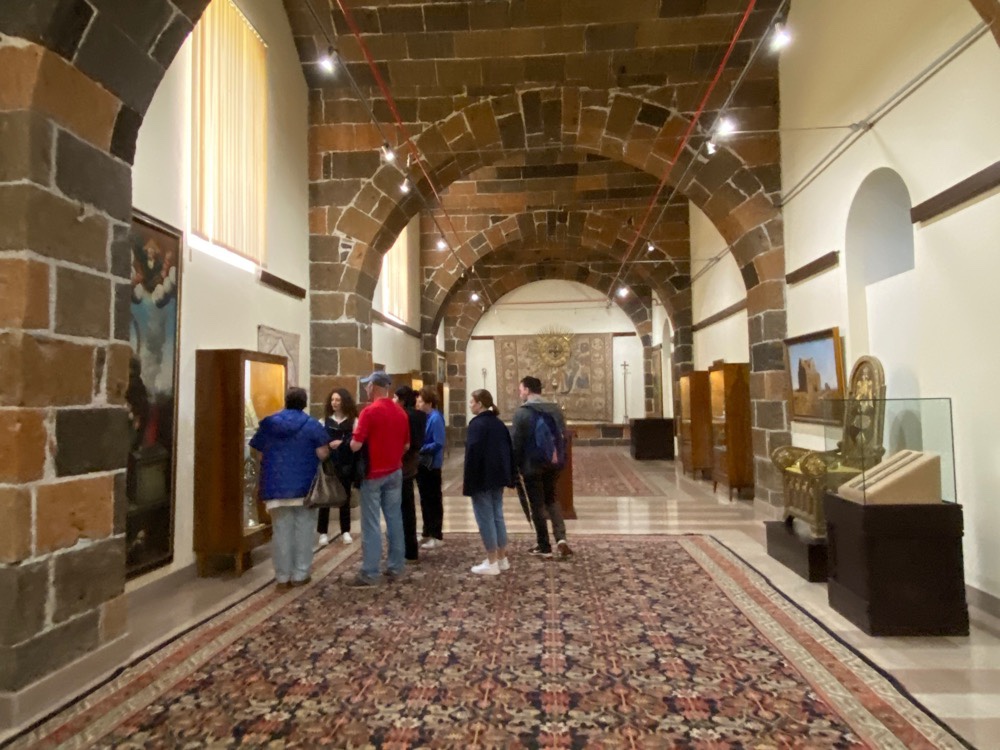
The building inself was beautiful!
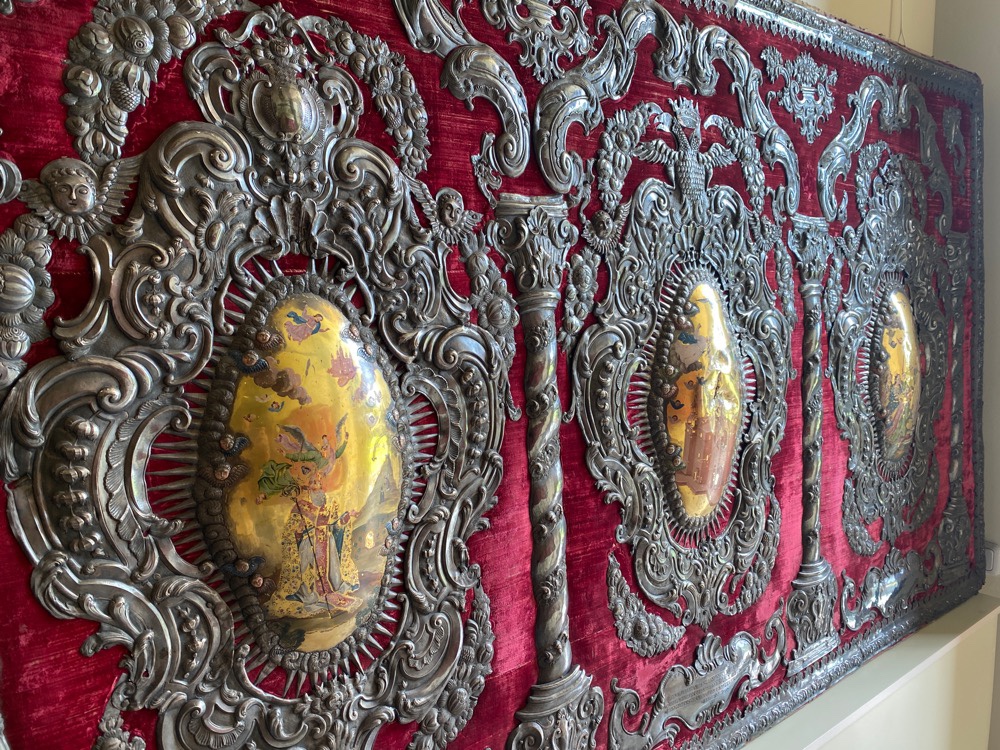
The beautiful exhibits were brought in from all different Armenian communities throughout time and show the intrictae craftsmanship of the different centuries, every piece was unique and intricate made with love

The Armenian highlands are rich in various kinds of metals, and the creation of metal objects in the region dates back to ancient periods of history. Native peoples learned how to work with copper as early as the seventh to fifth millennium B.C. and were working with gold and silver by the third millennium B.C. Excavations in Yerevan have yielded gold ornaments, medallions, rings, and other metal artifacts dating to the second millennium B.C

Armenian artists adopted easel painting only in the early nineteenth century as Western influence in the region increased, the beauty and details of this painting, so beautifully created but with sad story behind it
AGAPE REFLECTORY RESTAURANT
The oldest restaurant in the Caucasus since 17th c.
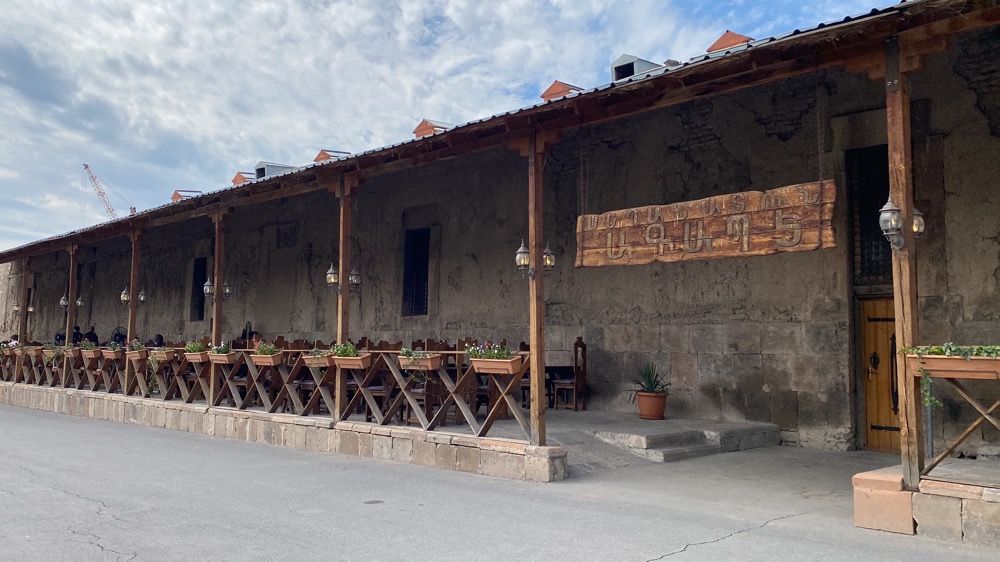
Its a one of a kind restaurant located in the Cathedral complex and serves traditional Armenian cuisine
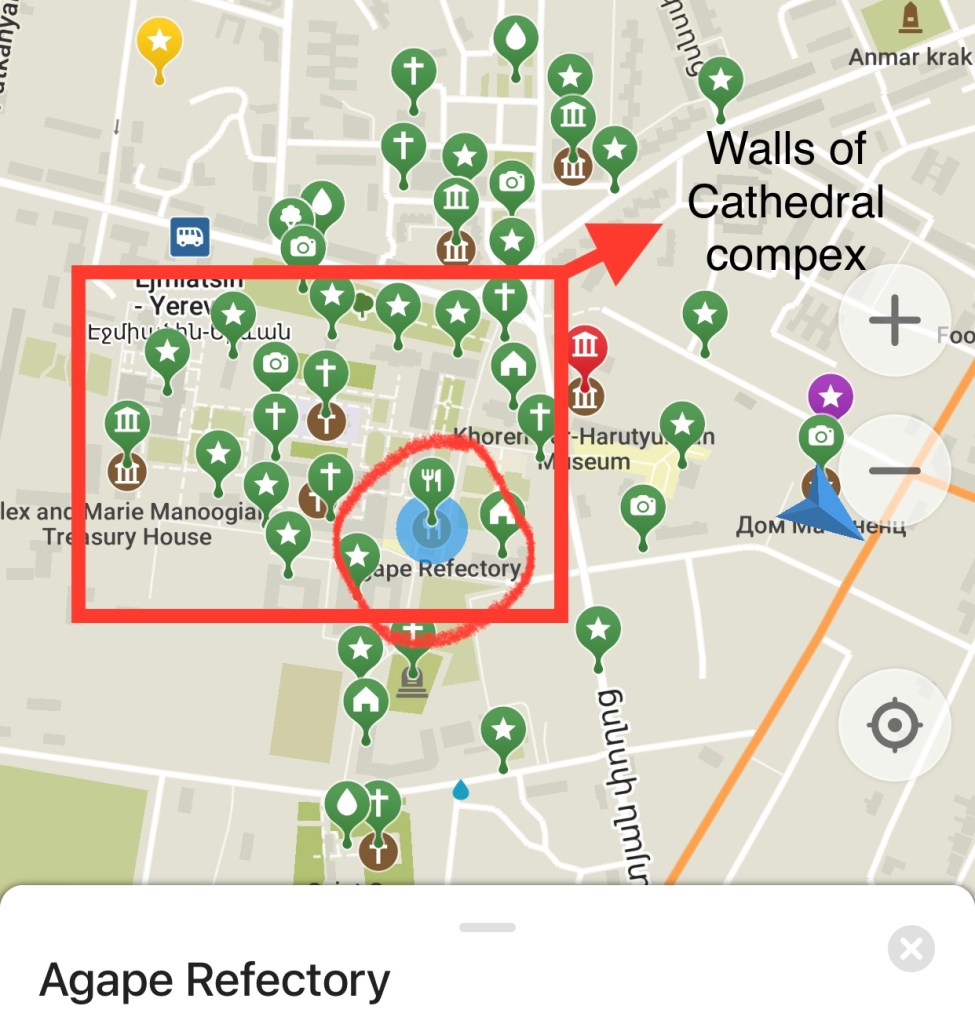

I had to have their special gata which was served warm and with a nice black coffee – was so good!

The Reflectory was given life by a couple who repatriated back to Armenia
I walked inside, and you have to go down as the inside of the restaurant is sort of half level below the ground level and it looks like an old church with huge high ceilings inside with old iron wrought chandeliers hanging from the ceiling
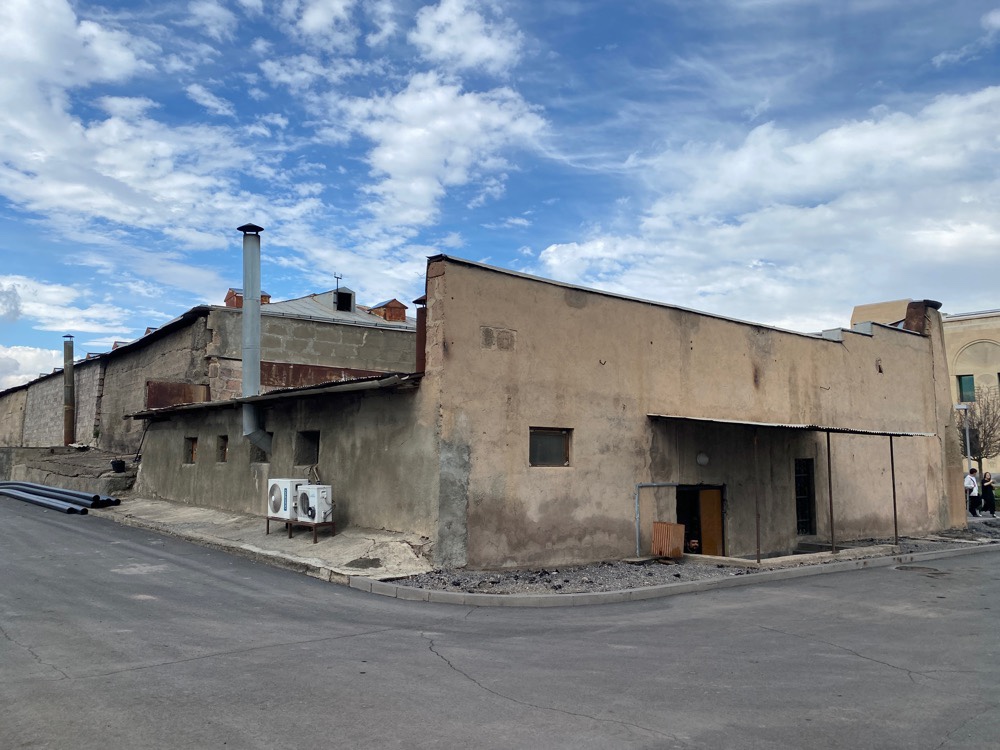
This is the back area of the building and the kitchen area, you can see how the building is below ground level
AGAPE means “love” in Greco-Christian, “the love of God for man and of man for God”. Within Christianity, agape is considered to be the love originating from God or Christ for mankind
HOUSE MUSEUM of HOVHANNES HOVHANNISYAN
Hovhannes Hovhannisyan was a famous poet and translator of classical Armenian literacy from Etchmiadzin during the 19th and 20th centuries
Free entry and it was guided
Shall live the one which is eternal,
– Hovhannes Hovhannisyan
Holy beauty and holy mind,
The noble mind will remain free and alive,
And the selfless love for the poor brother…
It took me a little to find this museum as it was literally tucked inside the courtyard of surrounding residential buildings, it was worth the find though!

The home has been preserved exactly as it was in its original shape, part of it also is underground but you cant visit the lower floor as its mouldy
It has 4 rooms, a corridor and kitchen area
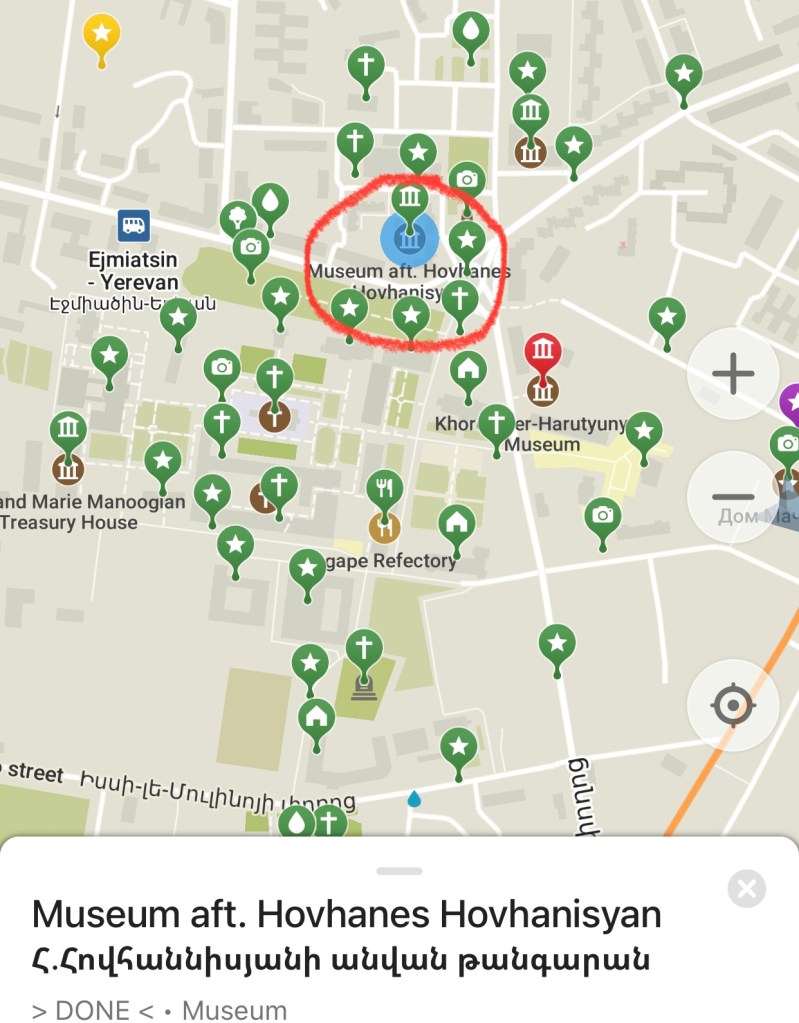

This is the main entranc area where you enter in and turn left into the living room
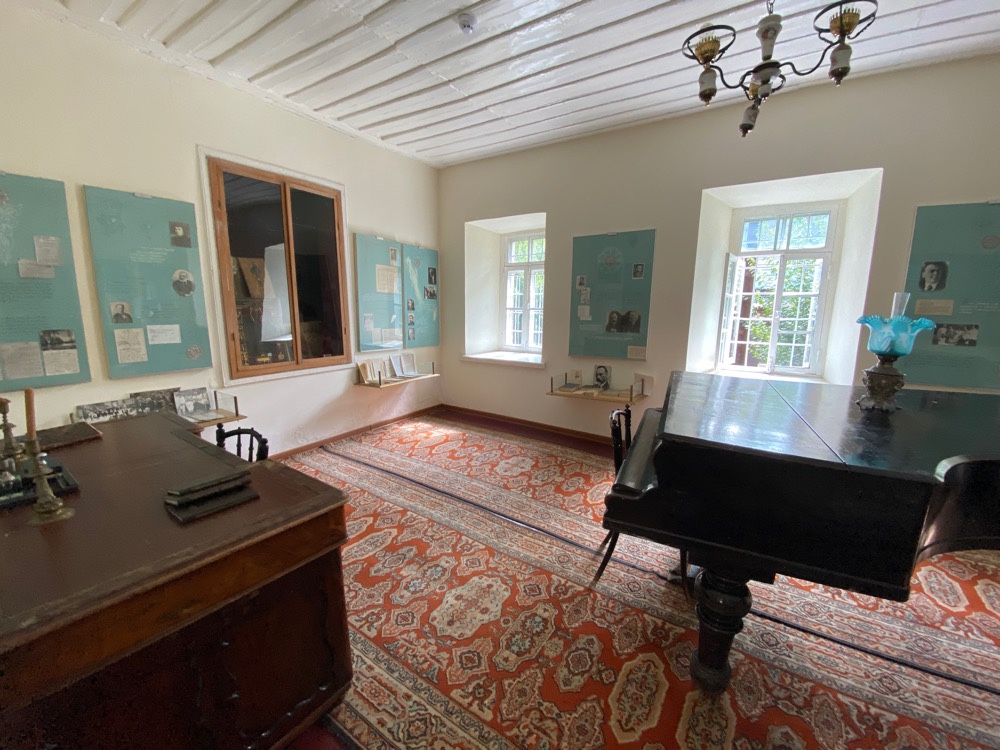
They have displayed more than 700 items which represent his years of study, social life, personal belongings and stories of his creations etc
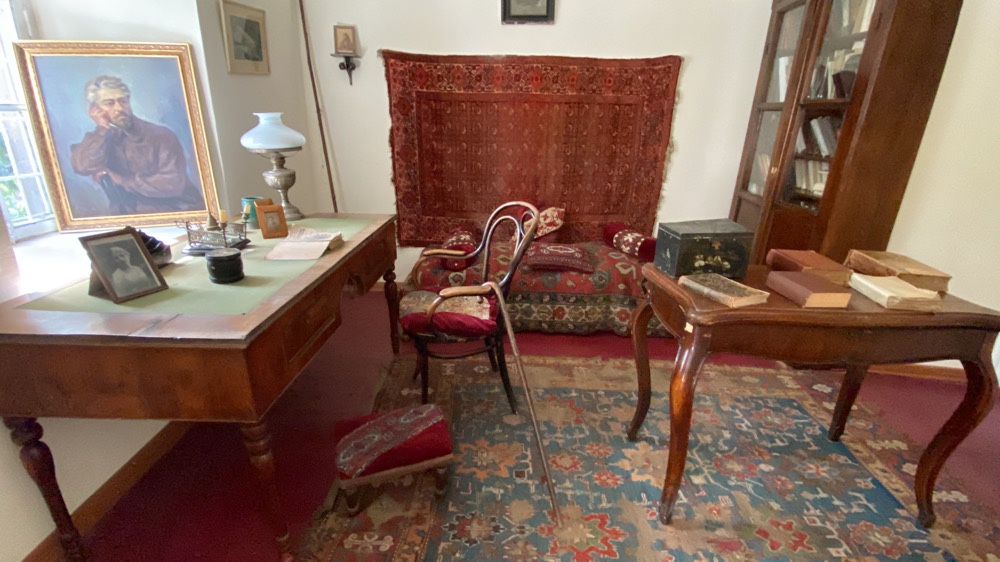
This was his work room all his own items are still kept here in place
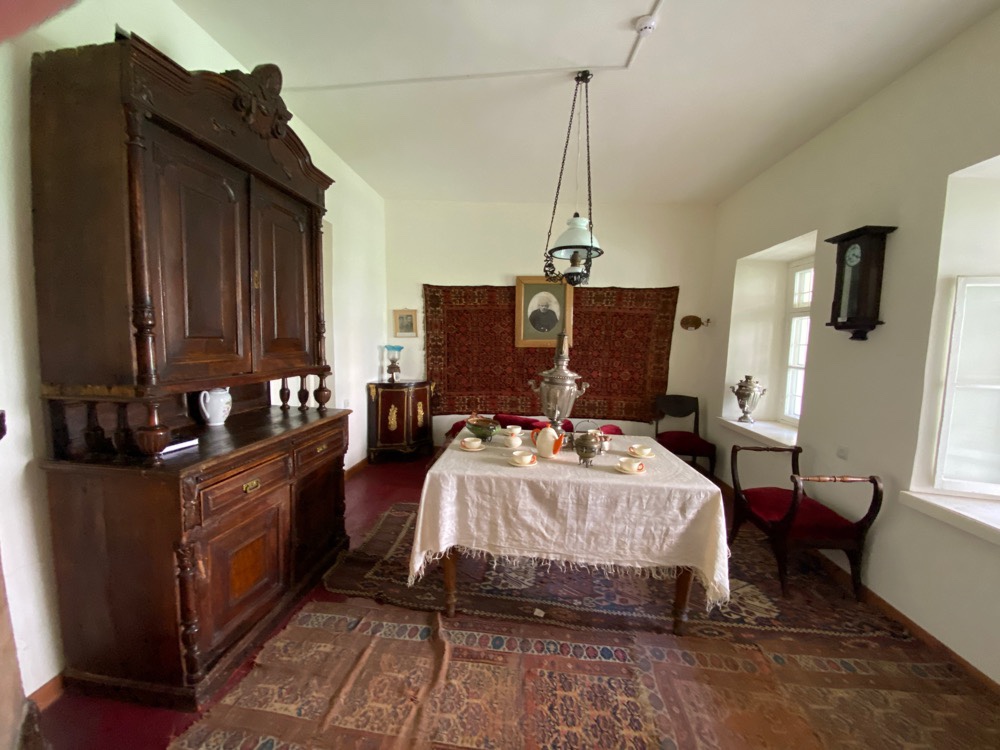
The kitchen with his original items
It was interesting to see how a local lived and how their house would have looked around that time
SAINT GAYANE CHURCH
Built in 630AD and part of UNESCO heritage, this ancient chuch is located a bit further out in the southern part of the city

It is said that this is the sitewhere St. Gayane and 2 of her friends were martyred
in 301, Gregory the Illuminator laid a foundation, in 395 the site ws reconstucted and then in 630 was demolished and S. Gayane Church was built and stands to this day

This church is a 4 pillared domed basilica and really impressive wth its red tufa coloured exterior – stands strong and proud and as you enter its all dark and gothic like with the dark red and black walls wher you can see the flames of the candles burnt and lft marks on the walls
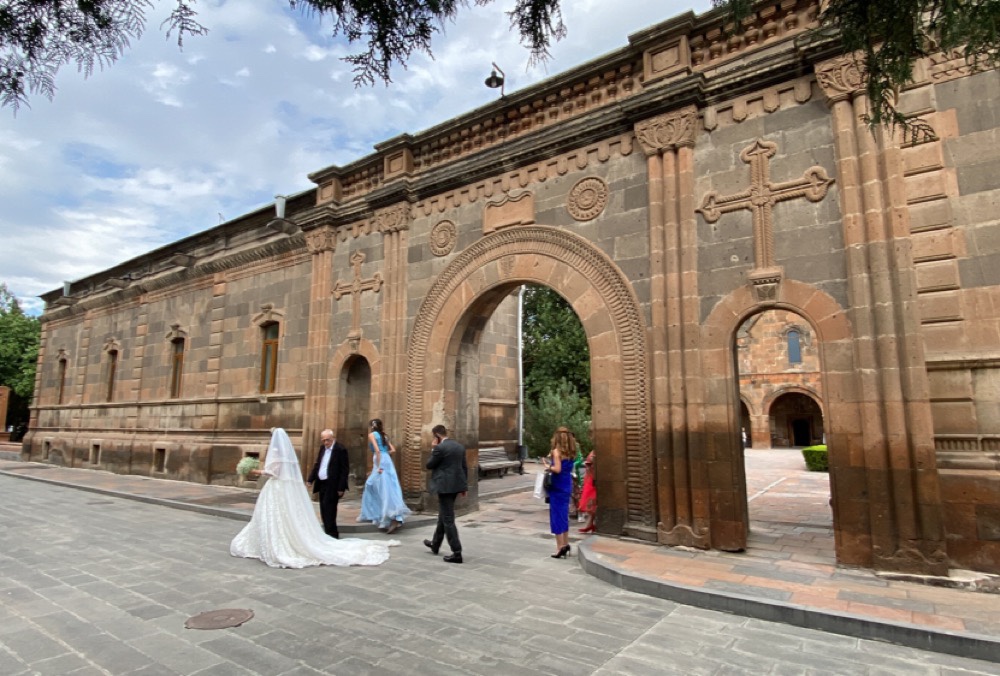
The church had a wall built at the entrance – there was a wedding on when I arived, it was so nice to see the white dress against the lovely red brick of the church, ladies all dressed up so beautifully with colourful dresses
I loved the intricate details carved along the outside of the wall
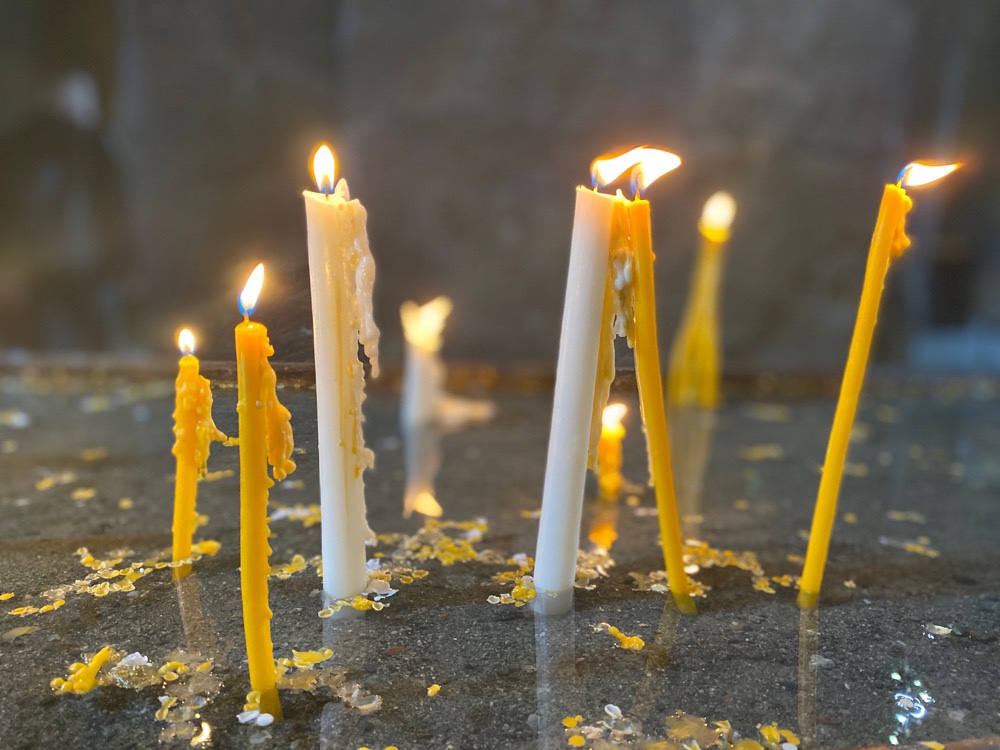
Went inside and lit a few candles – its like meditating, so nice and quiet and relaxing

St Gayane was a Christian Nun who was tortured and martyred due to rejecting the advances of Armenian King Trdat. She was one of 39 nuns living in Rome in the early 4th c. when Christianity was spreading. There was another nun, Hripsime, and due to the attention from the King and Roman Emperor Diocletian, both Gayane and Hripsime and some other nuns fled to Armenia to get away.
King Trdat ended up finding them and as he was rejected, he tortured and killed them both

The dark interior was beautiful and peaceful…
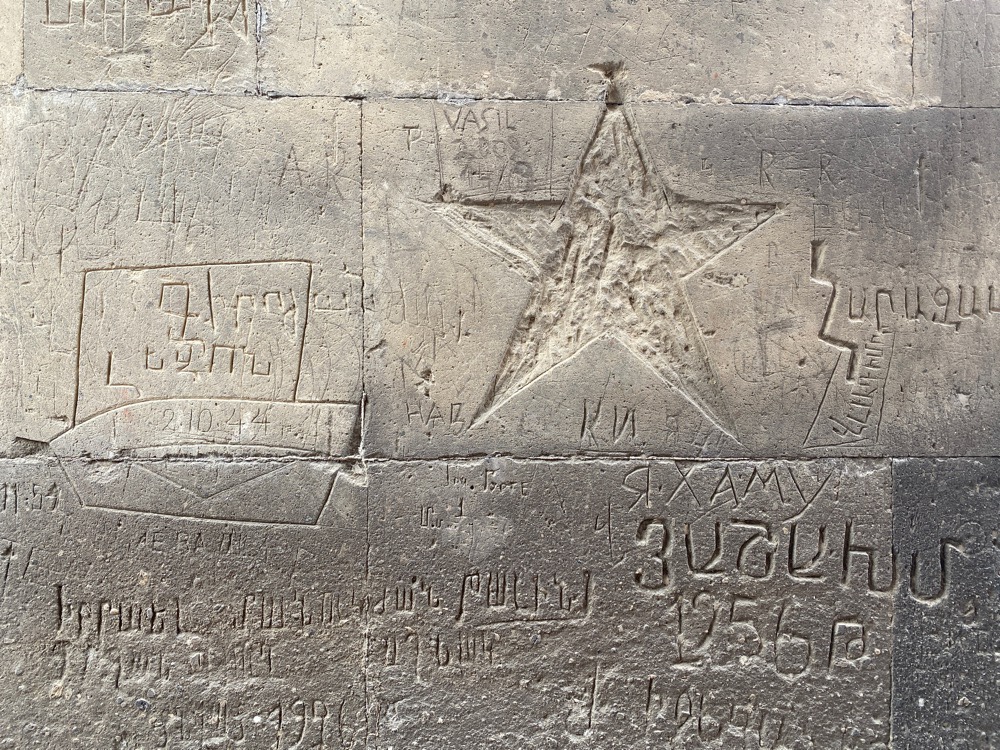
Old school Armenian graffiti

St Gayane’s final resting place is downstairs surrounded by brightly painted images
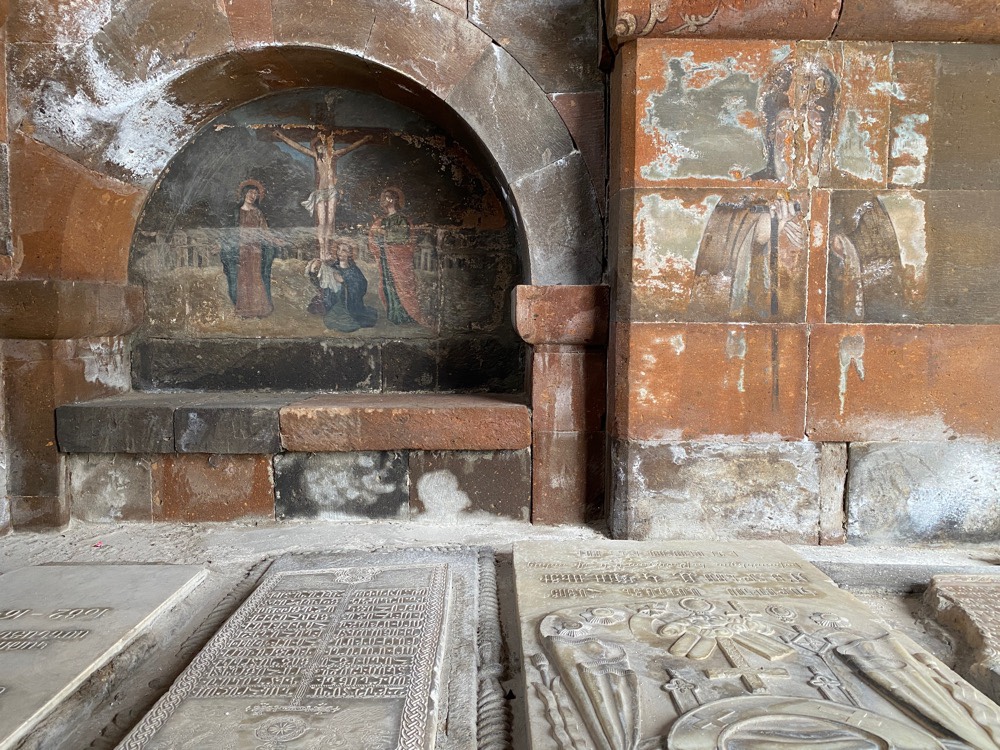
Walking up towards this church I passed by a really old cemetery, you can see by the tombstones and he random shape of the cemetery itself how old it really is I had awalk through on my own and it was quite eerie but interesting
CEMETERY OF HOLY ETCHMIADZIN
Walking towards St Gayane’s Church I stumbled upon this really old cemetery
There were only a few new gravestones but they were really modern compared to the older ones in this plot


The Old Cemetery just behind the School
You can tell from even the plot and layout of this cemetery how old it actually its – there wasnt much info on the net about this cemetery which is a shame!


CHURCH OF THE HOLY ARCH ANGELS
This beautiful unique church was built between 2009 and 2011
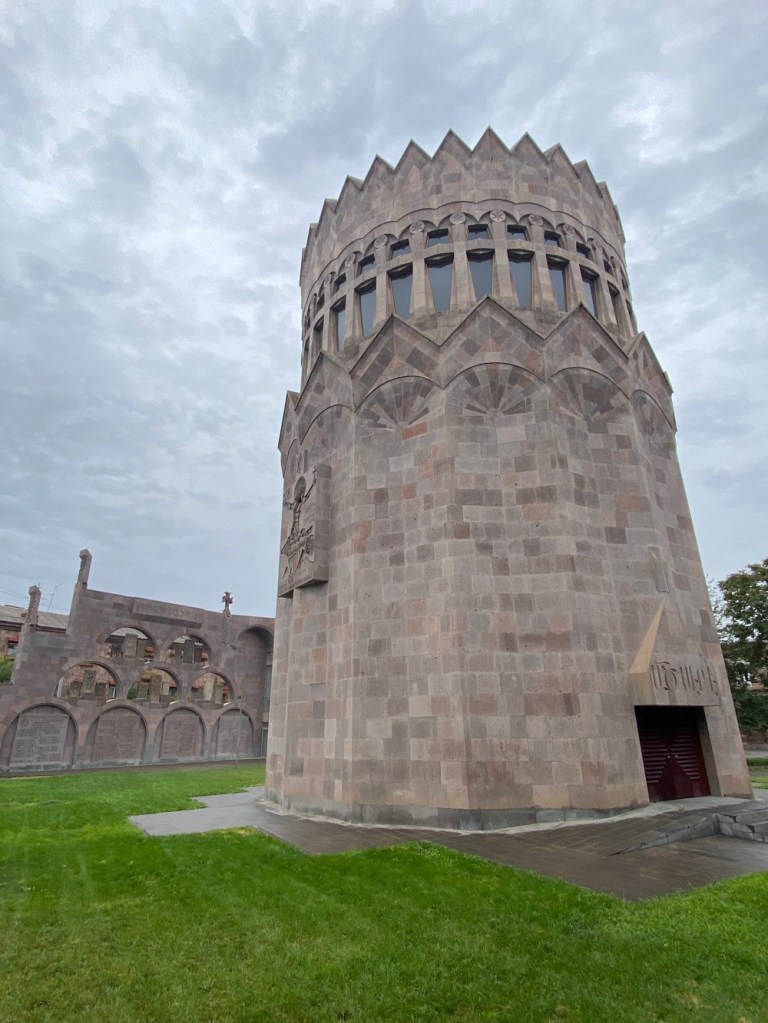
Its a beautiful building which stood out from the rest due to its unique and interesting design and shape
It was definitely more modern but the designs on the outside were all symmetrical

The inside was sky high! with the diameter is 15m- its mainly used by the deacons and students of the seminary who hold their daily services and worship
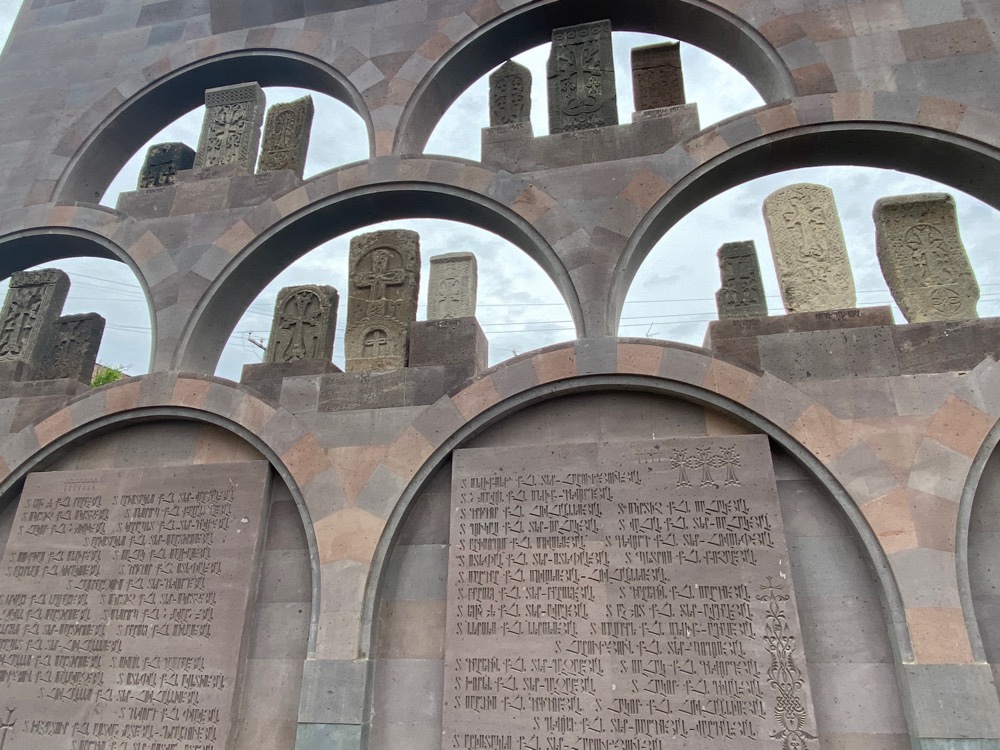
Just behind the church there were these beautiful khatchkars made from different stones and with unique designs on each
SAINT MARIAM ASTVATSATSIN
An 18th. C church with the bell tower built right infront of the main door entrance in beautiful red brick

IT was raining and there were cars all driving all over the place, no one follows road rules – but it all seems to work!

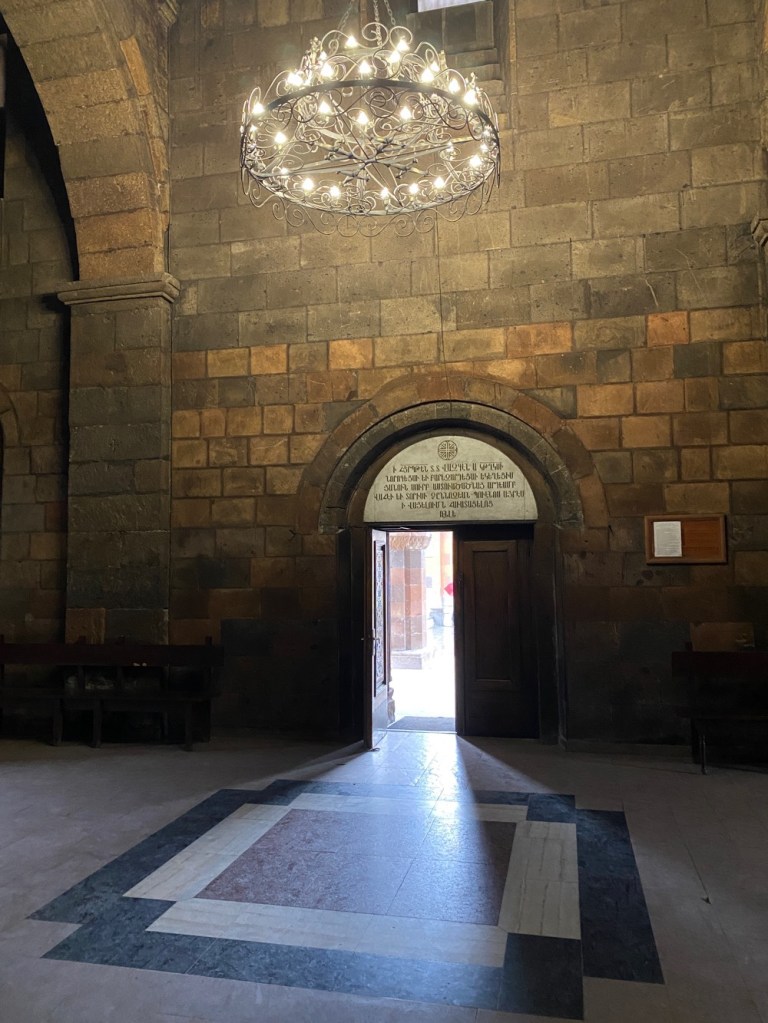
There were a few women sitting outside, asking for money
I loved my stay in Etchmiadzin, definitely need at least 2 days to be able to enjoy this ancient city
The Cathedral complex itself can be a whole day! Visiting the old Agape Restaurant is a must!
I recommend staying at Machanents Art Hotel! Its an amazing complex with museums restaurants
https://www.booking.com/Share-dkAJ9h
Link to booking.com
Reach out if you have any questions!
 The Wandering Passport
Thank you for your prayers and blessings! I agree with you whole heartedly 💗 especially needed during these times of change on earth
LikeLike