

Province : Vayots Dzor
distance from Yerevan : 2hrs drive
Entrance fee : Free
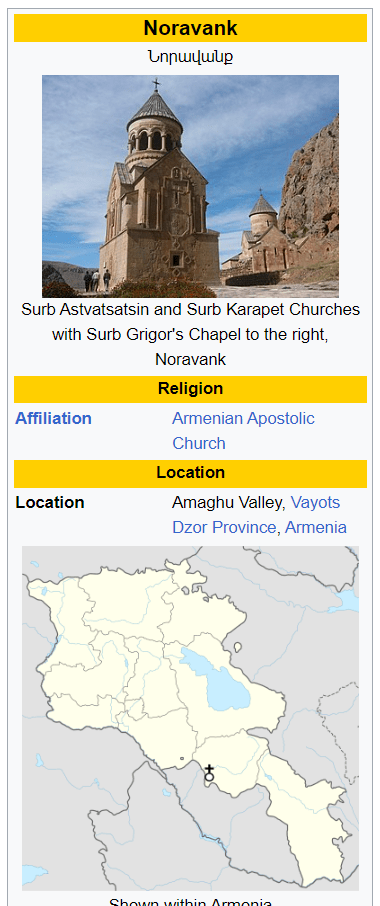
A beautifully preserved Monastic complex is built in the 13th c. Middle Ages
There are 3 churches on site all with beautiful ornate architecture and intricate designs and many beautiful traditional Armenian khatchkars
Its best known for its 2 storey Surb Astvatsatsin (Holy Mother of God) Church, which you can access via a reall narrow stone staircase, which has now been BLOCKED OFF 😦 very sad but you cant climb this anymore and this was one of the highlights
Noravank was founded in 1105 by Bishop Hovhannes and was the residence for the Orbelian princes


SURB ASTVATSATSIN
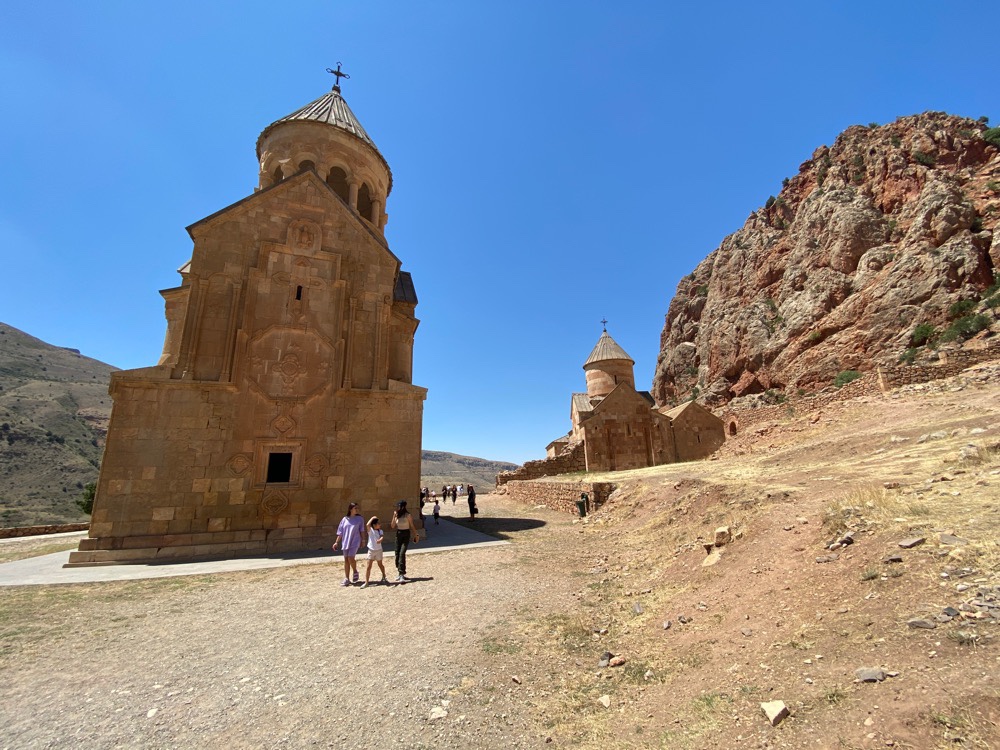
The back of Surb Astvatsatsin church as seen as you enter the complex from the parking lot
This church was completed in 1339 by sculture Momik who also designed it
Its such an artistic monument and reminiscent of the tower like burial structures of the first years of Christianity in Armenia
The ground floor was a burial vault and the top floor was a temple

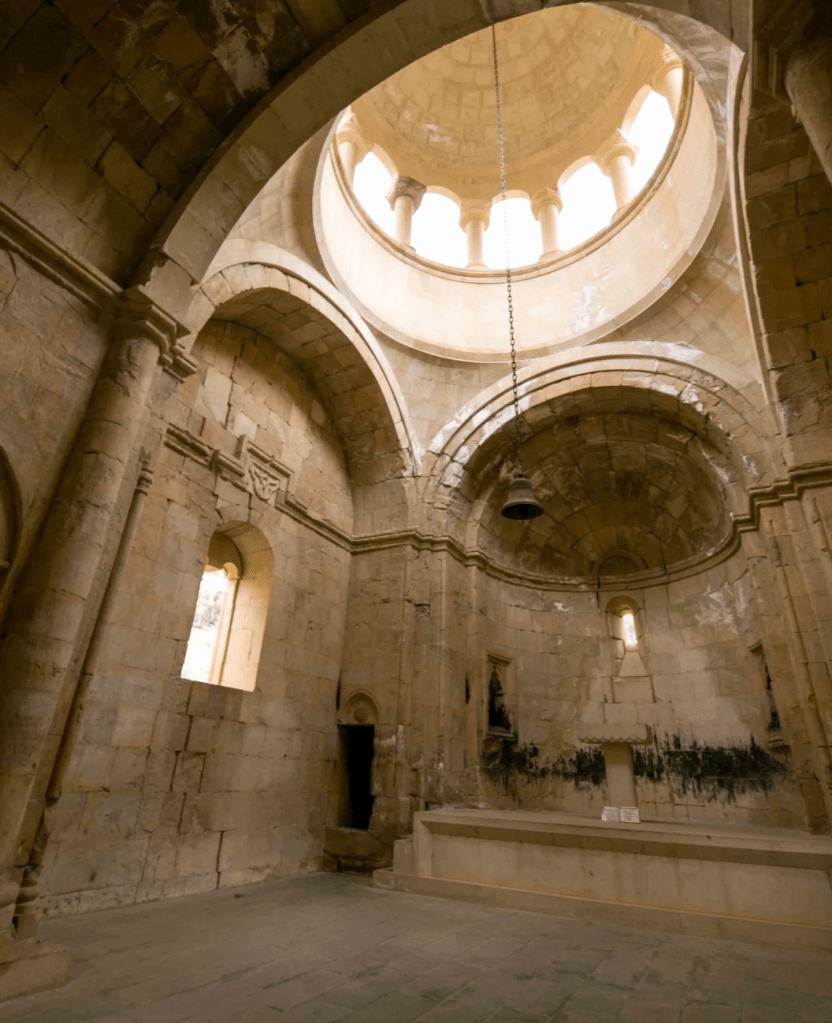
Inside the 2nd level of the main church

A cross shaped church built in 1216-1227
In 1340 an earthquake destroyed the dome which has now been reconstructed in 1361
The graves of the Orbelians are outside Infront of this church and they belong to members of the Orbelian dynasty, which patronized Noravank Monastery in the Middle Ages.

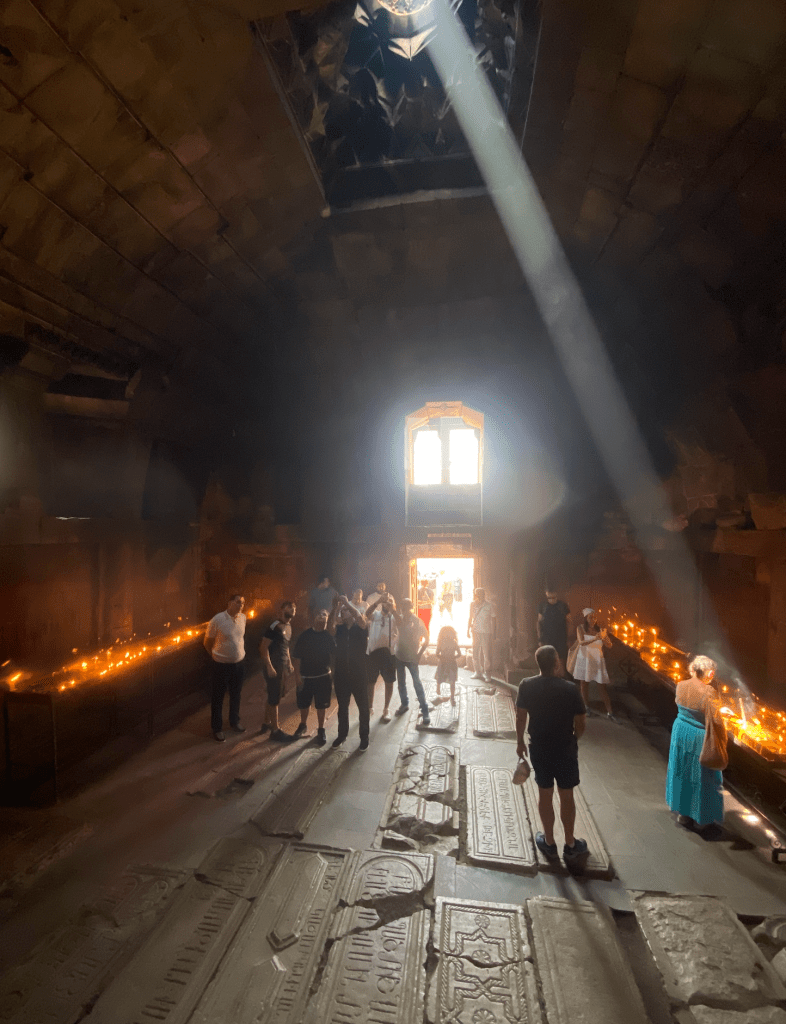
The inside of the amazing semi arched vault of the Narthex leading into the main Surb Stepanos Church

The inside of the main church of Surb Stepanos Church

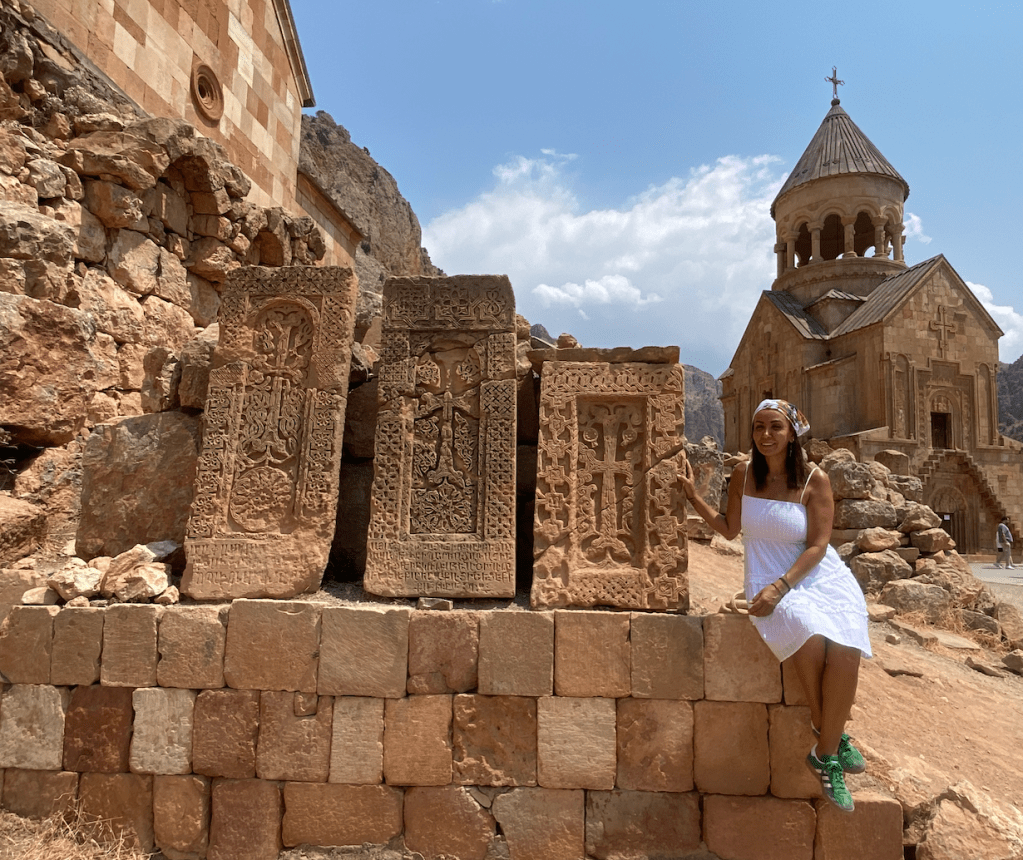
The ancient khatchkars on the outside of the ruins of Surb Karapet Chapel
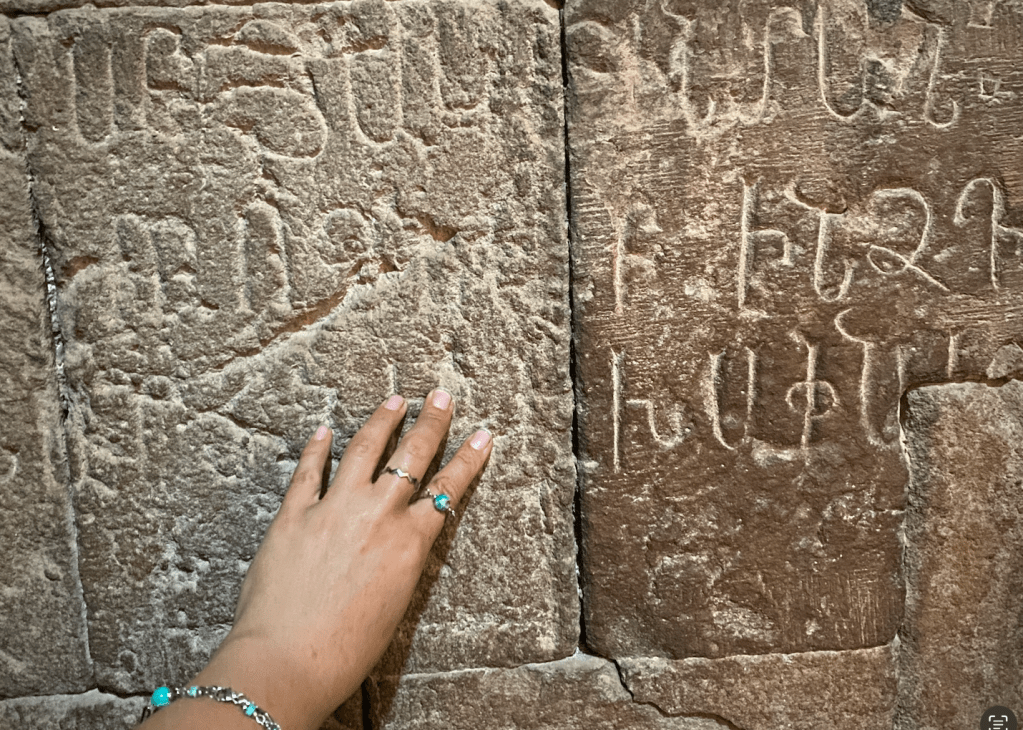
The etchings on the inside wall of the Narthex
The Armenian alphabet was designed so that a single swastika (visible on a khachkar outside Surb Karapet) was a monogram of the alphabet: every letter could be found in its shape.
This same idea was repeated in inscriptions around the complex, with words written with all of their letters found in a single shape.
This saved space, so that more could be written. During the unstable times, when invasions and destruction were common, Armenian history was written carved into the church walls, and words were written as monograms, with all the letters stacked on top of each other, in order to save space.


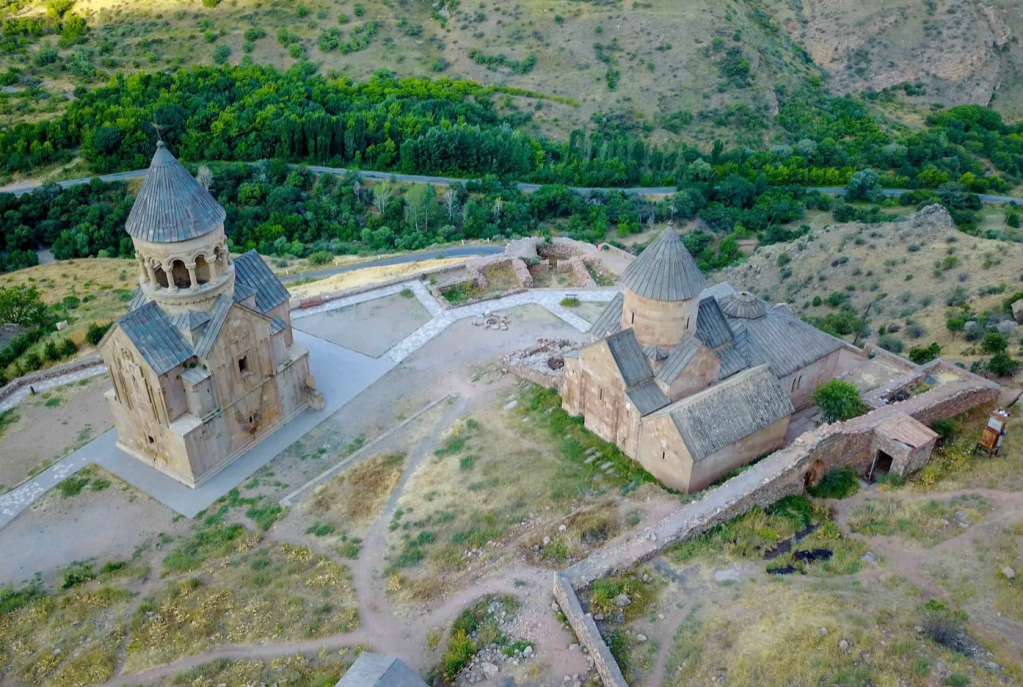
Noravank was an important location for the cultural and arts of the time in Armenia and centre of artistic production
 The Wandering Passport